2026 Best CNC Tool for Global Buyers?
Choosing the 2026 Best Cnc Tool for Global Buyers requires more than comparing prices or spindle speeds. A reliable choice must fit the material, machine, production volume, and local service conditions. Aluminum, hardened steel, and composite panels each demand different cutting behavior. A tool that performs beautifully in a German aerospace shop may struggle in a small Brazilian workshop. That difference matters.
Manufacturing quality expert W. Edwards Deming offered a useful principle: “Quality comes not from inspection, but from the improvement of the production process.” His view remains practical for CNC purchasing. Buyers should examine tool life, edge stability, runout, coating performance, and repeatability. They should also request test data, application examples, and clear warranty terms. A supplier with technical support can prevent costly mistakes. A low price cannot repair a damaged workpiece.
Real details often reveal more than catalog claims. Check whether the holder seats cleanly, whether chips evacuate at the stated feed rate, and whether cutting edges remain sharp after repeated passes. Ask about delivery times and replacement availability across regions. Standards and machine compatibility also deserve careful review. Some recommendations will remain imperfect because materials, operators, and machines vary. That limitation should be admitted, not hidden. This guide compares practical Cnc Tool options through measurable performance, buyer experience, supplier credibility, and long-term operating value. The best tool is not always the most advanced. It is the one that performs consistently when production becomes demanding.
What Is a CNC Tool? ISO 513 Materials and Tool Classifications
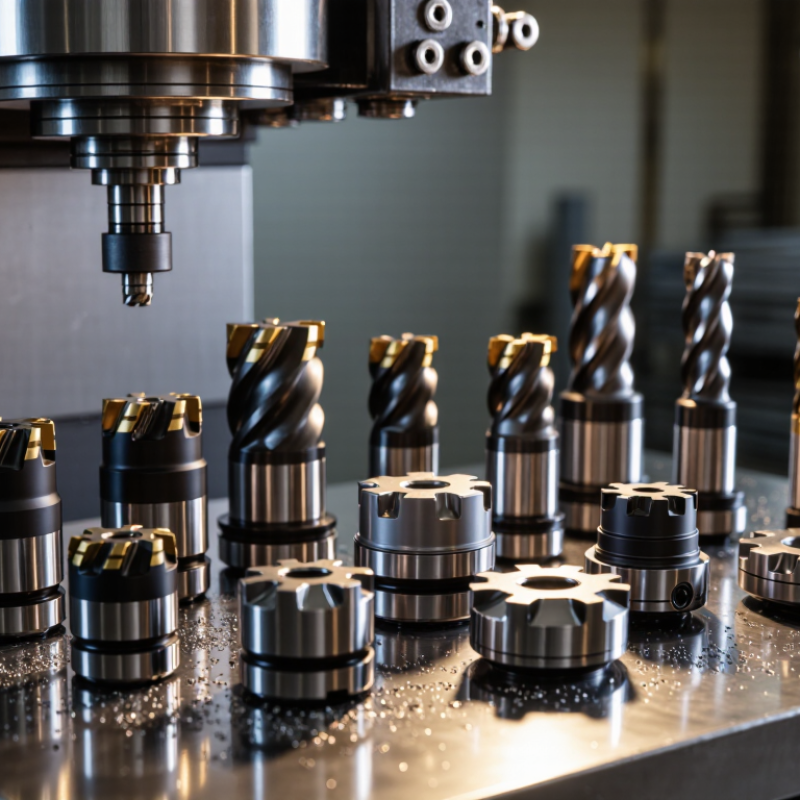
A CNC tool is a cutting component held by a machine spindle or tool holder. It removes material through controlled rotation, feed, and depth of cut. The best CNC tool for global buyers in 2026 is not one universal product. It depends on the workpiece, tolerance, machine power, and production volume.
ISO 513 helps classify cutting tool materials and their typical uses. Common categories include uncoated hardmetal, coated hardmetal, cermet, ceramic, polycrystalline diamond, and cubic boron nitride. Each material reacts differently to heat, impact, and abrasion.
Hardmetal suits many general machining tasks. Ceramic can handle high heat but may fail under vibration.
Diamond performs well on nonferrous materials, while CBN is suitable for hardened steel.
The application groups also matter. P covers steel, M covers stainless steel, and K covers cast iron. N refers to nonferrous materials, S to heat-resistant alloys and titanium, and H to hardened materials.
A technician should match the ISO group with cutting speed and coolant conditions. In a workshop, I would inspect chips after the first few passes. Their color and shape often reveal excessive heat or poor feed settings.
Still, chip evidence is not enough. Tool geometry, edge preparation, machine rigidity, and workholding can change the result. A classification chart guides selection, but it does not replace testing.
My own early selections were sometimes too conservative, causing rubbing instead of cutting. That mistake remains worth checking.
How Do Geometry and Coatings Affect Cutting Speed and Tool Life?
2026 Best CNC Tool for Global Buyers?
How Do Geometry and Coatings Affect Cutting Speed and Tool Life?
Choosing a CNC tool in 2026 requires more than comparing catalog prices. Geometry controls how the edge enters the material, removes chips, and handles heat. A sharp, positive rake often cuts aluminum smoothly with lower spindle load. A stronger edge with a smaller clearance angle suits hardened steel better. I have seen small geometry changes reduce vibration on thin walls. The same tool can fail quickly in a different machine.
Coatings influence friction, heat resistance, and chip flow. A heat-resistant coating can support higher cutting speeds in dry or high-temperature cutting. Yet coating choice must match the workpiece and coolant. A coating designed for steel may perform poorly in abrasive aluminum alloys. Tool life is not a fixed promise. Check flank wear, burrs, surface finish, and spindle load after each trial.
For global buyers, request test data using the intended material, holder, coolant, and machine power. Ask for cutting parameters in metric units and clear wear limits. Start below the recommended speed, then increase it in measured steps. Record edge condition after every batch. This approach costs time. It prevents expensive guesses. I still find tool-life estimates imperfect, especially when operators change chip load or tool runout. A 0.02-millimeter runout can quietly erase the expected advantage of premium geometry.
How to Compare Performance Using Taylor’s Tool-Life Equation, VTⁿ = C
2026 Best CNC Tool for Global Buyers?
How to Compare Performance Using Taylor’s Tool-Life Equation, VTⁿ = C
For global CNC buyers, tool speed alone is not enough. Taylor’s equation, VTⁿ = C, connects cutting speed (V) with tool life (T). The exponent n shows how quickly life changes as speed rises. The constant C depends on the workpiece, tool material, feed, depth of cut, and cooling method. A tool that lasts 30 minutes at 180 m/min may not remain economical at 220 m/min. Small speed increases can reduce life sharply.
Use controlled trials before comparing suppliers. Machine the same alloy with identical feed, depth, coolant, and tool geometry. Record flank wear, surface finish, cutting sound, and actual minutes in cut. Then fit test results to the equation. In my experience, stable data often reveals a better choice than impressive catalog claims. Still, two trials are rarely enough. Machine vibration and interrupted cuts can distort the result.
Tips: Ask for test conditions, not only tool-life numbers. Compare cost per finished part. Check whether the stated C value matches your material and machine. Keep a record of rejected parts and edge failures. These details matter.
The equation is useful, but imperfect. It does not fully describe chatter, thermal shock, or operator technique. I sometimes trust calculated life too much. That is a mistake worth checking with production evidence. Reliable purchasing combines mathematical comparison with repeatable shop-floor testing.
Which Global Standards Apply? ISO 13399, ISO 3002, and DIN 69871
2026 Best CNC Tool for Global Buyers?
Which Global Standards Apply? ISO 13399, ISO 3002, and DIN 69871
Global buyers should treat standards as working instructions, not decorative certificates. ISO 13399 supports digital tool data, including dimensions, cutting edges, and identification fields. It helps CAM systems read consistent information across suppliers. Yet a complete data file does not guarantee correct machining performance.
ISO 3002 focuses on tool geometry and the reference system used to describe cutting tools. Its definitions help engineers compare angles, diameters, lengths, and cutting directions. Check these details against the actual drawing. A small reference error can change the programmed tool position.
DIN 69871 concerns a common steep-taper toolholder interface used in many CNC environments. Buyers should verify taper size, pull-stud requirements, gauge length, and balancing limits. Do not assume compatibility from a similar-looking holder. Measure twice.
The machine manual remains essential. Standards may define interfaces, but they do not replace machine-specific requirements. Ask for dimensional drawings, inspection records, material details, and traceable test results. A useful review compares the 3D model with the delivered holder and tool assembly.
Some purchasing teams focus too heavily on ISO labels. That is understandable, but incomplete. Runout, coolant delivery, clamping force, and maintenance quality can affect results more directly. The honest answer is less tidy: global standard alignment reduces risk, but careful verification still decides whether the tool works.
How to Evaluate Total Cost Through Tool Life, Cycle Time, and Batch Size
2026 Best CNC Tool for Global Buyers?
The lowest purchase price rarely means the lowest production cost. A reliable evaluation starts with measured tool life, cycle time, and batch size. Record how many parts one tool produces before edge wear affects tolerance or surface finish. Then calculate the tool cost per acceptable part, not per insert or cutter.
Cycle time can change the result quickly. A tool that costs more may reduce cutting time by 18 seconds per part. Across 5,000 parts, that difference becomes significant. Include machine hours, operator time, energy use, and tool-change downtime. Small delays matter. A slow changeover can erase the expected savings.
Batch size also changes the best choice. For a short batch, setup time and trial waste may outweigh a long-life tool. For continuous production, stable wear and predictable replacement intervals usually matter more. Test tools on the actual material and machine when possible. Use identical cutting conditions during comparison. Keep records from several runs, because one excellent trial proves little.
Spreadsheets can lie. Real shops face vibration, inconsistent stock, and operator adjustments. I would leave a margin for these variables instead of trusting perfect estimates. Recheck the calculation after production begins. The best CNC tool is the one that delivers acceptable parts at a predictable total cost, under real working conditions.
Related Posts
-
What Are the Top CNC Tool Manufacturers in China?
-
What Are the Top CNC Tools to Buy in 2026?
-
Top 7 CNC Lathes That Revolutionize Precision Engineering
-
Crafted Precision Global Reach of Best Cnc Machine Tools from China
-

Exploring the Future of Milling Equipment: Innovations Shaping the Industry
-
Mastering CNC Lathes A Comprehensive Guide to Precision Machining Techniques and Best Practices