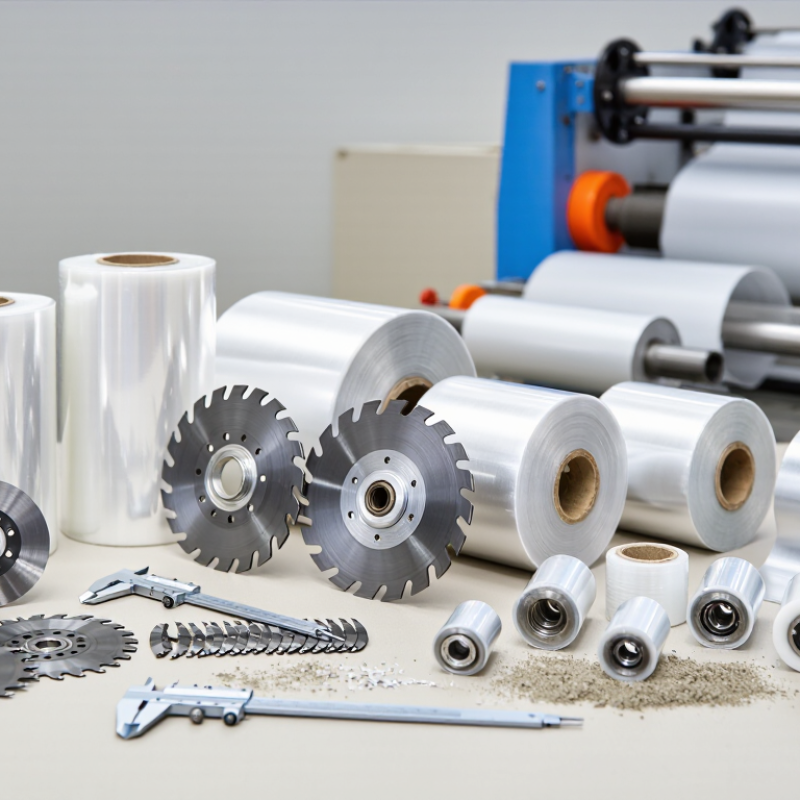
2026 Best Flexible Packaging Slitting Blades How to Choose?
Choosing the right flexible packaging slitting blades in 2026 is not simply a matter of selecting the hardest steel. Film structure, coating thickness, machine speed, tension control, and winding quality all influence the final cut. A blade that performs well on thin polyethylene may create edge dust on laminated foil. It may also damage a delicate barrier layer. Small differences become visible under production lighting.
According to converting specialist Dr. Charles A. Wickham, “A blade proves its value through the consistency of the cut, not its appearance in the catalog.” This practical view matters on the factory floor. Operators notice burrs, web wandering, uneven roll edges, and frequent blade changes before purchasing teams do. The best flexible packaging slitting blades should match the material, holder system, cutting method, and actual production conditions. That sounds obvious. It is often missed.
This guide examines blade materials, edge geometry, hardness, coating options, and service life. It also considers dust generation, heat, setup accuracy, and maintenance records. Experience suggests that the most expensive blade is not always the most economical choice. A cheaper blade can become costly when it causes rejects or repeated stoppages. Still, blade selection is not perfectly predictable. Film formulations change, machines age, and operator habits differ. Therefore, testing should include real production rolls, not only laboratory samples. A careful trial may reveal an uncomfortable truth: the problem is sometimes tension control, not the blade.
Flexible Packaging Slitting Blades: Purpose, Structure, and Applications
Flexible packaging slitting blades divide films, laminates, pouches, and coated webs into accurate widths. A clean cut reduces edge fuzz, film stretching, dust, and sealing problems. Small defects matter. During converting trials, operators often inspect the slit edge under bright, angled light. This reveals roughness that normal overhead lighting can hide.
Blade structure affects cutting stability. Common designs include razor, shear, and score-cut systems. Razor blades use a thin, sharp edge for films and lightweight laminates. Shear knives cut with two overlapping circular edges, supporting cleaner results at higher line speeds. Score-cut blades press material against a counter surface. They can suit thicker or less delicate webs. Steel hardness, edge angle, thickness, and surface treatment also influence service life.
Application conditions should guide selection. Consider film thickness, laminate layers, adhesive behavior, tension, speed, and required slit width. A blade that works well on polyethylene may perform poorly on metallized laminate. Operators should check burrs, curl, heat marks, and adhesive buildup after several production runs. Test cuts are essential. They may expose an overlooked issue, such as excessive pressure or poor blade alignment. In practice, the “best” blade is rarely universal. It is the blade matched carefully to the material, machine, and production target.
Key Blade Types for Film, Foil, Paper, and Laminate Materials
Flexible packaging demand keeps pressure on slitting accuracy. The Smithers report, The Future of Global Flexible Packaging to 2028, valued the market near US$250 billion in 2023. The report also expects continued growth through 2028. The right blade depends on the web, coating, tension, and winding speed.
For thin films, razor blades create clean cuts with low contact force. They suit polyethylene, polypropylene, and similar films. Use polished edges when dust or edge curl becomes visible. Foil usually needs a sharp shear blade with stable side pressure. A blunt edge can stretch aluminum before cutting. That creates bright wrinkles and uneven rolls. It happens quickly.
Paper behaves differently.
A crush-cut blade can work well on soft, porous grades, especially at moderate speeds. Harder coated paper often benefits from a shear edge. Laminate structures need more testing because each layer may react differently. A razor can cut cleanly, yet pull the adhesive layer. A shear blade may reduce tearing but increase setup sensitivity. There is no universal winner.
The 2024 State of the Flexible Packaging Industry report estimated United States flexible packaging sales at about US$42.9 billion in 2023. That scale makes small quality losses expensive. Measure burrs, dust, edge waviness, and roll telescoping during trials. Do not judge blades by sharpness alone. Carbide edges can extend service life, but they may be less forgiving during impact. My practical preference is simple: test the actual laminate, record the settings, and question the first successful result.
How to Match Blade Geometry with Packaging Material Properties
2026 Best Flexible Packaging Slitting Blades: How to Choose?
Flexible packaging growth is raising pressure on slitting quality. Smithers valued the global flexible packaging market at about $202 billion in 2023, with further growth expected through 2028. The Flexible Packaging Association reported nearly $40 billion in U.S. industry sales for 2023. These figures make blade selection more than a maintenance decision.
Match geometry to the material, not only to the machine. Soft polyethylene stretches under heat and tension. A polished razor edge with a narrow bevel can reduce drag and edge distortion. It must remain sharp. A dull edge pulls the film and creates feathering.
Biaxially oriented polypropylene and polyester are stiffer and harder. They often need a stronger edge and controlled shear clearance. Laminates combine different behaviors. Paper adds stiffness, foil resists tearing, and adhesive layers can foul the edge.
Small details matter. Very small details.
In production trials, I would record burr height, dust, web tension, and roll telescoping after each blade change. Smithers’ packaging studies repeatedly identify downgauging and multilayer structures as important market trends. Thinner films save material, but they reduce tolerance for poor geometry.
A geometry chart helps, yet it is not truth. I have seen an apparently correct blade fail after temperature, coating, or tension changed. Test the actual structure at operating speed. Review the result honestly, because the first setting is often only a useful mistake.
Essential Factors for Selecting Slitting Blades in 2026
Choosing flexible packaging slitting blades in 2026 requires more than checking sharpness or price. The blade must match the film structure, coating, thickness, and cutting method. A laminated film may need a different edge geometry than a thin polyethylene film. Record the web thickness, line speed, tension, and target slit width before selecting a blade.
Material matters. Powder metallurgy steel can offer strong wear resistance during long production runs. Carbide may suit abrasive structures, but it can be less forgiving during impact or poor setup. Edge angle also affects cutting force, heat, and burr formation. A smaller angle can cut cleanly, yet it may wear faster. A stronger angle may last longer, but it can increase film deformation.
Keep the holder, spacer, and blade seat clean. Small particles can create uneven pressure and visible edge defects. Check runout with suitable measuring equipment, especially when narrow slit widths matter. In practical trials, inspect the cut edge under magnification and track dust, curl, heat marks, and blade life. Do not judge performance after one short test.
My early selections focused too heavily on hardness. That was incomplete. Process stability often mattered more than maximum hardness. Ask the supplier for material data, tolerance information, and recommended operating limits. Keep trial records, even when the result looks disappointing. A failed test can reveal tension problems, alignment errors, or an unsuitable edge design. There is no perfect blade for every flexible package.
Blade Performance, Maintenance, Safety, and Replacement Guidelines
2026 Best Flexible Packaging Slitting Blades: How to Choose?
Flexible packaging lines demand stable cutting, especially with thin films, laminates, and recycled structures. Smithers reported that the global flexible packaging market reached about US$201.8 billion in 2023. That scale increases pressure on slitting accuracy, uptime, and waste control.
Blade performance starts with material matching. Carbide or hardened steel can suit different film tensions and abrasive layers. Check edge geometry, hardness, runout, and coating compatibility with the substrate. A sharp blade should create a clean slit without stretching the web. Watch the edge under magnification. Small chips often appear before visible defects.
Maintenance needs discipline. Record blade hours, web material, dust levels, and defect patterns. Replace blades when burrs, powder, tearing, or unstable winding appear. Waiting for a dramatic failure is expensive. The 2024 State of Flexible Packaging report from the Flexible Packaging Association placed U.S. industry sales near US$39.4 billion in 2023, showing how small yield losses can affect large production volumes. Yet replacement intervals are not universal; some teams rely too heavily on calendar dates.
Safety remains non-negotiable. Follow machine guarding requirements, isolate energy before access, and use cut-resistant handling procedures. Never test sharpness with a fingertip. ISO 12100 risk assessment principles support identifying hazards during adjustment, cleaning, and blade changeovers. Good practice is sometimes imperfect. Operators may rush. A short checklist, controlled storage, and documented training reduce that weakness.
| Evaluation Area | Recommended Specification or Practice | Typical Operating Range / Service Indicator | Suitable Application | Why It Matters | Replacement or Action Trigger |
|---|---|---|---|---|---|
| Blade Material | Use hardened tool steel for general-purpose film and paper work. Use carbide-tipped or solid carbide construction when long wear life and dimensional stability are required. | Tool-steel hardness is commonly selected around 58–62 HRC; the exact value depends on geometry, coating, and substrate. | Plastic films, laminates, paper, foil, and light nonwoven materials. | Material hardness affects edge retention, toughness, chipping resistance, and total operating cost. | Change the blade when repeated sharpening no longer restores cut quality or when edge chipping is visible. |
| Blade Geometry | Select a straight edge for stable, controlled web materials and a serrated or perforating edge only when the process specifically requires it. | Common industrial edge angles are approximately 15°–30°, subject to material, blade thickness, and cutting method. | Center slitting, score slitting, razor slitting, and crush slitting systems. | Edge angle and profile influence cutting force, heat generation, burr formation, and web tracking. | Reconfirm geometry after sharpening; excessive material removal can change the cutting angle and reduce performance. |
| Surface Finish | Choose a smooth, uniform edge and a clean blade surface free from grinding burns, burrs, rust, and adhesive deposits. | Visual inspection should show a continuous edge without reflected-light notches or irregular bright spots. | Clear films, printed webs, adhesive laminates, and high-appearance packaging materials. | A clean edge reduces drag, film deformation, coating damage, and contamination of the web. | Clean immediately when residue appears; replace or regrind if defects remain after cleaning. |
| Cutting Accuracy | Match blade runout, holder condition, overlap, and web tension to the slitter manufacturer's machine settings. | For precision converting, maintain the machine's specified tolerance; many processes target slit-width variation within approximately ±0.1–0.3 mm. | Multilayer films, narrow-width rolls, medical packaging, and high-speed printing or laminating lines. | Consistent slit width supports downstream registration, winding quality, and customer specifications. | Investigate vibration, holder wear, web tension, and blade runout before assuming the blade is defective. |
| Edge Sharpness | Use the sharpest edge that can cut the material without excessive fragility. Avoid forcing a dull blade through the web. | Monitor cut appearance, motor load, noise, dust, edge fraying, and film stretching rather than relying on a single numerical sharpness value. | Thin films, aluminum foil laminates, coated paper, and adhesive-backed structures. | Sharp edges reduce cutting force and heat, helping prevent distortion and premature wear of the slitting system. | Replace or sharpen when motor load rises, the cut becomes ragged, or the web begins to stretch at the slit. |
| Wear Resistance | Consider a wear-resistant coating only when it is compatible with the substrate, adhesive, cleaning method, and required edge geometry. | Service life varies widely with material abrasiveness, line speed, blade pressure, contamination, and sharpening quality. | Abrasive coatings, mineral-filled films, paperboard, recycled fiber, and high-volume production. | Wear resistance can reduce blade changes, but a coating cannot compensate for incorrect setup or excessive pressure. | Replace when coating delamination, edge rounding, pitting, or dimensional loss affects slit quality. |
| Heat Control | Use correct blade overlap, pressure, speed, and web tension. Keep the edge clean and ensure machine cooling systems operate correctly. | There is no universal blade temperature limit; follow the material and machine process window and watch for film shrinkage or adhesive smearing. | Heat-sensitive films, sealant layers, stretch films, and adhesive laminates. | Excessive heat can soften polymers, transfer adhesive, distort printed graphics, and accelerate edge wear. | Stop and correct the setup when smoke, melted polymer, adhesive transfer, or visible web distortion occurs. |
| Maintenance Frequency | Inspect blades and holders at every changeover; clean after each production run involving adhesive, ink, dust, or coating residue. | Perform a documented condition check at least once per shift on frequently used lines and after any abnormal event. | Continuous converting, contract packaging, and multi-material production environments. | Early inspection identifies edge damage and mounting problems before they create long web defects or unplanned downtime. | Schedule maintenance immediately after a crash, web break caused by contact, or abnormal vibration. |
| Cleaning Method | Use lint-free wipes and a cleaner approved for the blade material and process residue. Dry completely before storage or installation. | Never use abrasive pads, uncontrolled grinding, or chemicals that attack coatings, adhesives, or corrosion-resistant surfaces. | Ink, adhesive, dust, silicone, and polymer residue removal. | Improper cleaning can round the edge, introduce corrosion, or leave contamination on packaging materials. | Quarantine a blade if corrosion, coating damage, or a cleaning-related scratch reaches the cutting edge. |
| Storage | Store blades individually in protective sleeves or separated compartments in a dry, clean area. Protect edges from contact and impact. | Keep packaging sealed until use and avoid condensation, high humidity, and uncontrolled temperature changes. | Spare blade inventories and reconditioned blades awaiting inspection. | Correct storage prevents corrosion, edge-to-edge contact, accidental damage, and mix-ups between blade specifications. | Do not install a blade with rust, dents, contamination, or an unknown identification record. |
| Operator Safety | Isolate power, stop and secure all moving parts, use cut-resistant gloves for handling, and use approved blade-removal tools. | Apply the site's lockout/tagout procedure before entering the slitting zone or removing guards. | All manual blade installation, removal, inspection, and cleaning operations. | Slitter blades can cause severe lacerations even when they appear dull or stationary. | Do not handle an exposed blade by its edge. Replace damaged guards, holders, or blade-handling tools before operation. |
| Mounting and Alignment | Clean the holder seat, verify fastener condition, install the blade in the correct orientation, and tighten according to the machine procedure. | Check for lateral movement, uneven contact, runout, and correct blade overlap before restarting production. | Razor, shear, score, and crush slitting machines. | Incorrect mounting can cause vibration, uneven wear, blade breakage, and nonconforming slit widths. | Stop the machine if the blade moves, chatters, contacts the anvil incorrectly, or shows uneven wear. |
| Replacement Timing | Base replacement on performance data, not on a fixed calendar interval alone. Record operating hours, material type, line speed, and defect history. | Replace when slit quality, edge condition, safety, or dimensional compliance falls outside the approved process limit. | Production lines requiring predictable quality and controlled downtime. | Condition-based replacement avoids both premature disposal and production losses caused by overused blades. | Replace immediately after cracking, chipping, deformation, severe corrosion, suspected impact, or an unexplained web defect. |
| Sharpening and Reconditioning | Use a qualified sharpening process that preserves the original profile, flatness, edge angle, and minimum blade dimensions. | Reconditioning limits depend on the original blade thickness, design allowance, and manufacturer's engineering specification. | Reusable industrial blades with sufficient remaining material and no structural damage. | Controlled sharpening can extend useful life while maintaining predictable cutting performance. | Do not recondition blades with cracks, deep nicks, excessive distortion, or dimensions below the approved limit. |
| Performance Verification | After installation, verify slit width, edge appearance, web tracking, winding quality, noise, vibration, and motor load. | Compare results with the approved production baseline for the specific material and machine setup. | New blades, sharpened blades, changed materials, and process start-ups. | A short verification run confirms that the blade and machine settings work together before full-speed production. | Hold production and investigate if defects appear during the verification run or if safety interlocks do not function correctly. |