
7 High Temp Heat Pump Buying Tips for Global Buyers
Buying a High Temp Heat Pump is not simply a matter of choosing the highest advertised temperature. Global buyers must examine climate, building fabric, water quality, energy prices, and local service capacity. A unit operating at 70°C may look impressive on paper. Yet poor insulation can still produce high electricity use and uneven indoor comfort.
Thomas Nowak, former Secretary General of the European Heat Pump Association, has said, “Heat pumps are a central technology for decarbonising heating.” His point matters because performance depends on the complete heating system, not the outdoor unit alone. Buyers should compare seasonal efficiency, rated output at low ambient temperatures, refrigerant type, defrost behavior, controls, and compressor durability. Ask for independent test data. Marketing brochures are not enough.
The seven buying tips in this guide focus on practical decisions. They cover application temperature, climate compatibility, system sizing, installation quality, operating cost, maintenance, and supplier reliability. A hotel in Northern Europe has different needs from a food-processing site in Southeast Asia. An old radiator network may require higher flow temperatures. A modern building may not.
Some assumptions will be wrong.
That is normal. Real projects contain incomplete drawings, changing energy tariffs, and unexpected hydraulic problems. A reliable decision therefore includes site measurements, lifecycle costing, and review by a qualified heating professional. Global buyers should also confirm local safety requirements and warranty conditions before signing a contract. The best High Temp Heat Pump is not the most powerful model. It is the one that delivers stable heat, manageable costs, and dependable support in its actual operating environment.
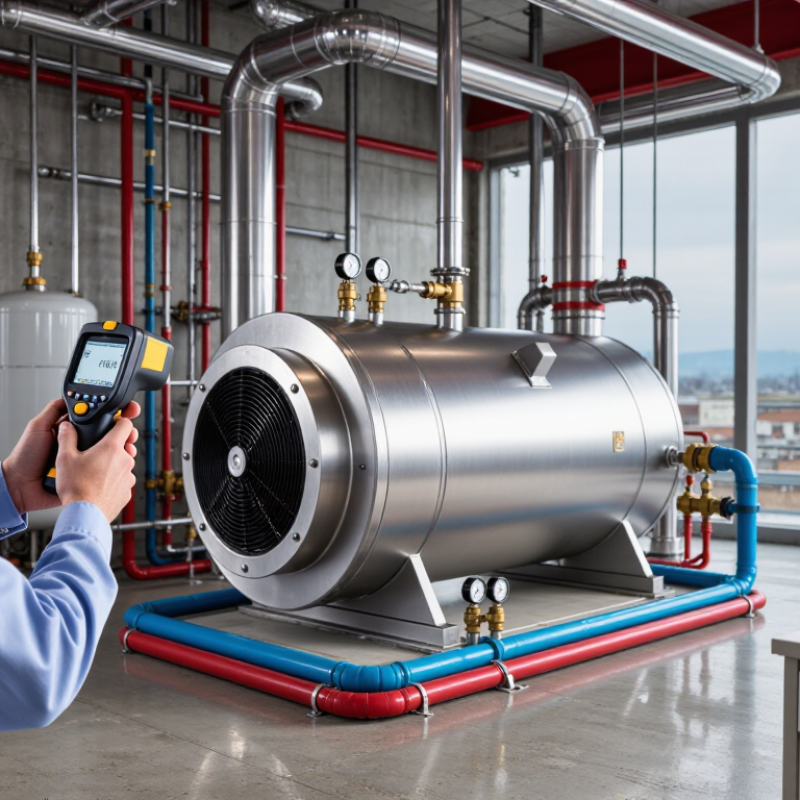
Define High-Temperature Heat Pump Requirements and Applications
Defining the process requirement is the real starting point for buying a high-temperature heat pump. “High temperature” often means delivering water above 80°C, while some industrial systems reach 120°C or higher. Do not select equipment from the outlet temperature alone. Record supply temperature, return temperature, flow rate, operating hours, and the lowest available source temperature.
Applications differ sharply. Food processing may need 85°C wash water, while laundries often require stable hot water during sudden demand peaks. District heating projects may need 90–120°C supply temperatures. Drying processes can require higher air temperatures, but direct electric heating may still be more practical. The International Energy Agency reports that heat pumps could reduce global carbon dioxide emissions by at least 500 million tonnes in 2030 under announced pledges. That potential depends on suitable applications and low-carbon electricity.
Check performance at real design conditions, not laboratory extremes. Ask for COP data at your required output temperature and source temperature. Also verify noise, defrost behavior, water quality limits, maintenance access, and refrigerant compliance in each target market. A unit showing COP 4 at 35°C may perform very differently at 90°C. That difference matters.
Peak demand is often underestimated. A small buffer tank can reduce cycling, but it cannot fix an undersized compressor. I have seen projects focus on maximum temperature and overlook return-water control. It is an easy mistake. Seasonal measurements, pilot testing, and a clear backup strategy make the purchase more reliable.
Compare Heating Capacity, Efficiency, and Operating Temperature Ranges
7 High Temp Heat Pump Buying Tips for Global Buyers
Compare heating capacity at several outdoor temperatures, not only the headline rating. A unit producing 20 kW at 7°C may deliver much less at −10°C. Ask for certified data at 7°C, 2°C, and −7°C.
The U.S. Department of Energy’s Cold Climate Heat Pump Specification uses 5°F testing and requires at least 70% capacity retention at that point. This offers a useful screening benchmark, but local weather may be harsher.
Tip 1: Check useful output, not input power.
Tip 2: Compare COP at the same water temperature.
Tip 3: Review seasonal efficiency, such as SCOP, rather than one laboratory COP.
The International Energy Agency reports that heat pumps can deliver three to five units of heat per electricity unit under suitable conditions. Efficiency falls as water temperature rises. A system supplying 70°C water may perform very differently from one tested at 35°C.
Test conditions rarely match a windy morning, poor insulation, or frequent defrosting.
Tip 4: Confirm the operating temperature range.
Tip 5: Read the capacity curve.
Tip 6: Check whether backup heating is required below the stated limit.
Tip 7: Request noise, defrost, and service data.
The European Heat Pump Association’s market reports show accelerating deployment across Europe, yet installation quality remains decisive. A larger unit is not automatically better. Oversizing can increase cycling and weaken comfort.
I would also question unclear “high temperature” claims; the label alone proves very little.
Evaluate Refrigerants, Components, and Climate Compatibility
High-temperature heat pumps demand more than a high outlet-temperature claim. Check the refrigerant’s operating pressure, temperature range, global warming impact, and flammability classification. Confirm that trained service support and replacement parts exist in your market. A refrigerant may perform well in testing but remain difficult to maintain locally.
Inspect the compressor, heat exchangers, expansion valve, sensors, and control software. These parts must tolerate repeated high-temperature cycles without excessive wear. Ask for capacity data at your actual outdoor temperature and water-flow conditions. Look for output ratings at minus 10°C, not only at mild laboratory conditions. Small details matter. Poor insulation can erase expected efficiency.
Match the system to your climate. In humid regions, check defrost behavior, drainage, and corrosion protection. In dry, cold areas, verify low-ambient starting and fan performance. Measure the required supply temperature carefully; 55°C may suit underfloor heating, while older radiators may need more. However, higher temperatures usually reduce efficiency. I once trusted a generous performance chart too quickly. Field conditions exposed a noticeable capacity drop. Request independent test data, installation references, and clear warranty conditions. A local technician should also confirm electrical requirements, noise limits, and applicable safety rules before purchase.
Check Installation Needs, Certifications, Warranty, and Local Support
7 High Temp Heat Pump Buying Tips for Global Buyers
Before ordering a high-temperature heat pump, inspect the installation site carefully. Measure radiator output, pipe sizes, electrical capacity, and outdoor clearance. Existing radiators may work, but only after a heat-loss calculation. A cold room can expose weak planning quickly. Ask a qualified local installer to check flow temperature, defrost drainage, noise limits, and refrigerant requirements. In some homes, better insulation costs less than operating at very high temperatures.
Check certifications that apply in your destination market. Look for recognized safety, electrical, efficiency, and refrigerant compliance marks. Requirements can differ between countries, and imported equipment may lack accepted documentation. Request test reports, manuals, and declaration documents before paying. Do not rely on a sales image. That shortcut can create delays during inspection or connection.
Read the warranty line by line. Confirm coverage for the compressor, controls, heat exchanger, labor, and replacement parts. Check whether annual servicing or approved installation affects validity. Local support matters just as much. Ask who diagnoses faults, how quickly parts arrive, and whether technicians understand high-temperature systems. A low purchase price feels less attractive when a small sensor keeps the home cold for weeks. Some buyers focus too much on rated output. I would also compare seasonal performance, service access, and real winter operating data.
7 High-Temperature Heat Pump Buying Tips for Global Buyers
Check installation needs, certifications, warranty terms, and local technical support before selecting a system.
The chart shows typical heating-water temperature ranges used by different heat-emitter systems. Lower-temperature emitters generally improve heat-pump efficiency, while existing radiators may require a high-temperature model or upgrades. Actual requirements depend on building heat loss, outdoor design temperature, insulation, radiator sizing, and local regulations.
- Confirm the required supply temperature at the local outdoor design temperature.
- Check electrical capacity, hydraulic connections, space, noise limits, and condensate management.
- Verify applicable safety, electrical, refrigerant, and energy-efficiency certifications in the target market.
- Review warranty coverage, exclusions, response times, spare-parts availability, and qualified local installers.
Calculate Total Ownership Costs and Select a Reliable Supplier
A high-temperature heat pump should be judged by total ownership cost, not its purchase price. Calculate equipment, installation, electrical upgrades, commissioning, maintenance, and replacement parts. Include electricity consumption at the required supply temperature, not only the advertised rating. A unit producing 70°C water may use more energy than expected at low outdoor temperatures. Ask for performance data at your actual climate and load.
Real sites differ. I have seen attractive forecasts weaken after installers added larger cables, buffer tanks, and control changes. Build three cost scenarios: normal operation, cold-weather operation, and service failure. Include downtime, emergency labor, and expected component life. My spreadsheets are never perfect, so I review assumptions with an experienced engineer and the facility operator. Small errors in operating hours can distort payback significantly.
Supplier reliability matters as much as efficiency. Request independently verified test results, installation references, spare-parts policies, and written response times. Ask who will commission the system and how performance will be measured after handover. A dependable supplier should explain capacity limits without hiding behind broad claims. Check warranty exclusions, local technical support, training, and documentation quality. Ask for proof. Also examine financial stability and production consistency before placing a large order. A low quote can become expensive when support is slow, parts are unavailable, or promised output cannot be verified.
| Tip | Buying Dimension | Realistic Benchmark or Data Point | Illustrative Calculation or Risk | Recommended Buyer Action |
|---|---|---|---|---|
| 1 | Match the Required Leaving-Water Temperature | High-temperature heat pumps may be designed for leaving-water temperatures of 55°C to 80°C, depending on the system design and operating conditions. | A system requiring 60°C water normally operates more efficiently than one requiring 75°C water. Higher supply temperatures generally reduce COP and increase operating cost. | Request performance data at the actual design points, such as −7°C ambient / 60°C water and 7°C ambient / 70°C water, rather than relying only on the headline maximum temperature. |
| 2 | Compare COP and Seasonal Efficiency at the Same Conditions | COP is condition-specific. A practical commercial screening range for many high-temperature systems is approximately 2.0–4.0 COP, depending on source temperature, water temperature, defrosting, and part-load operation. | Annual electricity use = Thermal output × Operating hours ÷ Seasonal COP For 100 kW thermal output, 2,500 hours per year, and a seasonal COP of 3.0: 100 × 2,500 ÷ 3.0 = 83,333 kWh/year. | Compare test results under the same standard and conditions. Ask for capacity, COP, sound power, and defrost information at low ambient temperatures and high water temperatures. |
| 3 | Check Capacity Derating and Cold-Climate Performance | Air-source heat pumps can lose heating capacity as outdoor temperature falls. Defrost cycles also temporarily reduce useful output and efficiency. | If a unit provides 100 kW at 7°C but only 75 kW at the project design temperature, the buyer may need additional capacity, staged units, or backup heating. | Build a design-temperature schedule showing capacity and COP at +7°C, 0°C, −7°C, −15°C, and the local winter design temperature, where applicable. |
| 4 | Evaluate Refrigerant, Safety, and Regulatory Fit | Common refrigerant categories have different properties: R290 is A3 flammable, R32 is A2L mildly flammable, and R744 is high-pressure carbon dioxide. Classification and installation rules vary by jurisdiction. | Refrigerant choice affects equipment-room requirements, technician qualifications, ventilation, charge limits, transport, and future service availability. | Obtain the refrigerant type, safety classification, charge quantity, applicable certifications, installation clearances, and local compliance documents before placing an order. |
| 5 | Calculate Total Cost of Ownership, Not Just Purchase Price | A useful 10-year TCO model includes equipment, installation, controls, shipping, duties, electricity, maintenance, water treatment, spare parts, and end-of-life costs. | 10-year TCO = Initial cost + 10 × annual energy cost + 10 × annual maintenance + major-repair reserve Example: equipment and installation US$48,000 + energy US$12,500/year + maintenance US$1,200/year + repair reserve US$8,000 = approximately US$193,000 over 10 years. | Recalculate the model using local electricity tariffs, annual operating hours, seasonal COP, financing costs, taxes, currency exposure, and expected load growth. |
| 6 | Verify Delivered Cost and System Integration | The delivered project cost can include the heat pump, pumps, buffer tank, valves, controls, electrical upgrades, foundations, insulation, commissioning, freight, insurance, customs duties, and local taxes. | A lower equipment quotation may become more expensive after adding three-phase electrical work, hydraulic modifications, crane access, import charges, or a required backup heater. | Request a line-item quotation with delivery terms, voltage and frequency, connection sizes, noise data, dimensions, weight, included accessories, exclusions, and commissioning responsibilities. |
| 7 | Assess Supplier Reliability and Lifecycle Support | A dependable supplier should provide traceable test data, installation documentation, commissioning support, spare-parts availability, and a defined warranty process. A commercially useful service target is parts availability for at least 7–10 years, subject to contract. | A warranty is less valuable if response times, labor coverage, exclusions, refrigerant responsibilities, and replacement-part lead times are unclear. | Check completed reference projects, factory quality procedures, technical staffing, local service coverage, remote-monitoring capability, warranty terms, response-time commitments, and a written spare-parts plan. |
| Important note: The numerical values above are transparent planning examples and screening ranges, not guaranteed product performance. Final selection should use independently verifiable test data, local energy prices, site-specific heat-load calculations, local safety rules, and a formal supplier quotation. | ||||