What is an ABA Blown Film Machine and How Does It Work?

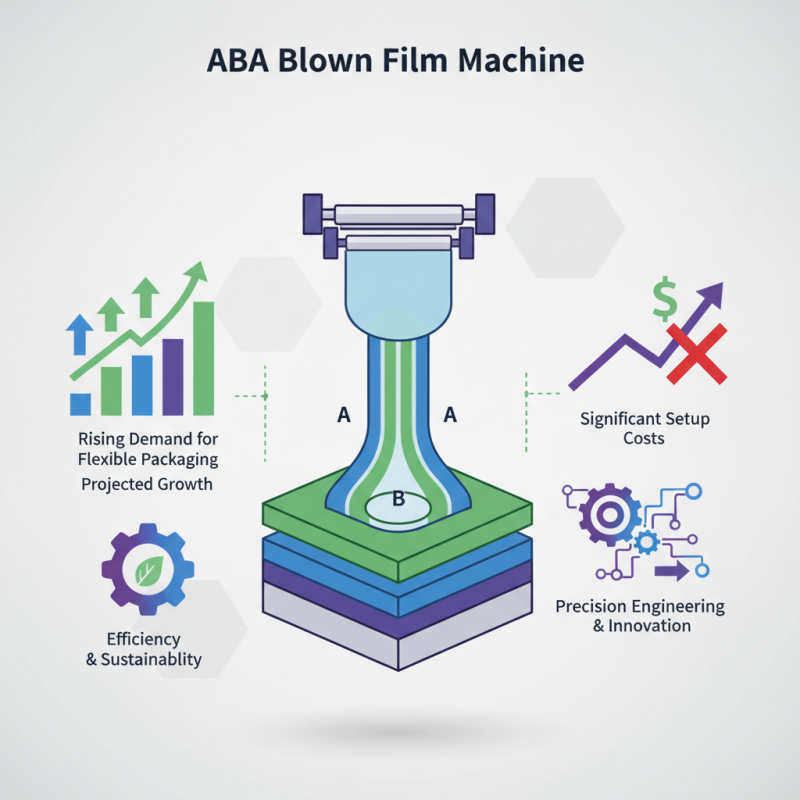
The demand for flexible packaging solutions is on the rise. An aba blown film machine stands at the forefront of this technology. Industry reports indicate a projected growth of 4.5% in the blown film sector by 2026. This growth reflects the increasing need for efficient and sustainable packaging materials.

An aba blown film machine produces high-quality films used in various applications. These machines utilize a co-extrusion process, which layers different polymers for enhanced properties. For instance, they can improve barrier characteristics while reducing material usage. However, challenges exist. The initial setup costs for these machines can be significant, potentially leading smaller companies to hesitate.

Understanding the intricacies of the ABA blown film machine is essential. Its operation relies on a combination of precision engineering and innovation. Companies must regularly assess their equipment and processes. Balancing efficiency and sustainability remains a critical goal. The ABA blown film machine represents both opportunities and challenges in this evolving industry.
What is an ABA Blown Film Machine and How Does It Work?

Understanding the Basics of ABA Blown Film Machines

ABA blown film machines are essential tools in the plastic industry. They produce films used in packaging and other applications. Understanding their operation can benefit manufacturers significantly.

These machines work by using two or three layers of materials. The "A" layers consist of a specific polymer, while the "B" layer is often a different material. This combination enhances strength and flexibility. The film production starts with melting the plastic pellets. Then, the material is extruded through a circular die. Afterward, the film is blown upwards, creating the desired thickness.

Tips: Regular maintenance is crucial. Check the cooling system frequently. A well-maintained machine produces better quality films. Pay attention to the die temperature. Inadequate temperatures can lead to defects.

Sometimes, manufacturers face challenges with film consistency. Variations in thickness can occur if adjustments are not made promptly. Monitoring extrusion speed helps maintain quality. Understanding your material properties leads to better results. This knowledge is key for optimizing production efficiency.

ABA Blown Film Machine Production Comparison

This chart represents the production output of different types of ABA blown film machines measured in kilograms per hour. The data is based on theoretical performance metrics across three common configurations.

Components of an ABA Blown Film Machine and Their Functions

The ABA blown film machine is essential in plastic film manufacturing. It consists of several key components, each playing a crucial role. One significant part is the extruder, which melts and homogenizes the plastic material. The material is then fed into a die, shaping it into a tube. This process is continuous, meaning that production can be efficient and high-volume.

The cooling system follows, using air or water to solidify the film. This step keeps the film uniform in thickness. Another vital component is the haul-off unit. It draws the film up and allows for winding. This part requires careful calibration to prevent defects. Proper functioning of each component significantly affects the final product quality.

*Tips: Ensure regular maintenance of the extruder to avoid overheating. Keep watch on the cooling system to maintain film integrity. Adjust the haul-off speed based on film thickness.*

Despite advancements, challenges persist. Variations in raw materials can lead to inconsistencies. Regular testing of the film properties is recommended. Understanding how each component interacts helps in troubleshooting. A focus on these aspects can improve the production process remarkably.

The Process of Blown Film Production Using ABA Technology

The ABA blown film production process utilizes a unique three-layer structure. This technology combines the advantages of different materials. The outer layers can offer durability, while the inner layer often focuses on barrier properties. It helps improve film quality and functionality.

During production, resin is heated in a barrel. It becomes a molten mass. The extruder then pushes this mass through a circular die, forming a thin tube. This tube expands as air is blown inside, creating films of various thicknesses. The cooling process is essential. It solidifies the tube into a stable film.

However, achieving consistent quality can be challenging. Variations in temperature and pressure during the process can lead to defects. Operators often need to adjust parameters to find the right balance. Sometimes, this means wasting materials. Reflecting on this, it's clear that monitoring these factors is crucial for efficiency and quality control. The aim should always be to minimize errors while maximizing output.

What is an ABA Blown Film Machine and How Does It Work? - The Process of Blown Film Production Using ABA Technology

Dimension Value
Material Type Polyethylene (PE)
Film Thickness Range 10 to 200 microns
Production Speed 50 to 300 meters/minute
Diameter of Die 100 to 800 mm
Cooling System Type Air Ring and Water Cooling
Layer Structure ABA (3 Layers)
Typical Applications Packaging, Agriculture Film, Industrial Film
Energy Consumption Low to Medium

Advantages of Using ABA Blown Film machines in Packaging

ABA Blown Film machines are increasingly popular in the packaging industry. They utilize a three-layer structure to produce high-quality film. This design enhances barrier properties, providing excellent protection for various products. The middle layer, often made of recycled materials, helps reduce costs and environmental impact. This approach is appealing to many manufacturers who prioritize sustainability.

One major advantage of ABA machines is their efficiency. They allow for faster production speeds without compromising film quality. This efficiency can lead to substantial cost savings over time. Additionally, the layered structure of the film offers better strength and durability. However, achieving the right balance in thickness and material composition can be challenging. It requires careful adjustments and testing to perfect the process.

Another benefit is versatility. ABA Blown Film can cater to different packaging needs. It can be used for food, pharmaceuticals, and consumer goods. Despite these advantages, firms may struggle with the initial setup costs and technical training. Adapting to new technologies takes time and effort. This aspect should not be overlooked when considering an investment in ABA Blown Film machinery.

Common Applications of ABA Blown Film in Various Industries

ABA blown film machines are pivotal in producing films for various industries. The ABA structure features three layers, enhancing the film's barrier properties. This design is attractive for many applications. Data indicates that the global market for blown film is expected to reach $16.5 billion by 2025, reflecting its broad utility.

In the packaging industry, ABA blown films play a significant role. They offer excellent moisture and oxygen barriers, essential for food preservation. Reports show that around 40% of ABA films are used in flexible packaging. This efficiency is crucial as the global food packaging market is projected to grow significantly. However, some producers face challenges in balancing cost and quality.

Moreover, ABA films are utilized in agriculture. They create protective layers for crops, improving yield. Studies have found that using these films can increase crop productivity by 15-20%. Nonetheless, environmental concerns arise. The production process can lead to waste if not managed properly. Understanding these trade-offs is essential for manufacturers.