Top 10 Benefits of Using Pressure Spray Dryers for Businesses?
In today's fast-paced business environment, efficiency and quality are paramount. Utilizing a Pressure Spray Dryer can significantly enhance production processes. This technology transforms liquids into fine powders, preserving essential properties. Industries like food, pharmaceuticals, and chemicals benefit immensely from this method.
Additionally, the Pressure Spray Dryer offers consistent results. Businesses can rely on it to deliver uniformity in particle size and moisture content. This leads to better quality control and reduces waste. The adaptability of spray drying is also worth noting. Many formulations can be processed, providing versatility in product development.
However, implementing a Pressure Spray Dryer is not without challenges. Initial investment costs can be high, and operational expertise is required. Businesses need to weigh these factors carefully. Overall, when used effectively, the benefits can outweigh the drawbacks, making it a valuable addition for many businesses.
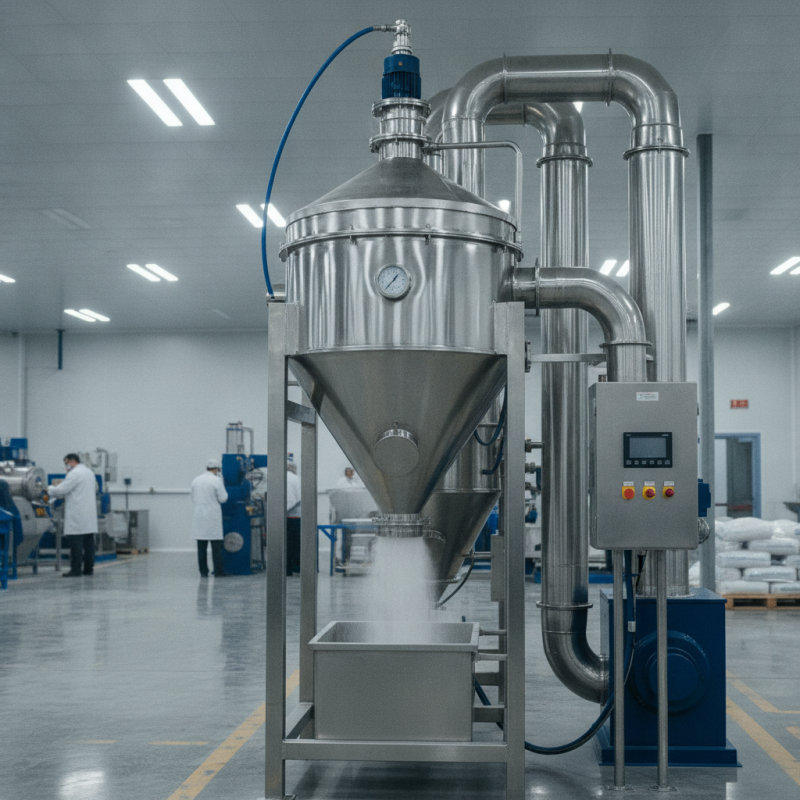
Advantages of Enhanced Product Quality with Pressure Spray Dryers
Spray drying is revolutionizing product quality across various industries. One key advantage is the ability to produce consistent particle size and moisture content. According to industry reports, businesses utilizing pressure spray dryers achieve up to 95% yield in their processes. This efficiency not only saves resources but also enhances overall product stability.
Enhanced product quality also stems from the controlled drying environment of pressure spray dryers. The rapid evaporation minimizes thermal degradation. This results in better flavor retention in food products. A notable finding from a recent study indicates that companies applying spray drying report a 30% increase in customer satisfaction linked to improved taste profiles.
However, it’s essential to acknowledge potential challenges. Proper calibration is crucial to prevent quality inconsistencies, and the initial investment can be steep. Regular maintenance is also necessary to ensure optimal performance. Overall, while there are costs and complexities involved, the benefits to product quality are evident and impactful.
Increased Production Efficiency through Automated Spray Drying Processes
The automated spray drying process significantly boosts production efficiency for businesses. By integrating pressure spray dryers, companies can achieve consistent product quality with minimal manual intervention. This system allows for rapid evaporation and reduces drying time, ensuring that products retain their essential nutrients. The precise control of spray nozzles optimizes the drying process, resulting in uniform particles and enhancing overall performance.
Businesses face challenges in scaling up their operations. Manual drying methods often lead to uneven consistency and longer production times. In contrast, pressure spray dryers offer a streamlined solution. While initial investment may seem high, the long-term benefits can outweigh costs. It’s crucial to evaluate performance metrics regularly after implementation.
Automated systems require skilled staff for operation and maintenance. Employee training is essential. However, there may be a learning curve associated with new technology. Monitoring and adjusting the settings will also be necessary for maximizing efficiency. This iterative process allows for continuous improvements, ensuring that the system meets the evolving demands of the market.
Cost-Effectiveness of Pressure Spray Drying in Industrial Applications
Pressure spray drying has become a game changer for many businesses. This method significantly reduces operational costs. The efficiency of water removal translates to lower energy consumption. When companies save energy, they also cut down their expenses. This aspect appeals to businesses focused on long-term sustainability.
Moreover, pressure spray drying preserves product quality. Products retain their nutritional value while being processed. However, achieving perfect results can be challenging. Some operators may struggle with optimal pressure settings. This inconsistency can lead to variations in product texture and taste. Nevertheless, continuous improvements in technology help address these issues over time.
Cost-effectiveness is a crucial factor for industries. The initial investment in pressure spray dryers can be significant. Yet, the long-term savings on raw materials and energy often outweigh this. Companies can also increase production efficiency. As a result, businesses can meet market demands swiftly. Balancing cost and quality remains a complex challenge, but the rewards are tangible.
Versatility of Pressure Spray Dryers for Various Materials and Industries
Pressure spray dryers are increasingly popular due to their versatility. They can handle various materials, from food products to pharmaceuticals. This adaptability makes them invaluable in multiple industries. According to the Spray Drying Association, nearly 40% of all spray-dried products come from the food sector. Drying efficiency and product quality are especially crucial here.
Pharmaceutical manufacturers also benefit from spray dryers. They can create fine powders necessary for inhalable medications. A report from Grand View Research shows the global spray drying equipment market is expected to reach over $5 billion by 2027. This growth reflects the rising demand for high-quality, consistent products. However, some operators still face challenges, such as maintaining optimal drying conditions.
The ability to scale production easily is a notable advantage. Businesses can adjust parameters to suit different materials or batch sizes. Yet, it requires careful training and oversight. Even with such advanced technology, errors in the drying process can affect product integrity. Awareness of these pitfalls ensures better operational management in the long run.
Top 10 Benefits of Using Pressure Spray Dryers for Businesses
| Benefit | Description | Applicable Industries |
|---|---|---|
| High Efficiency | Rapid drying process results in increased productivity. | Food, Chemicals |
| Versatility | Can handle a variety of materials and formulations. | Pharmaceuticals, Cosmetics |
| Controlled Process | Allows for precise control of drying conditions. | Food, Nutraceuticals |
| Quality Output | Produces high-quality, uniform powders. | Chemical, Food |
| Scalability | Easily scalable from laboratory to industrial volumes. | Pharmaceuticals, Chemicals |
| Cost-Effective | Reduction in energy and raw material costs. | Food, Agriculture |
| Environmentally Friendly | Minimizes waste and optimizes resource use. | Agriculture, Food |
| Enhanced Shelf Life | Improved resistance to spoilage and degradation. | Food, Pharmaceuticals |
| Potential for Innovation | Enables the development of new products and formulations. | Pharmaceuticals, Food, Chemicals |
Environmental Benefits of Using Pressure Spray Drying Technology
Pressure spray drying technology has significant environmental advantages that can benefit businesses across various sectors. A report from the Food and Agriculture Organization (FAO) indicates that traditional drying processes often consume more energy and generate more waste. In contrast, pressure spray dryers can reduce energy consumption by up to 35%. This efficiency is critical for businesses looking to lower their carbon footprint.
Furthermore, spray drying offers a unique advantage by minimizing waste. According to a study published in the Journal of Cleaner Production, this method can reduce waste production by more than 25% compared to conventional methods. By transforming liquid materials into powder form, companies can bypass the need for disposal of excess moisture. This reduction not only supports environmental sustainability but also results in lower waste management costs.
However, it is essential to be aware of the challenges involved. The initial investment for installing pressure spray drying systems can be considerable. Businesses must weigh this against the long-term savings from reduced energy consumption and waste management costs. Adopting this technology requires a strategic approach to ensure scalability and effective implementation within existing operations.