
7 Best Diesel Fuel Generators for Reliable Power

A dependable Diesel Fuel Generator is more than a large engine in a steel frame. It is a practical choice for keeping lights, pumps, refrigeration, or essential tools running when utility power fails. The right model depends on the load, runtime, noise tolerance, and maintenance support—not just the advertised wattage. A refrigerator starting with a brief surge can demand more than its running rating suggests. That detail is easy to miss.

Diesel engine inventor Rudolf Diesel wrote, “The use of vegetable oils for engine fuels may seem insignificant today. But such oils may become in course of time as important as petroleum and coal-tar products of the present time.” His historical observation concerned fuel possibilities, not today’s generator specifications. Still, it points to a useful lesson: fuel choice matters, and operators should follow each manufacturer’s approved fuel guidance. No shortcuts there.

This guide compares seven diesel generators through practical details: rated and surge output, fuel capacity, estimated runtime, outlets, portability, and service access. Some units suit backup power at home; others make more sense on a worksite or remote property. We also consider real-world trade-offs, including weight, operating noise, and the space needed for safe placement. Numbers can look reassuring on a product page. Conditions in the field are less tidy. Use the comparisons to narrow your options, then check the manual and calculate your actual load before buying.
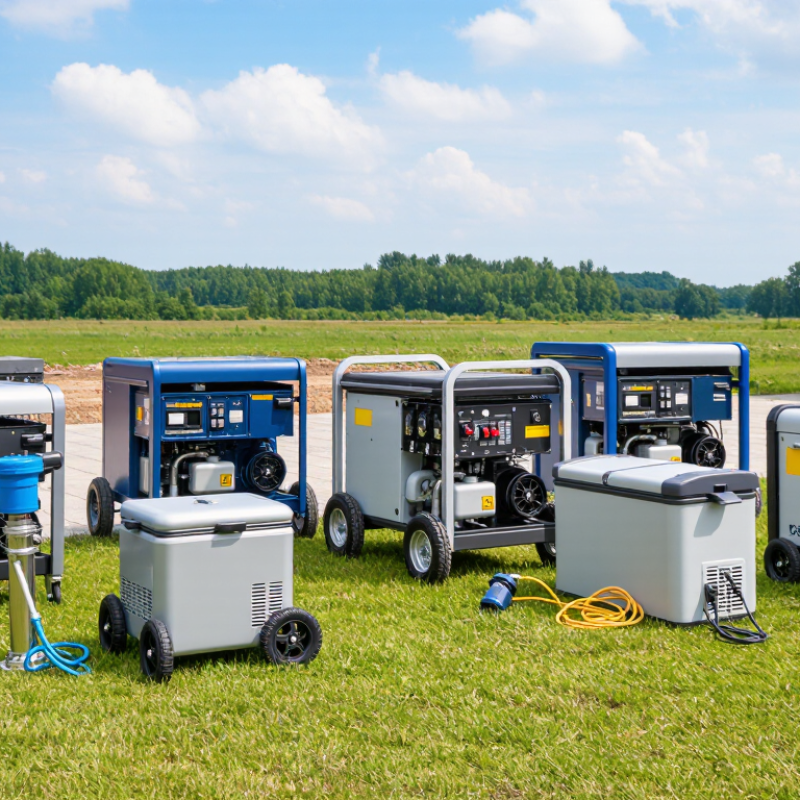
7 Best Diesel Fuel Generators for Reliable Power

How Diesel Fuel Generators Produce Reliable Power

A diesel generator turns fuel energy into electricity through a compact chain of mechanical steps. Injected diesel ignites under compression, pushing the pistons and turning the crankshaft. The shaft spins an alternator, where a magnetic field induces electrical current. It is a direct process, but stable output depends on control systems. A governor adjusts engine speed as loads change, while a voltage regulator helps keep output steady. Small fluctuations can still occur when motors start.

Fuel density supports long run times between refills. The U.S. Energy Information Administration’s Monthly Energy Review puts distillate fuel oil near 5.8 million Btu per barrel. That equals roughly 138,000 Btu per gallon. But efficiency is not guaranteed. A generator running far below its rated load may use fuel poorly and accumulate deposits. Correct sizing matters. So does maintenance: clean fuel filters, charged starting batteries, and clear airflow can prevent avoidable interruptions. In practice, I would test the unit under realistic loads, not just let it idle. A quiet idle proves little. That check is easy to overlook.

Key Factors for Evaluating Diesel Generator Performance

A diesel generator’s nameplate rating is only a starting point. Compare its fuel use at 25%, 50%, and 75% load, not just at full output. The U.S. Department of Energy’s Alternative Fuels Data Center lists diesel at about 137,000 Btu per gallon. That energy content helps estimate runtime, but actual consumption depends on engine condition, load, and temperature. A small site detail matters: a heater, pump, and compressor starting together can briefly demand far more power than their steady-running figures suggest.

Efficiency figures need context.
The U.S. Department of Energy’s reciprocating-engine CHP fact sheet gives electrical-efficiency ranges of roughly 25% to 50%, depending on engine and configuration. That is useful background, not a guaranteed rating for a standalone diesel generator. Ask for the manufacturer’s fuel-consumption curve and test data at the loads you expect to run. Still, a tidy spreadsheet can flatter a weak setup.

Check voltage and frequency stability, step-load response, and performance at the site’s altitude and summer temperature. ISO 8528-5 defines performance classes for generator-set behavior under changing loads, offering a common basis for comparison. Request a witnessed load-bank test, and record recovery after a sudden load increase. Test the actual transfer sequence too. It can expose an overlooked delay.

Seven Diesel Fuel Generators for Different Power Needs

Diesel generators suit very different power needs, from a few essential appliances to demanding worksite equipment. A compact portable unit can keep lights, a refrigerator, and basic tools running during an outage. It is easier to move, but its limited output calls for careful load planning. Small, steady loads work best.

A mid-size jobsite generator can support several power tools, while a trailer-mounted model is useful when crews need power at changing locations. For a rural property, a farm-duty unit may run pumps and workshop equipment for longer periods. A residential standby generator can be connected to selected home circuits by a qualified installer. Check the starting demands of motors, not just their running wattage.

Commercial buildings may need a larger standby unit to support essential systems, while industrial sites often require three-phase output for heavy machinery. Sizing is where even careful buyers sometimes guess. List the equipment, note which items start together, and allow a sensible reserve. Also compare fuel use, service access, noise, and enclosure protection. A diesel engine needs routine maintenance, and every generator must operate outdoors with exhaust kept away from occupied spaces. The quiet model still makes noise.

7 Best Diesel Fuel Generators for Reliable Power

Seven diesel generator power classes for different needs

The chart compares representative rated-output classes, from small backup units to larger commercial systems. These are illustrative capacity levels, not specifications for particular models; actual output depends on the generator and its operating conditions.

Comparing Capacity, Runtime, Fuel Use, and Portability

Choosing among seven diesel fuel generators starts with the loads they must support. Add the running watts of essential equipment, then account for motors that need extra power when starting. A refrigerator, pump, and work lights may fit a smaller unit than several power tools running together. Leave some capacity in reserve; operating at the limit can reduce flexibility.

Runtime figures need context. Check the fuel-tank size and the load used for the manufacturer’s estimate, since a generator running near full capacity will use fuel faster. Compare fuel consumption at a similar output, not just advertised hours per tank. Real conditions vary. Cold starts, maintenance, and changing loads all affect performance. Small details matter.

Portability also has trade-offs. A high-capacity generator may weigh enough to require wheels, a ramp, or two people for safe handling. Measure doorways and storage space before choosing, and check whether the frame has practical lifting points. For frequent moves between job sites, a smaller model may be easier to manage, even if it needs more refueling. I would not treat any single runtime number as a guarantee; match capacity, fuel use, and transport needs to the actual work.

Selecting and Maintaining a Generator for Your Application

Choosing a diesel generator starts with the loads it must actually carry. List running watts, then account for motor-starting surges from pumps, compressors, and refrigeration. Add headroom for future equipment, but avoid oversizing so much that routine operation stays lightly loaded. Check the unit’s continuous rating, ambient-temperature limits, altitude derating, and transfer-switch compatibility. A load-bank test can expose gaps that a spreadsheet misses. I would revisit estimates after testing; paper calculations can be optimistic.

Fuel planning matters, too. The U.S. Energy Information Administration’s carbon dioxide emissions coefficients assign distillate fuel 10.19 kilograms of CO2 per gallon burned. Use that figure alongside expected run hours to estimate fuel needs and emissions. Easy to miss. Store fuel in an approved, clean tank, check for water, and follow the engine maker’s schedule for sampling or treatment. Diesel can look clear while contamination is developing.

Maintenance should be specific to the duty cycle and installation, not guessed from a generic checklist. Inspect coolant, oil, belts, battery terminals, air filters, and leaks; record readings and service dates. NFPA 110’s requirements for covered emergency power systems generally include monthly exercising for at least 30 minutes, subject to the adopted edition and site conditions. Exercise under load where required, and verify that alarms, ventilation, and exhaust paths work. A quiet test is not always a useful test.

7 Best Diesel Fuel Generator Types for Reliable Power — Selecting and Maintaining a Generator for Your Application
Generator Type Typical Output Range Best-Suited Applications Approx. Fuel Use at 50% Load Key Selection and Maintenance Considerations
Compact portable 3–8 kW Small job sites, service vehicles, tools, and limited backup for essential circuits About 0.4–1.4 L/hour (0.1–0.4 US gal/hour) Check starting-watt requirements for motor-driven tools. Keep the unit level, inspect cords and connections, and follow the engine maker’s oil and filter schedule.
Small standby 10–20 kW Homes, small workshops, and essential lighting, refrigeration, or heating loads About 1.3–3.5 L/hour (0.3–0.9 US gal/hour) Size for the loads that must run together and account for motor-starting surges. Use a properly installed transfer switch and exercise the system according to its instructions.
Residential whole-property standby 20–50 kW Larger homes or properties with several essential electrical loads About 2.5–8.8 L/hour (0.7–2.3 US gal/hour) Confirm the service-panel load, phase, voltage, and transfer-switch rating. Keep the exhaust outdoors and away from openings; test starting and transfer operation regularly.
Light-commercial standby 50–100 kW Retail premises, offices, small farms, and light industrial facilities About 6–17.5 L/hour (1.6–4.6 US gal/hour) Check whether the required supply is single-phase or three-phase and verify load balance. Inspect coolant, belts, hoses, batteries, and fuel condition as directed by the service schedule.
Mid-size commercial 100–250 kW Larger buildings, workshops, agricultural operations, and critical backup systems About 12.5–43.8 L/hour (3.3–11.6 US gal/hour) Assess starting currents, power quality, and the need for load sequencing. Plan fuel storage for the expected outage duration and check applicable permitting and emissions requirements.
Industrial standby 250–750 kW Factories, hospitals, data facilities, and other sites with substantial backup loads About 31–131 L/hour (8.2–34.6 US gal/hour) Have qualified professionals verify fault current, protection, ventilation, exhaust routing, and installation requirements. Use scheduled load-bank testing where required by the application.
Large prime-power or rental unit 750–1,500 kW Large temporary power projects, remote operations, and sites needing extended or prime-rated supply About 94–263 L/hour (24.8–69.5 US gal/hour) Confirm the prime or standby rating matches the duty cycle; ratings are not interchangeable. Plan fuel delivery, operator access, service intervals, and parallel operation with a qualified specialist.
Fuel-use figures are broad planning estimates for 50% electrical load, not guaranteed specifications. Actual consumption varies with engine design, generator efficiency, load, altitude, temperature, and maintenance condition. Compare manufacturer data at the expected operating load, and follow the equipment manual for inspection, oil, filter, coolant, battery, and fuel-system service intervals.