
What Is the Best Jewelry Equipment in 2026?

Choosing the best Jewelry Equipment in 2026 is less about buying the newest machine and more about matching tools to real bench work. A jeweler making delicate repairs needs different equipment from a studio producing repeated cast pieces. A bright product photo cannot tell you whether a flex shaft vibrates, a soldering station holds steady heat, or a microscope feels comfortable after an hour. Small details matter.

Goldsmith and educator Charles Lewton-Brain is known for practical, hands-on teaching. A fair paraphrase of that approach is: “Choose tools for the work you actually do, not the workshop you imagine.” That is a useful starting point, not a universal buying rule. This guide will compare essential equipment by purpose, precision, durability, safety features, and value. It will also consider space, maintenance, and the cost of compatible accessories. A lower-priced tool can be the smarter choice. Sometimes, it is not. For example, a well-balanced flex shaft may reduce hand fatigue, while a poorly supported polishing motor can spread dust across a small bench. The difference is tangible.

There is no perfect setup. Budgets, materials, skill levels, and production goals vary, and equipment specifications do not tell the whole story. The recommendations ahead will distinguish core tools from optional upgrades and point out trade-offs buyers may overlook. Some judgments remain imperfect; real workshop conditions are hard to capture in a checklist. Still, careful comparison can make a purchase more reliable—and help each jeweler build a safer, more capable workspace.
What Is the Best Jewelry Equipment in 2026?

What Jewelry Equipment Includes in 2026

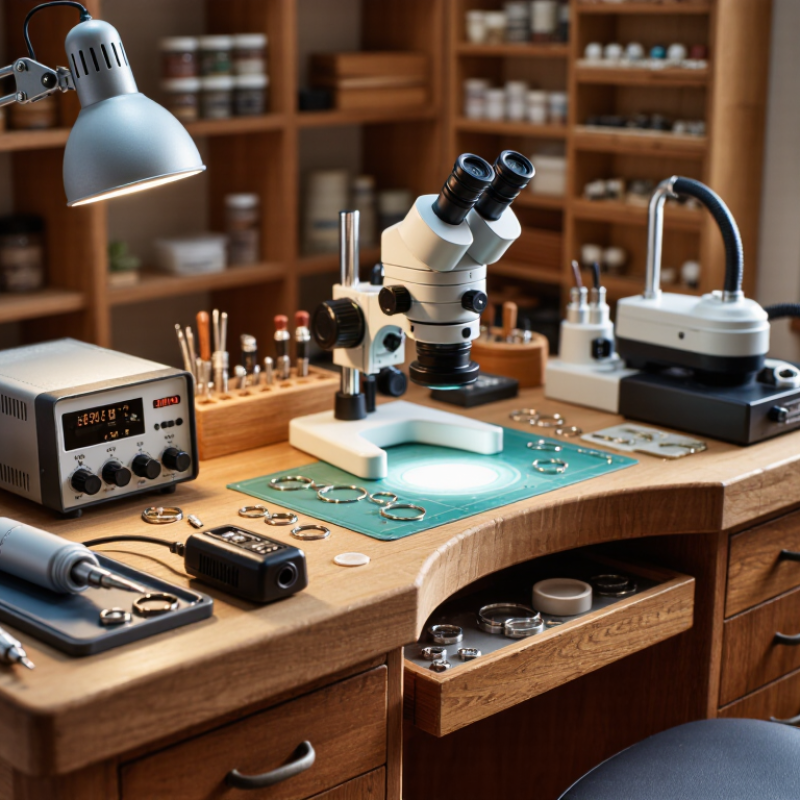
In 2026, jewelry equipment covers the tools used to design, shape, join, finish, and inspect pieces. A jeweler’s bench may hold a bench pin, jeweler’s saw, files, pliers, and a small vise. Calipers and ring gauges help check dimensions before metal is cut or shaped. Small details matter.

Forming tools include hammers, mandrels, rolling mills, and drawplates. Soldering equipment typically includes a torch, heat-resistant surface, tweezers, and suitable safety gear. Good ventilation and clear work surfaces matter, especially when heating materials or polishing. A polishing motor, abrasive papers, and hand buffs can bring out different finishes. For close inspection, a loupe or microscope helps reveal rough edges and tiny setting flaws.

Digital tools are part of the picture, too. Design software can prepare models for casting or 3D printing, while a digital scale supports careful material measurement. Not every studio needs everything. The categories overlap, which can make choosing equipment confusing. A costly machine may sit unused if it does not fit the maker’s workflow. Match tools to the work, check that they are maintained, and leave room for learning; even experienced makers sometimes need to refine their setup.

Core Tools Used in Jewelry-Making Processes

The best jewelry equipment in 2026 is the equipment suited to the workbench, materials, and maker. Core tools shape each step, from cutting metal to finishing a piece. A bench pin gives steady support for sawing, while a jeweler’s saw and fine blades help create controlled cuts. Files and pliers refine edges and bends. Small details matter.

For soldering, use a stable, heat-resistant surface, a suitable torch, and a third hand to hold components. Eye protection and good ventilation are essential. A flex-shaft tool can help with drilling and surface work, but it takes practice; rushing can leave scratches or uneven holes. Calipers are useful for checking dimensions, though careful measuring cannot replace a test fit.

Tips: Keep blades, files, and polishing tools organized. Check saw tension before cutting, and practice on scrap metal first. A clean work area helps prevent small parts from disappearing.

Choose polishing equipment that matches your material and desired finish. Start with gentle abrasives, then move to finer compounds when needed. More powerful tools are not automatically better; excess pressure can round crisp edges or overheat a small piece. Build a basic kit before adding specialized equipment. One tool may seem indispensable in a tutorial but sit unused at your bench. Reassess your setup as your projects change.

How to Evaluate Equipment for Different Jewelry Tasks

What Is the Best Jewelry Equipment in 2026?
How to Evaluate Equipment for Different Jewelry Tasks

The best equipment depends on the job, not the latest feature list. For stone setting, a stable bench pin, bright adjustable lighting, and a microscope can improve control around tiny prongs. For cutting and polishing, compare speed control, vibration, dust capture, and how easily parts can be cleaned. For soldering, assess heat control, ventilation, and safe access to tools. A machine that excels at one task may be awkward for another.

Safety data helps make comparisons practical. NIOSH’s 1998 noise criteria document recommends limiting occupational exposure to 85 dBA over eight hours. If grinding silica-containing materials, OSHA’s silica standard sets a 50 microgram-per-cubic-meter limit for an eight-hour time-weighted average. These figures make noise ratings and dust extraction worth checking, rather than treating them as optional extras. Still, published limits do not replace a task-specific risk assessment.

Tips: Test equipment with the materials and motions you actually use. Check warranty terms, replacement parts, and maintenance access before buying. Even a powerful tool can feel clumsy at the bench; that is easy to overlook in a showroom. Start with one frequent task, record setup time and finish quality, then reassess.

What Is the Best Jewelry Equipment in 2026? — How to Evaluate Equipment for Different Jewelry Tasks

There is no single best tool for every jewelry task. Compare equipment by the work it must perform, its control and capacity, the materials involved, and the safety and maintenance requirements.
Jewelry Task Suitable Equipment Useful Capabilities What to Evaluate Safety and Material Considerations
Cutting sheet metal and piercing patterns Jeweler’s saw, bench pin, and appropriately sized saw blades Manual control for straight cuts, curves, and internal openings in thin sheet and wire. Check frame rigidity, throat depth, blade availability, tensioning, and how comfortably the frame fits the work. Finer blades suit thinner stock and detailed cuts; blade choice should match material thickness. Secure the work, keep fingers clear of the blade path, and use eye protection. Saw blades are consumables and should be replaced when dull or damaged.
Drilling, shaping, and setting preparation Flexible-shaft rotary tool with compatible burs, drills, and abrasive accessories Variable-speed rotary work for drilling, grinding, carving, and finishing small areas. Assess speed control, handpiece comfort, accessory compatibility, vibration, and ease of changing tools. A foot control can help regulate speed while keeping both hands available. Use eye protection and suitable dust extraction. Secure small work securely; rotating accessories can catch loose hair, clothing, or gloves.
Reducing or texturing metal stock Jeweler’s rolling mill with appropriate flat or textured rolls Can reduce the thickness of suitable metal stock and produce repeatable rolled textures with compatible rolls. Verify the roll width and opening accommodate the intended stock. Check roll alignment, adjustment smoothness, frame stability, and whether the mill is designed for the materials and workload planned. Follow the equipment’s stated reduction limits and operating instructions. Keep fingers clear of the rolls and never force stock through a mill.
Soldering and joining metal Jewelry torch, suitable fuel system, soldering surface, and heat-control tools Localized heat for joining compatible metals with an appropriate solder and flux. Match the torch’s controllable flame and heat output to the size of the work. Evaluate stable flame adjustment, reliable fuel connections, and availability of suitable tips and replacement parts. Use effective ventilation and a non-combustible work area. Keep fuel cylinders secured and follow their handling instructions. Heated metal can remain hot after it stops glowing.
Polishing and surface finishing Bench polishing motor or guarded polishing station with suitable wheels Buffing and polishing with wheels and compounds selected for the metal and finish. Check stability, guarding, dust collection, wheel compatibility, and access to the work. For regular use, evaluate how effectively the station controls polishing dust. Wear eye protection and use appropriate dust collection. Tie back hair and avoid loose clothing near rotating wheels. Use separate wheels or clean them when changing compounds or materials.
Inspecting small details and settings Jeweler’s loupe, bench magnifier, or stereo microscope Magnified viewing for checking prongs, solder joints, surface defects, and fine fabrication details. Consider useful magnification, working distance, lighting, field of view, and comfort during extended inspection. Higher magnification is not automatically better if it reduces the visible area or working space. Use bright, well-positioned lighting and take regular breaks during prolonged close work. Magnification helps inspection but does not replace secure handling of sharp tools.
Cleaning suitable finished pieces Ultrasonic cleaner or manual cleaning setup Ultrasonic cleaning can help dislodge soil from compatible items with complex surfaces or crevices. Evaluate tank capacity, temperature control, timer, and cleaning-solution compatibility. Choose capacity based on the largest items normally cleaned, not only small samples. Ultrasonic cleaning is not appropriate for every gemstone or construction. Porous, fractured, treated, assembled, or delicate pieces may be damaged; confirm suitability before cleaning. Follow the cleaning solution’s safety instructions.
Fine joining or repair on heat-sensitive assemblies Jewelry laser welder operated by a trained user Can make localized welds and is used for some repairs where limiting heat spread is important. Assess the work envelope, controls, viewing system, service requirements, training, and compatibility with the metals and repair types involved. Consider operating and maintenance costs as well as purchase price. Laser equipment requires appropriate guarding, training, and eye-safety controls. Confirm that the machine and workspace meet applicable safety requirements.

How to choose: Start with the tasks performed most often, then compare working capacity, control, compatibility with your materials, dust or fume management, maintenance, training needs, and total operating cost. Always consult the equipment manual and verify that a process is suitable for the specific metal, stone, or finished piece.

Best Equipment Choices by Skill Level and Workshop Type

For a beginner bench, choose a sturdy bench pin, jeweler’s saw, files, pliers, a torch, and eye protection before buying powered machines. Add a flexible-shaft tool only when handwork becomes a bottleneck. Keep it simple. In a shared workshop, learn its ventilation and tool rules before bringing in equipment; duplicate only the tools you use every session.

A home studio needs careful attention to dust, fumes, and noise. For stone cutting or grinding, plan wet methods or local exhaust, not just an open window. OSHA’s respirable crystalline silica standard sets an eight-hour exposure limit of 50 micrograms per cubic meter, with an action level of 25 micrograms. That is a useful benchmark, not a substitute for assessing the materials and processes in your own shop. A polished bench is not proof of safe air.

For experienced makers and small production studios, prioritize repeatability: a calibrated scale, task lighting, reliable polishing extraction, and machines matched to daily work. BLS reports a 2024 median annual wage of $49,140 for jewelers and precious-stone and metal workers. That figure is not a business budget, but it argues for weighing purchases against realistic revenue. My own bias is toward buying slowly; it can also mean tolerating inefficient tools too long. Cite: OSHA, Respirable Crystalline Silica Standard; U.S. Bureau of Labor Statistics, Occupational Outlook Handbook.

Best Jewelry Equipment in 2026: Typical Setup Budget by Skill Level and Workshop Type

Estimated equipment budget ranges in USD for a basic setup. Home beginner kits typically cover hand tools and a small work surface; independent benches add equipment such as a flex shaft, torch, and polishing tools; small production workshops may also require Casting Equipment and dedicated ventilation. Actual costs vary by location, specifications, and new or used condition.

Safety, Maintenance, and Emerging Equipment Trends in 2026

What Is the Best Jewelry Equipment in 2026?
Safety, Maintenance, and Emerging Equipment Trends in 2026

The best equipment is not always the newest. In 2026, a dependable bench setup starts with effective local exhaust ventilation, eye protection, and well-maintained polishing tools. Fine dust can collect around motors, wheels, and work surfaces. Clean extraction filters and inspect guards, cords, and tool rests on a set schedule. The U.S. National Safety Council’s Injury Facts 2024 estimated that work-related injuries cost $176.5 billion in 2023 across the United States. That figure covers many industries, not jewelry shops, but it underscores the value of prevention.

Emerging equipment trends include quieter variable-speed motors, extraction systems that indicate filter condition, and digital maintenance logs. These features can help teams spot wear before a tool fails. They do not replace training or hands-on inspection. A sensor may miss a loose wheel. That is worth remembering. Choose equipment that fits the task, has clear operating instructions, and can be serviced safely. Keep a dated record of repairs and recurring problems; patterns often reveal what needs attention.

Tips: Before each shift, check the wheel, guard, and extraction airflow. Stop using equipment that vibrates unusually. Record the issue, isolate the tool, and have a qualified person inspect it before returning it to service.