
7 Best TNC Cable Assemblies for Global Buyers
A Tnc Cable Assembly can look simple: two threaded connectors, a cable, and a clear path for an RF signal. But small differences in impedance, cable construction, connector finish, and test documentation can affect whether it performs reliably in service. For global buyers, the challenge is not just finding a supplier. It is matching the assembly to the equipment, environment, and installation requirements.
Paul Neill, an RF connector pioneer, helped shape the field of coaxial interconnects. A practical buying principle inspired by his engineering legacy—not a verified direct quotation—is: “A dependable RF link begins with a sound interface.” That is worth remembering when comparing the seven options in this guide. Check the required impedance and operating frequency, then review cable loss, shielding, connector compatibility, and specified environmental limits. Ask for clear drawings and test results. They help expose mismatches before an assembly reaches the installation bench.
Small details matter. A threaded coupling can support a secure connection, but it cannot correct a poorly specified cable. Buyers should also confirm lengths, quantities, labeling, and packaging before approving an order. These checks are especially useful when products cross borders or move through several distributors. No single assembly suits every job. Some details may still need direct confirmation with the manufacturer; product listings do not always tell the whole story. This overview compares seven TNC cable assembly choices and highlights the questions that help buyers assess fit, documentation, and practical value.
What TNC Cable Assemblies Are and How They Work
7 Best TNC Cable Assemblies for Global Buyers
What TNC Cable Assemblies Are and How They Work
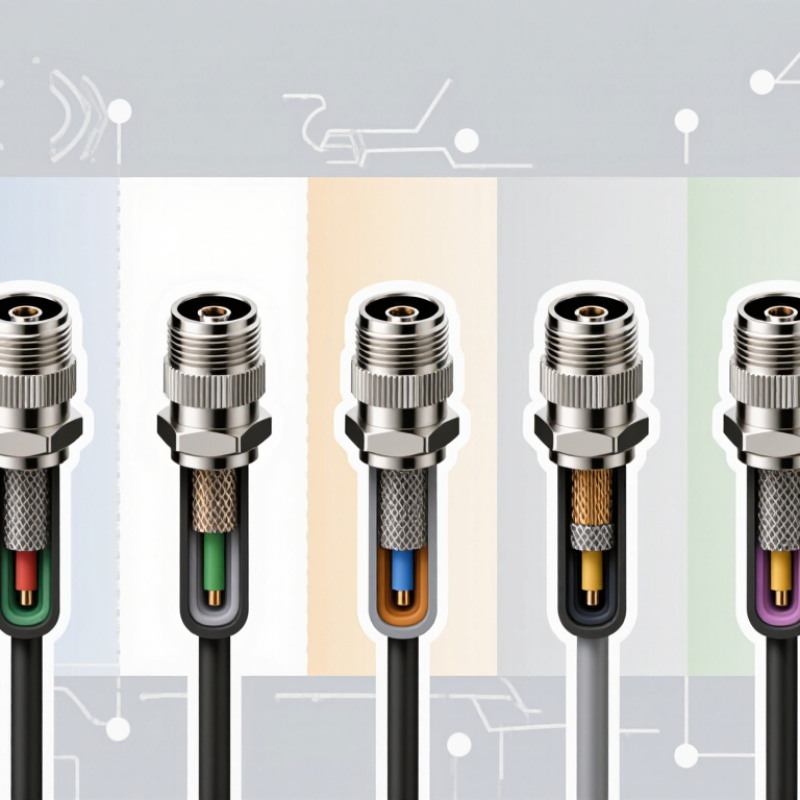
A TNC cable assembly is a coaxial cable fitted with TNC connectors at one or both ends. It carries radio-frequency signals between equipment such as antennas, receivers, and test instruments. Inside, a center conductor carries the signal, while the surrounding dielectric and braided or foil shield help control interference. The connector’s threaded coupling keeps the connection secure. That makes it useful where vibration could loosen a push-on connection.
Many TNC assemblies are designed for 50-ohm systems, but that should never be assumed. Cable type, connector quality, and assembly length all affect performance. At higher frequencies, a poorly matched connection can cause signal reflections and measurable loss. Specifications matter. Check the operating frequency, impedance, cable loss, and connector gender against the equipment requirements. Also inspect the interface: the threads should turn smoothly, and the center pin should sit straight. One easy-to-miss detail is cable routing; a sharp bend near the connector can strain the joint over time.
Tips: Before ordering, confirm both connector ends and the required cable length. Leave a little slack for installation, but avoid loose coils near sensitive equipment. Tighten the coupling by hand unless the manufacturer specifies a tool. Then check the connection and signal path. It is a small step, but it can prevent a frustrating fault.
Key Specifications to Compare Before Buying
For TNC cable assemblies, compare impedance and frequency range before price. Most RF systems require 50-ohm assemblies, but confirm this against the equipment specifications. Check the rated frequency, insertion loss, and VSWR across the full operating band, not just at one test point. Small differences matter. A cable that performs well at a low frequency may lose more signal near its upper limit.
Look closely at connector gender, cable type, and assembly length. TNC connectors use a threaded coupling, which helps maintain a secure connection, but the correct interface still matters. Longer runs and thinner cables can increase signal loss. Ask for test data at the finished cable length when performance is critical. Shielding, temperature range, and environmental protection also deserve attention, especially for outdoor or moving equipment. Measure twice. One detail is easy to overlook: a datasheet may describe the connector’s rating, not the complete assembly’s rating. Compare the assembled cable’s limits and test conditions, and clarify any unclear figures with the supplier before ordering. That extra check can prevent a costly mismatch.
7 Best TNC Cable Assemblies for Global Buyers — Key Specifications to Compare Before Buying
How to read this chart: Lower attenuation means less signal loss along the cable. Values are representative approximations in dB per 100 ft at 1 GHz; actual performance varies by cable construction, length, connectors, and manufacturer. Before buying, confirm impedance, operating frequency, power rating, connector gender, cable length, and environmental requirements for your application.
Seven TNC Cable Assembly Types for Global Buyers
TNC cable assemblies come in several practical forms, and the right choice depends on routing, impedance, and equipment access. A straight-to-straight assembly suits open spaces where the cable can leave the connector without bending sharply. A right-angle assembly helps when a panel or nearby surface restricts clearance. Check the bend radius; forcing a tight turn can damage the cable. A bulkhead assembly mounts through a panel, creating a fixed connection point. A cable-to-panel assembly may use a bulkhead connector at one end and a plug at the other. Small details matter. Panel thickness and mounting hardware need checking before an order is placed.
Three other types address signal and handling needs. A 50-ohm TNC assembly is common in radio-frequency systems, while a 75-ohm version may suit specific video or measurement setups. Match the impedance across the full signal path. Low-loss assemblies use cable selected to limit attenuation, though performance depends on length and operating frequency. Phase-stable assemblies are designed to reduce changes in electrical phase when the cable moves or temperature shifts. This can matter in measurement systems. These categories can overlap: a low-loss assembly may also have right-angle connectors. Compare connector gender, cable diameter, shielding, operating range, and test documentation. Product descriptions do not always make trade-offs obvious, so verify the details against the equipment and installation conditions.
7 Best TNC Cable Assemblies for Global Buyers — Seven TNC Cable Assembly Types for Global Buyers
A practical comparison of seven common 50-ohm TNC cable assembly configurations. “Best” depends on cable length, frequency, flexibility, environment, and installation requirements.
| Assembly type | Typical cable construction | Typical cable diameter | Approx. attenuation at 1 GHz | Typical strengths | Common applications | Buyer considerations |
|---|---|---|---|---|---|---|
| Flexible general-purpose TNC assembly | RG-58-class, 50-ohm coaxial cable | About 5 mm | About 45–55 dB/100 m | Widely available, flexible, and suitable for general RF connections | Test equipment, antennas, wireless devices, and short-to-medium cable runs | A useful all-round choice; account for signal loss on long runs and repeated flexing. |
| Miniature flexible TNC assembly | RG-174-class, 50-ohm coaxial cable | About 2.8 mm | About 75–90 dB/100 m | Small, lightweight, and easy to route through compact assemblies | Portable equipment, compact antennas, and space-constrained enclosures | Its small size comes with higher attenuation and generally lower power-handling capacity than larger cables. |
| High-temperature miniature TNC assembly | RG-316-class, PTFE-insulated 50-ohm coaxial cable | About 2.5 mm | About 65–80 dB/100 m | Compact construction with insulation suited to elevated-temperature conditions | Instrumentation, aerospace electronics, and tightly routed RF connections | Check the cable and connector temperature ratings, bend radius, and attenuation at the operating frequency. |
| High-power flexible TNC assembly | RG-213-class, 50-ohm coaxial cable | About 10.3 mm | About 20–25 dB/100 m | Lower loss and greater power capability than miniature cable types | Base-station connections, radio equipment, and installations needing a robust cable | The larger cable is less flexible; confirm connector compatibility and the assembly’s power rating. |
| Low-loss 240-class TNC assembly | 50-ohm coaxial cable with a diameter of approximately 6 mm | About 6 mm | About 20–30 dB/100 m | Balances flexibility, size, and lower loss than many general-purpose miniature cables | Mobile antennas, building installations, and medium-length RF runs | Confirm the cable’s exact construction and connector termination; products in this size class vary. |
| Low-loss 400-class TNC assembly | 50-ohm coaxial cable with a diameter of approximately 10 mm | About 10 mm | About 12–17 dB/100 m | Low attenuation for longer feeder runs | Outdoor antenna feeders, communications infrastructure, and fixed RF installations | Check routing space, minimum bend radius, weather protection, and whether the TNC connector is rated for the cable size. |
| Semi-rigid TNC assembly | 50-ohm coaxial cable with a solid outer conductor, commonly 0.141-inch size | About 3.6 mm | About 20–30 dB/100 m | Stable geometry, strong shielding, and reliable routing when formed during installation | RF modules, laboratory fixtures, and compact internal equipment connections | Not intended for frequent flexing; specify the formed shape, connector orientation, and installation clearance. |
Selection note: Attenuation figures are indicative ranges for representative cable constructions at approximately 1 GHz, not guaranteed assembly specifications. Actual performance varies with cable design, length, connectors, termination quality, and operating conditions. Standard TNC assemblies are commonly 50 ohms; frequency limits and environmental ratings depend on the specific components and assembly design. Request verified test data for the required frequency range, insertion loss, return loss, temperature, and ingress-protection requirements.
How to Match Cable Assemblies to Applications and Environments
7 Best TNC Cable Assemblies for Global Buyers
Matching a TNC cable assembly starts with the equipment, not the connector alone. Check the required impedance, operating frequency, cable length, and acceptable signal loss. Many TNC assemblies use 50-ohm components, but confirm both ends match the system. A mismatch can weaken signal performance. Small details matter.
The installation environment narrows the options. For outdoor equipment, look for suitable sealing and materials that tolerate moisture and temperature changes. In vehicles or machinery, consider vibration resistance and the cable’s minimum bend radius. A cable forced around a sharp corner may fail early, even when its connectors are well made. For longer runs, compare attenuation at the frequencies you actually use; “low loss” is not a universal guarantee. It is easy to overlook routing space until installation begins.
Tips
Share the frequency range, cable length, connector gender, and expected temperature range when requesting a quote. Ask for test data or a datasheet, and verify the assembly against your equipment requirements. If the environment is uncertain, allow margin. That costs a little more, sometimes unnecessarily, but replacing a hard-to-reach cable can cost more.
Global Sourcing, Compliance, and Quality Considerations
For global buyers, a TNC cable assembly is only as dependable as its specification and supply chain. State impedance, operating frequency, cable length, connector material, and environmental requirements before comparing suppliers. Ask for measured insertion loss and return loss across the required frequency range. For outdoor use, confirm sealing and temperature ratings; a connector that fits may still fail in rain or vibration.
The World Bank’s 2023 Logistics Performance Index assessed 139 economies across customs, infrastructure, shipment arrangements, and tracking, among other factors. Use it as a country-level sourcing reference, not proof of any factory’s reliability. Check the actual production site, backup capacity, lead-time history, and lot traceability. Small details matter: can the supplier link a finished assembly to its cable batch and test record?
Quality systems need evidence. The ISO Survey 2023 recorded 1,082,448 valid ISO 9001 certificates worldwide. That’s not enough. Certification does not verify a particular TNC assembly’s RF performance or workmanship. Request a sample test report, inspection criteria, and change-control process. Where relevant, align cable and harness workmanship checks with IPC/WHMA-A-620, while separately validating connector interface and electrical performance. Paperwork can look tidy; real consistency across production lots is harder. Compare incoming inspection results over time, and question unusually perfect records.