
Who Are the Best Work Glove Manufacturers in China?
China is home to a wide range of Work Glove Manufacturers, from large export-focused factories to smaller specialists. Their catalogs may look similar, but the gloves can differ in coating thickness, seam strength, sizing, and grip. A nitrile-coated glove that grips a dry carton may feel very different when handling a damp metal part.
Former OSHA Assistant Secretary David Michaels has said, “Workplace injuries and illnesses are preventable.” That principle matters when comparing glove suppliers: protective gear should match the task, not just the purchase price. A useful review looks at materials, product testing, quality-control processes, customization options, and the clarity of technical documents. It also checks whether sample gloves perform as expected in real working conditions. Details matter.
This guide explores how to assess leading Chinese manufacturers and what questions buyers should ask before placing an order. Public product pages rarely reveal everything, especially long-term defect rates or consistency between production batches. That gap deserves attention. No single supplier is best for every workplace, and a polished catalog is not proof of dependable performance. The comparisons ahead focus on practical evidence, while recognizing that buyers still need to verify product claims and suitability for their own tasks.
What Defines a Leading Work Glove Manufacturer in China?
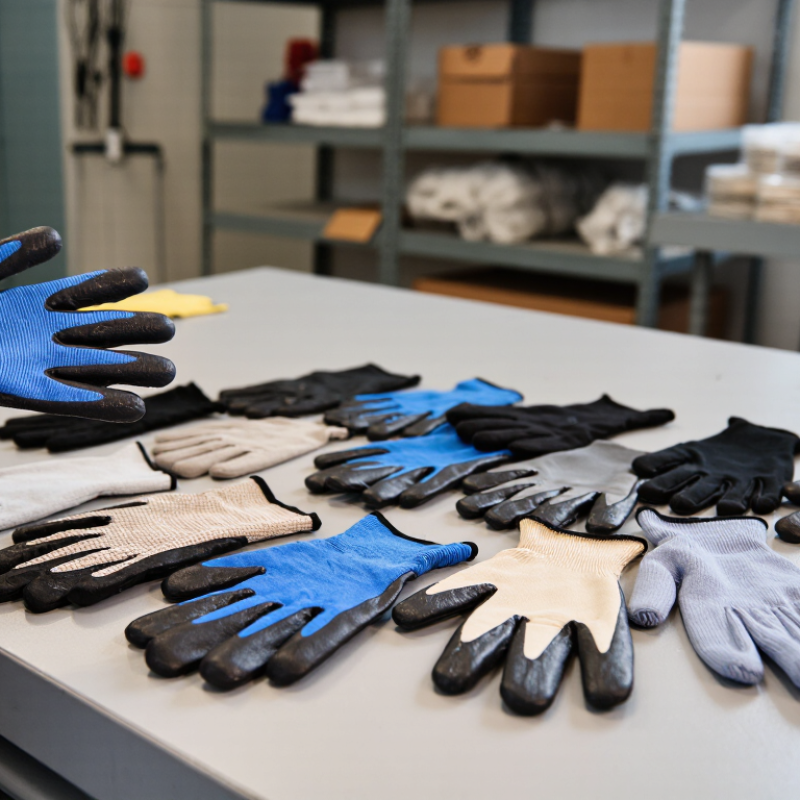
A leading work glove manufacturer in China is defined by consistent performance, not just a broad product catalog. Gloves must suit the task: cut-resistant materials for sharp edges, reinforced palms for repeated handling, and flexible cuffs that stay comfortable through a shift. Small details count. Seams should lie flat, coatings should cover the working surface evenly, and sizing should remain consistent between samples and production orders. Fit matters.
A dependable manufacturer can explain how materials are selected, how production quality is checked, and what happens when a batch falls short. Ask for product specifications and samples, then inspect stitching, grip, flexibility, and comfort during realistic handling. Clear records and direct answers are useful signs of an organized process. So is a willingness to discuss limitations, rather than promise that one glove suits every job. Even a capable factory can miss a detail; the important question is whether it identifies the cause and makes a measurable correction. Communication about lead times, customization, and order changes should be specific, too. A polished sample is helpful, but repeatable quality is what earns trust.
What Defines a Leading Work Glove Manufacturer in China?
EN 388:2016+A1:2018 Mechanical Hazard Rating Levels
EN 388 rates gloves for mechanical risks including abrasion, blade cut, tear, and puncture. This chart shows the number of possible rating levels for each test, including level 0 where applicable; the TDM cut test uses levels A–F. These scales are not directly comparable. For buyers, a manufacturer’s ability to provide relevant test results and match glove performance to the intended hazards is more useful than a single overall ranking.
Key Types of Work Gloves Made by Chinese Manufacturers
Chinese manufacturers produce several distinct work-glove types. Cut-resistant gloves often use tightly knitted yarns, sometimes with textured palms for a steadier grip on metal edges. Coated handling gloves use polyurethane, nitrile, or latex coatings; the right choice depends on oil, moisture, and required dexterity. Disposable nitrile gloves suit light-duty tasks where frequent changes matter. Chemical-resistant and heat-resistant gloves serve more specialized jobs, while leather gloves remain common for rough handling and some welding tasks.
Selection needs more than a product name. The U.S. Bureau of Labor Statistics reported 2.6 million nonfatal workplace injuries and illnesses in private industry in 2023. That figure does not prove gloves prevent every injury, but it underlines the value of matching protection to the task. For cut protection, compare tested performance levels under standards such as ANSI/ISEA 105; check the glove’s specific rating rather than relying on “cut resistant” alone. Fit matters too. A glove that bunches at the fingertips can reduce control, even if its material looks impressive.
Tips: Ask for test reports and samples. Try them with the actual tools and materials. A coating that grips dry cartons may feel slippery on oily parts. Labels help, but they are not the whole story.
How to Assess Manufacturers by Quality, Certifications, and Capacity
Assess a Chinese work-glove manufacturer through verifiable controls, not a polished sample alone. Ask for the ISO 9001 certificate’s scope, audit date, corrective-action records, and named factory address. The ISO Survey 2022 reported more than 1.2 million ISO 9001 certificates worldwide. That figure shows broad adoption, not glove-specific competence. A management certificate cannot prove cut resistance or coating consistency. Request recent independent test reports against EN 388 or ANSI/ISEA 105, covering the exact glove construction. Check abrasion, cut, tear, puncture, and dexterity results. One report is not enough.
Capacity needs physical evidence. Compare monthly output with line count, shifts, skilled operators, and bottlenecks such as dipping, curing, or sewing. Ask for three months of order, delivery, defect, and rework data. Then check batch traceability: can a carton be linked to its yarn, coating lot, and inspection record? Request a pilot order and inspect ten randomly selected pairs for sizing, seams, grip, and coating thickness. Small details matter. A capacity sheet can look convincing, yet one late raw-material delivery may shift the schedule; this risk is easy to underestimate. Record agreed tolerances in the purchase specification and arrange an independent pre-shipment inspection.
Who Are the Best Work Glove Manufacturers in China? — How to Assess Manufacturers by Quality, Certifications, and Capacity
Use this evidence-based scorecard to compare manufacturers. The weightings are suggested evaluation weights, not published rankings or verified performance data for any specific manufacturer.
| Assessment area | Dimension | Suggested weight | Evidence to request | How to assess |
|---|---|---|---|---|
| Product quality | Applicable performance testing | 20% | Current test reports for the exact glove model, construction, and intended protection claims. | For mechanical-risk gloves, check whether testing is relevant to EN 388 or ANSI/ISEA 105, as applicable to the destination market and product claim. Confirm the tested model matches the sample and quotation. |
| Product quality | Incoming, in-process, and final inspection | 15% | Inspection procedures, inspection records, defect classifications, and corrective-action examples. | Look for documented checks of materials, stitching or coating, sizing, labeling, and finished goods, with traceable records and a defined process for handling nonconforming products. |
| Certifications and compliance | Management-system certification | 10% | Certificate copies, certificate numbers, issuing-body details, validity dates, and certified-site scope. | ISO 9001 relates to quality management systems; ISO 14001 to environmental management; ISO 45001 to occupational health and safety. Verify each certificate with the issuing or accreditation body and confirm it covers the relevant site and activities. |
| Certifications and compliance | Market-specific product requirements | 10% | Product-specific declarations, technical documentation, test reports, and labeling samples for the intended market. | Confirm the applicable legal and customer requirements for the glove type and destination. A factory management-system certificate does not, by itself, prove that a glove meets a product-performance or market-access requirement. |
| Manufacturing capacity | Production capability and available capacity | 15% | Production-line details, recent output records, current utilization, staffing, and capacity by glove type. | Compare demonstrated output for the relevant product and construction with your forecast and required delivery schedule. Distinguish installed capacity from capacity currently available to your order. |
| Manufacturing capacity | Lead time and delivery reliability | 10% | Recent order and shipment records, stated production lead times, and explanations of delays or schedule changes. | Check whether quoted lead times distinguish sampling, material sourcing, production, inspection, and shipment. Compare promised dates with documented order history. |
| Supply-chain resilience | Material sourcing and traceability | 8% | Material specifications, supplier controls, batch records, and procedures for material changes. | Confirm that key materials can be traced to production batches and that substitutions are reviewed and approved before use. |
| Supply-chain resilience | Business continuity and subcontracting controls | 5% | Business-continuity procedures, subcontractor list, and controls for outsourced production steps. | Ask how disruptions are managed and whether any production or finishing is subcontracted. Confirm that outsourced work remains subject to agreed specifications and inspection. |
| Commercial and technical fit | Sampling, customization, and communication | 7% | Sample process, specification sheets, change-control records, response times, and order terms. | Evaluate how accurately the supplier converts requirements into an approved sample and controls changes to materials, design, packaging, or labeling. |
| Total suggested weighting | 100% | Score each dimension using the same evidence requirements for every supplier. | ||
Note: Standards and regulatory requirements depend on glove type, protection claim, and sales market. Verify current requirements and documents independently before placing an order.
Notable Work Glove Manufacturers and Their Specialties
China’s work glove industry includes manufacturers with distinct strengths rather than one universal leader. Some specialize in cut-resistant gloves, combining high-performance yarns with coatings that improve grip. Others focus on nitrile-coated assembly gloves, where flexible cuffs and textured palms help workers handle small parts. The right specialty depends on the task. Fit matters, too.
Leather-glove makers often serve welding, construction, and material-handling needs. Their strengths may include reinforced palms, sturdy seams, and heat-resistant materials.
Thermal-protection specialists, meanwhile, design gloves with layered linings for cold storage or outdoor work. A thick glove can protect well, but reduce finger control. That trade-off deserves a real wear test.
When comparing suppliers, buyers can request material specifications, test reports, sample pairs, and details about production consistency. Check seams, coating coverage, sizing, and grip with the tools workers actually use. Ask how defects are handled between production runs. No catalog tells the whole story. A supplier’s stated specialty is useful, but performance should be checked against the workplace conditions and the wearer’s feedback. I would not assume one sample proves every future batch.
How to Choose a Manufacturer for Your Sourcing Needs
Choosing a work glove manufacturer in China starts with the task, not the catalogue. Define the hazards, required grip, wear time, and working conditions before comparing factories. A cut-resistant glove for handling sheet metal needs different testing from a coated glove used around oily parts. Ask for current test reports, material specifications, and samples from the same production line you plan to order. ILO’s 2023 global estimates recorded 2.93 million work-related deaths and 395 million non-fatal work injuries for 2019. Gloves cannot prevent every incident, but poor fit or unsuitable protection can add avoidable risk.
Check how the manufacturer controls quality between sample approval and bulk production. Request inspection records, batch traceability, and clear answers about changes to yarn, coatings, or suppliers. Standards such as ISO 21420 and EN 388 can help you frame questions; confirm the exact test methods and performance claims for your intended market. A factory visit helps, though it may show its best day. Independent testing and a small trial order provide a more balanced view.
Tips: Send a real task description, not just a target price. Test samples after repeated washing or use, where relevant, and compare grip with the tools workers actually hold. Keep written approval samples. Small details matter. A slightly loose cuff can undermine an otherwise capable glove.