
China Best Pink Clothing Donation Bins Supplier

Finding the China Best Pink Clothing Donation Bins Supplier takes more than comparing color samples and prices. A donation bin must work in real settings: beside a busy parking lot, under changing weather, or near a community center entrance. Its opening should make clothing deposits straightforward, while its structure should withstand frequent use. Pink also needs to remain visible without making the bin difficult to identify or maintain. Small details matter.

As circular-design expert William McDonough puts it, “Waste is food.” That principle gives this topic a useful lens: a collection bin is not the whole recycling system, but it can help make clothing reuse easier to access. This guide explores how buyers can assess Pink Clothing Donation Bins, from material choices and surface finishes to access, signage, and supplier communication. Ask for clear product specifications, realistic photos, and details about maintenance. Where available, review relevant test reports rather than relying only on broad marketing claims. A polished catalog can still leave practical questions unanswered. That is worth admitting.

The right supplier should explain what a bin is designed to handle and where it may be installed. Buyers should also check whether customization affects lead times, replacement parts, or cleaning routines. These questions are not glamorous, but they prevent avoidable surprises. No single design suits every site. A thoughtful comparison can help organizations choose bins that are visible, practical, and easier to manage over time.
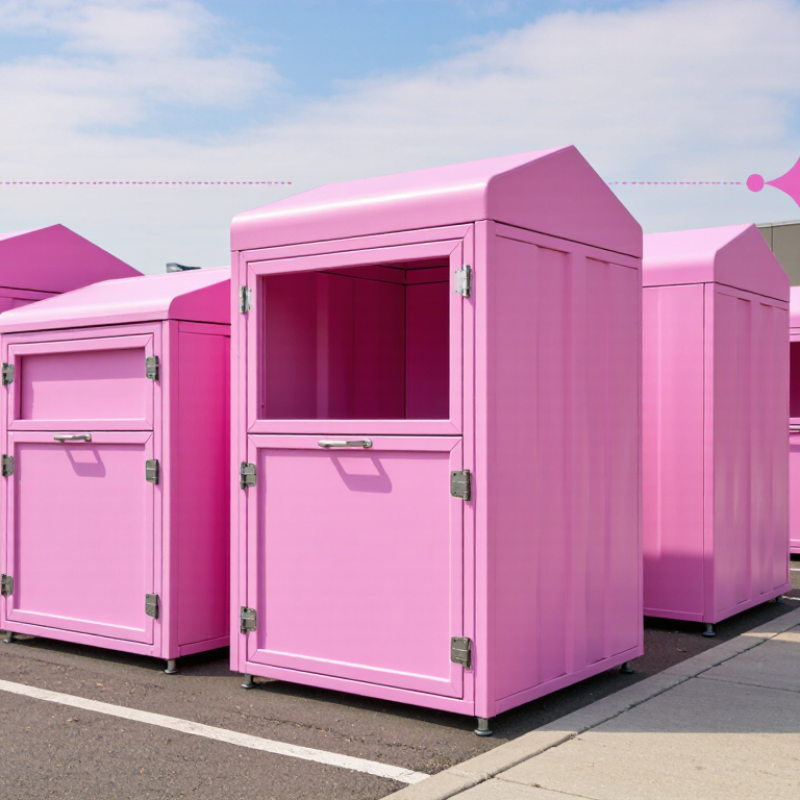
China Best Pink Clothing Donation Bins Supplier

What Pink Clothing Donation Bins Are and How They Support Textile Reuse

Pink clothing donation bins are visible collection points for garments, shoes, and household textiles, depending on the instructions printed on each bin. Their color can make them easy to spot, but it does not guarantee that every site accepts the same materials. Clear labels matter. A useful bin explains what to donate, how to prepare items, and whether textiles must be clean and dry. A sturdy lid, a secure access panel, and a wide, smooth opening can help protect donations from rain and make depositing clothes easier.

After collection, garments are typically sorted by condition and material. Wearable clothing may be prepared for reuse, while damaged fabric may be directed toward textile recovery where suitable facilities exist. This keeps usable items in circulation and can reduce the amount sent to disposal. The process is not perfect: mixed fabrics, stains, and wet items can limit what can be recovered. Donors can help by placing clean, dry items in a closed bag and checking the bin’s instructions first. Small details matter. Careful collection and honest sorting give textile reuse a more reliable start.

How Donation Bin Design Affects Safety, Capacity, and Clothing Collection

China Best Pink Clothing Donation Bins Supplier

Donation bin design affects more than appearance. A narrow, smooth-edged opening can discourage reaching inside while allowing folded shirts and trousers through. Rounded corners, a stable base, and a lockable service door help reduce contact injuries and keep stored clothing secure. A weather-resistant lid matters too; damp garments become heavier and harder to handle. Small details count.

Capacity should match the site’s donation volume and pickup schedule. An oversized bin may invite overfilling; an undersized one can leave bags beside it. The U.S. Environmental Protection Agency’s 2018 Advancing Sustainable Materials Management report recorded 17 million tons of textiles in municipal solid waste, with 2.5 million tons recycled. That figure covers textiles broadly, not clothing donations alone, but it shows the scale of material that can be missed. Clear fill-level markings and a practical collection plan help prevent overflow. Textile Exchange’s Materials Market Report 2024 estimates global fiber production reached 124 million tonnes in 2023. A bin cannot solve that challenge by itself. Pink helps visibility, but it is no substitute for safe access, sturdy construction, and regular emptying. A missed pickup still happens.

How Donation Bin Design Affects Capacity and Collection

Capacity estimates use illustrative internal dimensions and assume 80% usable volume. Sack equivalents are calculated as internal volume × 1,000 L/m³ × 0.8 ÷ 60 L; actual clothing volume and collection frequency vary. Safe access also depends on factors such as aperture design, secure doors, and anchoring, which are not measured in this chart.

Key Criteria for Evaluating Pink Clothing Donation Bin Suppliers in China

China Best Pink Clothing Donation Bins Supplier

Key Criteria for Evaluating Pink Clothing Donation Bin Suppliers in China

A reliable supplier should show more than a bright paint sample. Check steel thickness, welded seams, lid fit, and resistance to rain and UV exposure. Ask for material specifications, coating test records, production photos, and a sample inspection before approving a large order. A covered, smooth-edged deposit slot helps protect garments and reduces snagging. Confirm the pink shade against a physical sample; screens can distort color.

UNEP estimates that about 92 million tonnes of textile waste are generated worldwide each year. Its textile-sector reporting also puts the industry’s share of global greenhouse gas emissions at roughly 2–8%. These figures make durable collection equipment relevant: wet or contaminated donations may be harder to reuse. Ask suppliers about anchoring, capacity, collection access, and replacement parts. A low quotation can hide thin metal or inconsistent finishing. It happens.

Tips: Send a drawing with exact dimensions and slot size. Request a pilot unit and test it outdoors for several weeks. Check whether labels stay readable after rain and cleaning. Supplier claims matter, but a real inspection is better.

Materials, Customization, and Manufacturing Standards for Donation Bins

China Best Pink Clothing Donation Bins Supplier

Materials shape a donation bin’s service life. Powder-coated galvanized steel offers a sturdy shell and helps resist rust, while UV-resistant coating can keep pink panels brighter outdoors. For indoor locations, durable HDPE may be lighter and easier to clean. Ask for material thickness, coating details, and samples before approving production. A vivid color can still fade in strong sunlight.

Customization should fit the collection site, not just the artwork. Confirm the opening size, access door, capacity, signage area, and anchoring method. A wide opening may help with bulky clothing, but it can also invite rain if the cover design is weak. Manufacturing checks matter too: inspect welds, door alignment, sharp edges, coating coverage, and dimensions against an approved drawing. Request photos or inspection records from a finished sample. Small details matter.

Tips: Test a sample outdoors before ordering in volume. Check the pink shade in daylight, and confirm it matches your approved color reference. Ask how the supplier checks coating thickness and performs basic stability testing. These checks do not guarantee zero wear; they make differences easier to spot before shipment.

China Best Pink Clothing Donation Bins Supplier - Materials, Customization, and Manufacturing Standards for Donation Bins
Category Specification or Option Practical Details
Typical dimensions Approximately 1,200 × 1,000 × 1,800 mm (L × W × H) Commonly used as a planning reference for a freestanding collection bin. Final dimensions depend on site access, capacity, and local handling requirements.
Main material Welded carbon-steel sheet and structural sections Steel is widely used for outdoor bins because it can be fabricated into rigid enclosures and fitted with reinforced doors and frames.
Panel thickness Typically 1.2–2.0 mm steel sheet Thickness should be selected to suit the bin size, expected use, reinforcement design, and handling conditions. Thicker sections may be used for the base or frame.
Corrosion protection Galvanized steel, or prepared steel with a compatible primer and exterior coating Coating choice should reflect whether the bin is indoors, sheltered, or exposed to rain and other weather. Cut edges and weld areas need appropriate protection.
Pink finish Powder-coated finish; RAL 3015 Light Pink is one possible color reference Color can be matched to an agreed sample or color specification. Actual appearance may vary with coating texture, gloss, lighting, and substrate preparation.
Collection opening Top or front opening, often with a sloped rain cover Opening size and shape should suit the intended donated items while reducing access to the stored contents. Final design should be checked against local safety and accessibility requirements.
Access and security Hinged service door with a lockable latch Door position, hinges, lock type, and access clearance can be specified for the operator’s collection process. Reinforcement can help limit damage during repeated use.
Weather and drainage Covered seams and opening; drainage details where needed Design should help prevent water ingress without trapping moisture inside. Drainage locations should be considered alongside placement, cleaning, and site requirements.
Customization Color, dimensions, opening, door layout, decals, and instructions Artwork and wording can be supplied as print-ready files. Confirm placement, material compatibility, and whether graphics must withstand outdoor exposure.
Fabrication checks Dimensional inspection, weld inspection, door and lock function checks A documented inspection plan can verify agreed drawings, fit, finish, and operation before packing. Acceptance criteria should be agreed before production.
Coating checks Film thickness and visual finish; additional tests by agreement For suitable coating systems, tests such as adhesion or corrosion-resistance testing may be specified using relevant methods, including ISO 2409 or ISO 9227. Test method and acceptance limits should be agreed for the product.
Manufacturing system Quality-management controls aligned with ISO 9001 principles ISO 9001 concerns an organization’s quality-management system; it does not by itself certify a particular donation bin. Request current, applicable documentation when certification is required.
Packaging and delivery Protective wrapping and edge protection, with shipping method selected for the order Packaging should reduce scratches and impact damage during handling. Confirm assembled or flat-packed delivery, shipment dimensions, and installation needs before ordering.
Note: The specifications above are indicative examples, not universal requirements. Confirm the final drawings, materials, coating system, applicable local rules, inspection criteria, and delivery terms for each project.

Ordering, Delivery, and After-Sales Service for Donation Bin Projects

China Best Pink Clothing Donation Bins Supplier: Ordering, Delivery, and After-Sales Service

Ordering should begin with the site, not the color chart. Measure each placement area, check doorways and vehicle access, then confirm bin dimensions, capacity, lock type, and collection opening.

For a multi-site project, request a written schedule showing quantities, production dates, packaging, and delivery windows. Small details matter. A pink finish may look different under outdoor light, so approve a physical color sample when consistency is important.

Delivery planning needs practical checks. Confirm whether bins arrive assembled or flat-packed, who unloads them, and whether installation is included.

The U.S. Environmental Protection Agency reported that 17 million tons of textiles entered the U.S. municipal waste stream in 2018, with 2.5 million tons recycled. This figure comes from its Advancing Sustainable Materials Management report; it is U.S.-specific, but it shows why dependable collection infrastructure matters.

After delivery, inspect each unit for transit damage, stable placement, smooth doors, and legible donation instructions. Keep photos and a signed delivery record. A tidy plan can still miss a cramped loading bay.

Tips: Ask for spare keys, cleaning guidance, and a clear response process for defects before placing the order. Save the supplier’s contact details with each site’s bin inventory.