China Top 10 Heavy Duty Pallet Rack Manufacturers?
China’s warehouse sector is expanding alongside e-commerce, manufacturing, and more demanding distribution networks. For buyers, choosing Heavy-Duty Pallet Racks is not simply a matter of comparing quoted prices. Beam capacity, upright design, steel quality, connection details, and installation support all affect how a system performs under daily loading. A rack may look sturdy on a factory floor, yet still be unsuitable for a particular pallet size or forklift aisle.
Industry research also points to the growing importance of dependable storage infrastructure. MHI and Deloitte’s 2024 Annual Industry Report found that 88% of surveyed supply-chain professionals viewed digital supply-chain innovation as a source of competitive advantage. That finding does not measure rack demand directly, but it reflects the pressure on warehouses to improve visibility, space use, and throughput. Reliable storage remains part of that practical foundation. Fit matters.
This guide introduces ten Chinese manufacturers and offers a starting point for comparing their capabilities. It considers product range, customization, manufacturing experience, quality controls, and export support—details buyers should verify with each supplier. Ask for load data, drawings, relevant test documentation, and references for comparable installations. Not every rack suits every site. The list is a research aid, not an independent factory audit or a substitute for engineering review. Some supplier information can also change, so confirm specifications before making a decision.
Understanding Heavy-Duty Pallet Racking and Its Role in Warehousing
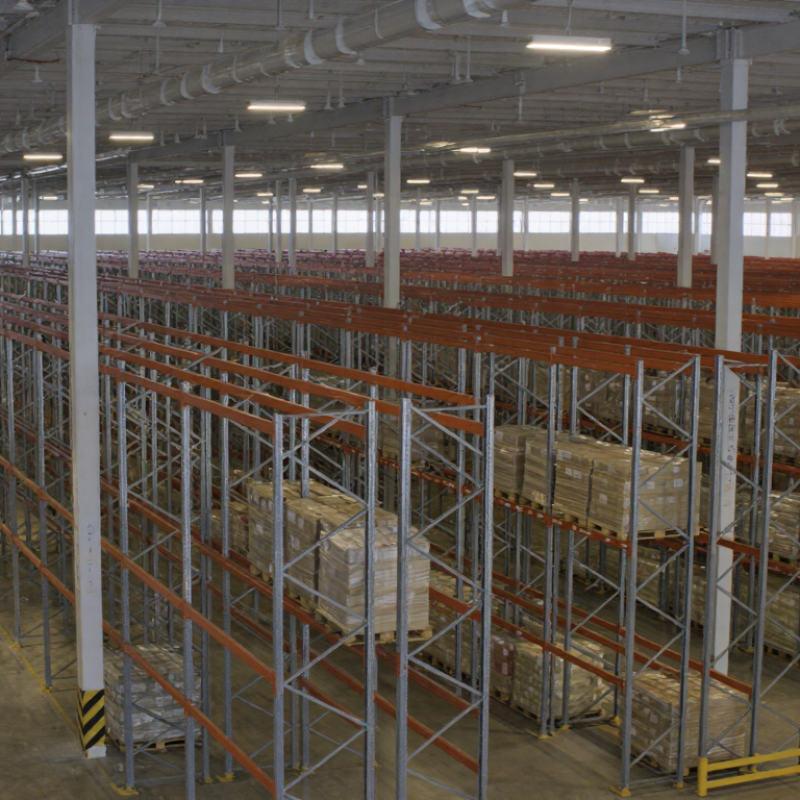
Heavy-duty pallet racking stores palletized goods on strong steel frames, making vertical space useful in busy warehouses. Beams support the loads, while upright frames transfer weight to the floor. A forklift places and retrieves pallets from each level. That matters.
The rack layout affects how easily workers reach products. Selective racking gives direct access to each pallet, which suits warehouses with many product types. Drive-in designs store pallets more densely, but reduce access to individual loads. More storage is not always better; slower picking can offset the space saved.
Reliable performance depends on more than the rack itself. Pallet weight, beam span, floor condition, and forklift clearance all affect safe operation. Follow the rated load information and have the system checked by qualified personnel. Look for loose connectors, damaged uprights, and beams that are visibly bent. Small impacts can be easy to miss. Capacity labels help, but they cannot account for every change in stock or layout. Reassess the arrangement when loads or handling practices change; this step is sometimes overlooked.
How to Assess China’s Heavy-Duty Pallet Rack Manufacturers
Assessing China’s heavy-duty pallet rack manufacturers starts with engineering, not polished catalog photos. Ask for the rated capacity of each beam level and rack bay. Confirm the figures match your pallet dimensions, load weight, and proposed layout. Check steel thickness, weld consistency, upright dimensions, and coating quality. Request project-specific drawings and calculation documents, then ask the engineering team to explain them in plain language. A reliable supplier should discuss floor conditions, anchoring, and installation clearances, not just quote a price. No checklist is perfect.
Compare quotations line by line. Confirm whether beams, frames, bracing, safety locks, anchors, and column guards are included. Ask for test reports linked to the actual rack model, rather than a generic certificate. Review quality-control records and, where practical, inspect production or arrange an independent factory audit. A neat brochure proves little. Pay attention to how the supplier handles drawing changes, delivery questions, and after-sales requests. One awkward detail can reveal a process gap. Also check spare-part availability, packaging for transport, and realistic lead times. Even a careful review may miss something, so record every agreed specification before production begins.
How to Assess Heavy-Duty Pallet Rack Manufacturers
Suggested procurement weighting for comparing manufacturers. These percentages are an evaluation framework, not market-survey results or company rankings.
Prioritize verified load calculations, engineering documentation, manufacturing quality, and applicable safety requirements. Confirm that each supplier’s specifications match your facility, pallet loads, and operating conditions.
Profiles of 10 Chinese Heavy-Duty Pallet Rack Manufacturers
A profile of a heavy-duty pallet rack manufacturer should go beyond product photos. It should explain steel grades, upright thickness, beam connections, and rated load capacity. These details affect how a rack performs under repeated forklift handling. Small differences matter.
The ten Chinese manufacturers in this comparison can be assessed through their production capabilities, engineering support, and quality checks. Look for clear drawings, sample load calculations, and documented inspection steps. Ask whether the quoted capacity applies to each beam level or the entire bay. That distinction is easy to miss. A factory visit or a detailed video inspection can also reveal how parts are cut, welded, coated, and packed.
Project needs vary. A cold-storage warehouse, for example, may require finishes suited to low temperatures and moisture, while a busy distribution center may prioritize adjustable beams and impact protection. Compare lead times, spare-part availability, and packaging for long-distance shipping. Request references for installations with similar loads and operating conditions. Not every supplier will provide the same level of engineering detail, and a polished catalogue alone is not proof of performance. Some comparisons remain imperfect when technical data is incomplete; flag those gaps before making a purchasing decision.
Comparing Rack Systems, Production Capabilities, and Certifications
Heavy-duty pallet racks differ in beam capacity, frame bracing, connection design, and adaptability. Selective racks allow direct access to each pallet; drive-in systems store more pallets per footprint but reduce selectivity. For mixed loads, compare stated capacities at the actual beam span and rack height—not just a catalogue’s maximum figure. Ask manufacturers for load calculations, steel thickness, weld inspection records, and drawings showing floor anchors and aisle clearances. Small details matter.
Production capability is more than factory size. Check whether the supplier controls steel sourcing, roll-forming tolerances, welding, coating thickness, and batch traceability. The 2023 MHI Annual Industry Report found that 87% of surveyed supply-chain professionals expected digital supply-chain investment to increase over the following two years. That trend makes future compatibility worth checking: can rack layouts accommodate scanners, conveyors, or automated handling equipment? Maybe not every warehouse needs automation yet.
Certifications need context. ISO 9001 concerns quality management; it does not certify a rack’s load capacity. Ask for system-specific design evidence, such as calculations aligned with EN 15512 or ANSI MH16.1, and clarify which standard applies to the installation. ISO 3834 may support evaluation of welding quality. A certificate alone proves little. Compare its scope, issuing body, and validity, then verify sample test reports and inspection procedures. Even good documentation can miss a site’s uneven floor.
Factors to Consider When Selecting a Manufacturer for Your Warehouse
When comparing heavy duty pallet rack manufacturers in China, start with the loads your warehouse actually handles. Share pallet dimensions, maximum weight, beam spans, forklift types, and clear aisle widths. A capable supplier should explain how these details affect upright frames, bracing, and beam capacity. Ask for written load tables and engineering drawings, not just a price per bay. Numbers matter.
Check how the manufacturer verifies quality. Ask about steel grades, welding inspections, coating thickness, and traceability between production batches. Request sample inspection records or arrange a factory audit when practical. A polished brochure is useful, but it cannot show whether a beam connection fits securely or whether coating coverage reaches concealed surfaces. Small details count.
Installation support deserves equal attention. Confirm whether the quotation includes layout planning, assembly instructions, and guidance for anchoring racks to your floor. Ask how replacement parts are identified and how quickly technical questions receive answers. Warranty terms should be clear, including exclusions and response procedures. Still, paperwork is not the whole story. A supplier may meet every specification yet communicate poorly once a project changes. Check references from warehouses with similar loads and operating conditions, then compare responses for clarity, not confidence alone.
China Top 10 Heavy Duty Pallet Rack Manufacturers? – Factors to Consider When Selecting a Manufacturer for Your Warehouse
| No. | Selection Factor | What to Assess | Evidence to Request | Why It Matters |
|---|---|---|---|---|
| 1 | Design standards and engineering | Confirm which design standards apply to the rack type and destination market. For adjustable pallet racking, relevant references may include EN 15512 or ANSI MH16.1, subject to project requirements and local regulations. | Project-specific calculations, design assumptions, applicable standard and edition, and confirmation of the responsible engineer. | Rack design depends on loads, geometry, material properties, connections, and site conditions; a generic capacity figure is not a substitute for project-specific engineering. |
| 2 | Load capacity and configuration | Check the proposed beam, frame, bay, and pallet-load capacities for the actual rack layout, beam elevations, number of levels, and load arrangement. | Load tables or calculations for the quoted configuration, stated assumptions, and proposed load notices for installation. | Capacity can change with rack dimensions, beam spacing, bracing, connections, and the way pallets are loaded. |
| 3 | Seismic and site-specific design | Establish whether seismic design, wind exposure, floor conditions, or other local building requirements apply to the warehouse. | Written design criteria, site information used, and any required structural calculations or review documents. | Environmental and building conditions vary by location and can affect anchorage, bracing, frame design, and overall stability. |
| 4 | Steel and component quality | Review specified steel grades, thicknesses, tolerances, connection details, and consistency of beams, uprights, bracing, and accessories. | Material specifications, inspection records, and traceability documents where required by the project. | Material properties and component dimensions are inputs to structural design and affect whether supplied parts match the approved design. |
| 5 | Manufacturing and quality controls | Assess controls for forming, welding where applicable, coating, dimensional checks, nonconforming products, and final inspection. | Quality-control procedures, inspection records, and the scope of any quality-management certification. | Consistent production helps ensure delivered components conform to drawings and stated specifications. A quality-management certificate alone does not certify rack capacity. |
| 6 | Testing and technical documentation | Check whether relevant component or system testing supports the proposed design, and whether drawings and manuals are clear and complete. | Applicable test reports, technical drawings, installation instructions, inspection guidance, and revision-controlled documents. | Testing and documentation help customers and installers understand the designed system, its limits, and the correct assembly requirements. |
| 7 | Installation and project coordination | Clarify who is responsible for site measurements, floor checks, installation supervision, anchoring, and final handover. | Scope of work, installation method statement, inspection checklist, and a written list of responsibilities. | Correct installation and suitable site conditions are necessary for the installed system to match its design assumptions. |
| 8 | Corrosion protection and environment | Match the proposed finish to indoor or outdoor use, humidity, temperature, cleaning practices, and any corrosive exposure. | Coating or finish specification, preparation process, and any relevant test information or maintenance recommendations. | Environmental exposure influences finish selection and ongoing maintenance needs; one coating specification is not suitable for every warehouse. |
| 9 | Delivery, spare parts, and lead time | Confirm realistic production and shipping schedules, packaging, identification of components, and availability of compatible replacement parts. | Written delivery schedule, packing list format, spare-parts policy, and process for reporting shortages or transit damage. | Clear logistics planning reduces receiving and installation delays and helps keep future repairs consistent with the installed system. |
| 10 | After-sales support and rack safety | Ask how technical questions, damage reports, replacement components, and periodic inspections are handled after handover. | Warranty terms, support contacts, inspection guidance, and documentation for safe use and maintenance. | Rack systems require appropriate use, inspection, and maintenance. EN 15635 is one relevant reference for the use and maintenance of storage equipment where applicable. |
Note: Standards and regulatory requirements vary by destination and project. Confirm the applicable requirements with a qualified structural engineer and the relevant local authority; verify all capacity claims against the final, project-specific design.