
7 Tips to Choose the Right Automatic Transmission Filter
A transmission can feel smooth on the morning commute, then hesitate after hours in stop-and-go traffic. Sometimes the cause is not obvious. The Automatic Transmission Filter helps capture debris before it circulates through the transmission’s hydraulic system, but choosing the right one takes more than matching a product photo.
Vehicle age makes careful maintenance increasingly relevant. S&P Global Mobility reported that the average age of U.S. light vehicles reached 12.6 years in 2024. The Auto Care Association’s 2024 Factbook also tracks the scale of the vehicle maintenance and repair market. These reports offer useful context, not a reason to replace every filter on a fixed schedule. Service needs depend on the vehicle, its operating conditions, and the manufacturer’s guidance.
Fit matters. So do filter design, sealing surfaces, included gaskets, and compatibility with the specified fluid and transmission model. A pan-mounted filter may look straightforward on a workbench, yet a mismatched seal can create trouble after installation. Small details count. This guide presents seven practical tips for comparing part numbers, checking construction, and evaluating supplier information. It also separates useful evidence from vague claims, which can be harder than it sounds. No single filter suits every transmission. When records are incomplete, confirm fitment with the owner’s manual, a trusted parts catalog, or a qualified transmission professional before ordering.
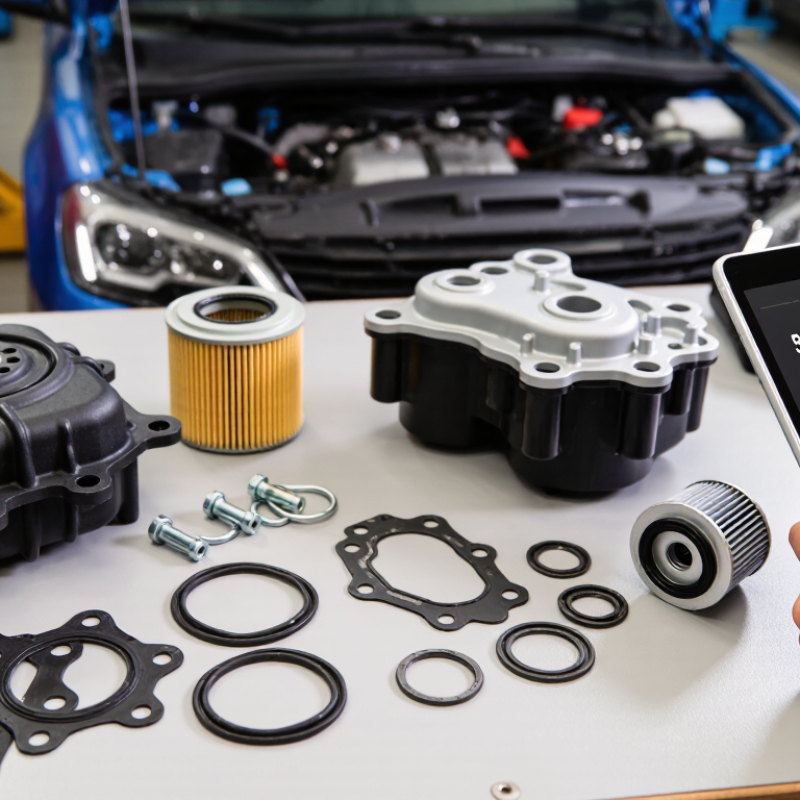
Understand How an Automatic Transmission Filter Works
An automatic transmission filter protects the hydraulic system by catching wear particles and debris before they circulate through narrow passages and control valves. As the pump draws fluid from the pan, fluid passes through the filter media; cleaner fluid then supports clutch operation and gear changes. Some designs include a bypass valve. If the media becomes restricted, the valve can allow fluid to keep flowing, though unfiltered fluid may then pass through. The exact arrangement varies by transmission, so a filter’s location and service method should be checked in the vehicle’s repair information. Small particles matter.
ISO 4406:2021, an industry fluid-cleanliness standard, classifies particle counts in three size bands: at least 4, 6, and 14 micrometres. Its coding system shows why filtration is not only about catching visible grit; particles too small to see can still contribute to wear. The standard does not set one universal cleanliness target for every automatic transmission. Filter condition also depends on fluid condition, operating heat, and accumulated debris. A dark pan deposit or a clogged screen can signal a problem, but appearance alone cannot diagnose the cause. It is tempting to blame the filter first. That may be wrong. Use the specified fluid and replacement procedure, and investigate recurring debris rather than simply fitting another filter.
7 Tips to Choose the Right Automatic Transmission Filter — Understand How an Automatic Transmission Filter Works
| Tip | What to Check | Practical Guidance | Why It Matters |
|---|---|---|---|
| 1 | Confirm the exact transmission | Check the vehicle’s year, make, model, engine, and transmission identification. Use the correct service information or parts catalog, and verify fitment before purchase. | Vehicles that look similar may use different transmissions, filter shapes, pickup locations, or mounting arrangements. |
| 2 | Understand how the filter works | The filter or strainer helps catch particles in the transmission fluid before the fluid reaches hydraulic passages and components. Depending on the design, it may use mesh or a porous filter medium. | A filter supports fluid cleanliness, but it cannot repair worn components or correct a mechanical fault. Its construction and filtration role vary by transmission. |
| 3 | Match the filter to the fluid pickup | Compare the replacement filter’s inlet, pickup tube, mounting points, and orientation with the original part and the transmission service specifications. | A poorly matched pickup or seal can allow air to enter the fluid supply or prevent the filter from seating correctly. |
| 4 | Check pan depth and clearance | Confirm whether the transmission has a shallow or deep pan and check that the filter and pickup are specified for that configuration. | Filter height and pickup position affect clearance and fluid pickup. The wrong configuration may not fit or function as intended. |
| 5 | Inspect seals and included parts | Check whether the filter requires a separate pickup-tube seal, gasket, or O-ring. Replace sealing parts as directed and make sure they are fully seated. | A damaged, missing, or incorrectly installed seal can cause leaks or interfere with fluid pickup. |
| 6 | Follow the transmission’s service procedure | Use the vehicle or transmission manufacturer’s instructions for service intervals, filter replacement, fluid type, fluid level, and temperature-check procedure. | Service requirements differ between transmissions. Some designs have a replaceable pan filter, while others use a different arrangement or service method. |
| 7 | Inspect the old filter and pan | During service, look for unusual debris, excessive friction material, or metal fragments, and follow the service manual’s guidance if anything appears abnormal. | Some residue can occur with wear, but unusual or heavy debris may indicate an underlying problem that a new filter alone will not resolve. |
Service note: Always verify fitment and service steps using information for the exact transmission. Follow safe lifting procedures and use the specified transmission fluid.