
Top Round Slings Manufacturers and Suppliers
Round Slings are essential lifting components for construction, logistics, manufacturing, ports, and energy projects. Their soft, flexible bodies protect painted surfaces and irregular loads better than many rigid lifting tools. Yet flexibility does not mean unlimited strength. Working load limits, sling angles, edge pressure, abrasion, and temperature can quickly change lifting performance.
Grand View Research valued the global material handling equipment market at approximately USD 213.35 billion in 2023. Its report also forecasts continued growth through 2030, supported by warehouse automation and industrial investment. Research and Markets’ Industrial Lifting Equipment Global Market Report 2024 highlights similar demand across manufacturing and infrastructure applications. These figures cover broader equipment categories, not Round Slings alone. That distinction matters. Product claims should never replace verified testing.
This guide examines top Round Slings manufacturers and suppliers through practical safety and purchasing criteria. We consider material quality, rated capacity, certification, traceability, inspection support, and delivery reliability. Standards such as ASME B30.9, EN 1492-2, and OSHA 1910.184 provide useful reference points. A trustworthy supplier should clearly state the working load limit for each configuration. Labels should remain readable after repeated handling. Stitching should appear even, dense, and free from loose threads.
Field inspectors often find damage near hooks, sharp edges, and loading points. A sling may look clean while hidden fibers are weakened. That is an uncomfortable detail. Buyers should request test certificates, batch records, and replacement guidance before ordering. No manufacturer is perfect, and published ratings require correct use. The strongest supplier is not always the cheapest. Reliability is proven through documentation, inspection discipline, and consistent support.
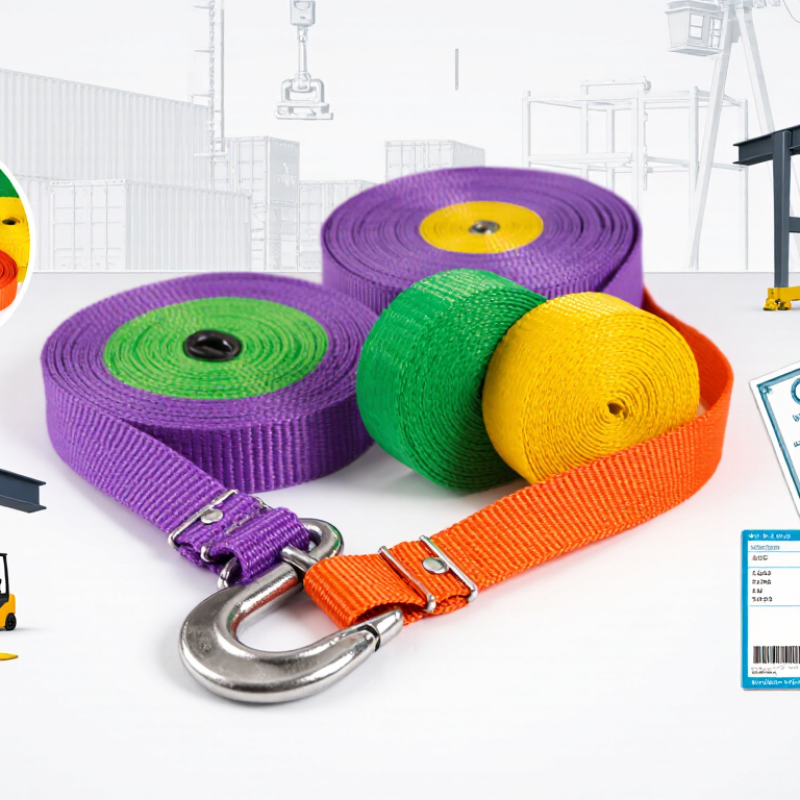
Round Slings Explained: Types, Materials, WLL Ratings, and Core Uses
Round slings are flexible lifting tools built around a load-bearing core and protective cover. Endless slings form a continuous loop, while eye-and-eye slings have reinforced eyes at both ends. Multi-leg assemblies support awkward loads, but they demand careful angle control. Polyester is widely used because it resists moisture and many chemicals. Nylon offers more stretch and shock absorption, although it can soften under certain conditions. High-performance fibers provide low stretch and light weight, but they need specialized handling.
The working load limit, or WLL, is not simply the sling’s size. It depends on material, core construction, hitch type, sling angle, and load contact. A basket hitch can lift more than a vertical hitch, while a tight angle can sharply reduce capacity. I always check the sewn label, inspection record, and manufacturer’s load chart before lifting. The label alone is not enough. Suppliers should provide traceable testing, clear WLL tables, and guidance for abrasion, heat, cuts, and chemical exposure. Round slings commonly move steel beams, pipes, machinery, and precast sections. Protectors matter around sharp edges. One missed edge can damage hidden fibers. I have seen experienced crews recheck a sling after positioning the load, and that extra pause is worthwhile. WLL ratings still require judgment, not guesswork.
Round Slings Explained: Types, Materials, WLL Ratings, and Core Uses
The chart shows commonly used reference capacity factors for round sling hitch configurations compared with the tagged vertical Working Load Limit (WLL).
How to read the chart: A vertical hitch is shown as 1.0× the tagged WLL. A choker hitch is commonly rated at approximately 0.8×, while a balanced basket hitch can provide approximately 2.0× the vertical rating.
Materials and uses: Polyester round slings are widely used for general lifting because of their low stretch and good resistance to moisture. Nylon slings offer greater stretch and are suitable for many general lifting applications, but they are more sensitive to acids and heat. Round slings are commonly used for machinery, structural components, pipes, and other loads that require a soft, low-damage lifting connection.
Safety note: These are reference factors, not a substitute for the sling identification tag, applicable regulations, or the manufacturer's rated capacity. Actual WLL depends on sling construction, hitch angle, load condition, edge protection, and inspection status. WLL must never be confused with breaking strength.
How to Compare Manufacturers Using EN 1492-2 and ASME B30.9 Criteria
Top Round Slings Manufacturers and Suppliers
Comparing round sling manufacturers requires more than checking price or catalog photos. EN 1492-2 requires clear working load limits, traceability, and defined construction for textile roundslings. ASME B30.9 adds practical controls for inspection, removal, identification, and safe operation in lifting workplaces. Ask suppliers for test certificates, material details, batch numbers, and inspection guidance. Vague answers are warning signs.
Pay close attention to the design factor. EN 1492-2 commonly uses a 7:1 minimum safety factor, while ASME B30.9 commonly references a 5:1 design factor for synthetic slings. These figures are not interchangeable. A competent supplier should explain the difference without hiding behind technical language.
The International Labour Organization estimated 2.93 million work-related deaths globally in 2019, reported in its 2023 safety publication. Lifting equipment is only one risk, but it deserves serious control.
Check how the supplier handles abrasion, heat, chemical exposure, edge protection, and rejected slings. Request photographs showing permanent labels and stitching details. Real quality is visible there. A laboratory report alone is not enough. In practice, storage instructions and replacement support can matter just as much. One uncomfortable point remains: perfect documentation cannot rescue a sling cut against a sharp beam. Procurement teams should test supplier knowledge with a realistic lifting scenario, then record every answer. Mistakes happen. Unexamined assumptions are worse.
Key Supplier Data: WLL, Safety Factors, Length Ranges, and Test Records
Top Round Slings Manufacturers and Suppliers
When comparing round sling suppliers, start with verified working load limit (WLL), not color alone. WLL changes with straight, choker, and basket configurations. OSHA 1910.184 requires synthetic slings to show rated capacities and prohibits use when markings are missing. A supplier should provide capacity tables for each sling diameter, hitch, and angle. Small errors matter.
Safety factor deserves equal attention. Common North American practice uses a 5:1 design factor for synthetic slings, while EN 1492-2 commonly applies a 7:1 minimum factor for roundslings. These figures are not interchangeable. Ask which standard controls the design, testing, and labeling. A strong supplier can explain the difference without hiding behind technical language.
Length ranges should match the lift geometry, including hook reach, load width, and required choke allowance. Typical catalog lengths may run from 1 to 20 meters, but custom lengths need documented inspection criteria. Request batch identification, material details, manufacturing date, and test records. Independent laboratories operating under ISO/IEC 17025 principles can improve confidence in test results and calibration traceability. Field experience still matters: abrasion near a sharp beam, crushed fibers, or a faded label can invalidate an otherwise impressive certificate. I would also question records showing only a pass result without load, date, equipment ID, and inspector details. That gap is easy to overlook.
Leading Production Methods: Polyester Webbing, Stitching, Labels, and Inspection
Top round slings manufacturers and suppliers rely on controlled production rather than appearance alone. Polyester webbing is selected for consistent width, tensile strength, and resistance to moisture. The load-bearing yarns are formed into a continuous core, then protected by a durable outer sleeve. Color helps identify capacity, but it never replaces a verified label.
Stitching requires careful tension control. Reinforced eye loops need even seams, clean edges, and no skipped stitches. Operators inspect needle damage, loose threads, abrasion, and distorted sleeves during production. Small defects matter. A sling can look neat while hiding uneven load distribution. That is why experienced suppliers combine visual checks with measured tensile testing and documented inspection records.
Every finished sling should carry a readable label showing rated capacity, length, material, and traceability information. Labels must remain attached after handling and exposure to normal workplace conditions. Inspectors review webbing density, seam alignment, cover condition, and identification details before release. Some production lines still depend too heavily on manual judgment, which deserves honest review. Better suppliers use calibrated equipment, trained staff, sampling plans, and independent checks. Records should connect each sling to its materials, operator, test result, and inspection date. Consistency is difficult. It must be demonstrated repeatedly.
How Buyers Verify Quality Through Proof Testing, Certification, and Traceability
Quality verification begins before a round sling reaches the warehouse. Buyers should request proof-test records showing the tested load, date, batch number, and laboratory identity. The test laboratory should operate under ISO/IEC 17025 competence requirements. A simple pass stamp is not enough. Ask for the actual report.
Relevant standards matter too. EN 1492-1 covers textile round slings, including marking, construction, and safety factors. ASME B30.9 provides additional guidance for sling inspection and use. HSE recorded 138 worker fatalities in Great Britain during 2023/24, with lifting activities remaining a serious workplace risk. That figure is not sling-specific, but it shows why paperwork cannot replace control. Inspectors should match the label, certificate, stitching, protective sleeve, and working load limit. One mismatch should stop the shipment.
Tips: Photograph every sling label when received. Compare serial numbers with the certificate and purchase order. Check whether the stated working load changes by hitch type or angle. Keep inspection records with batch traceability, not loose email attachments. Suppliers should explain rejected-test procedures and calibration dates clearly. Buyers sometimes accept beautifully printed certificates too quickly. That is a mistake worth admitting. Traceability can fail when a replacement sling is issued without updating the register. A short site check prevents a long investigation.
Top Round Slings Manufacturers and Suppliers - How Buyers Verify Quality Through Proof Testing, Certification, and Traceability
| Verification Dimension | What Buyers Should Request | Typical Acceptance Evidence | Key Data to Compare | Traceability Record |
|---|---|---|---|---|
| Applicable product standard | A declaration of the design and manufacturing standard used for the round sling. | The stated standard is relevant to synthetic round slings and is shown on the certificate or technical file. | EN 1492-2, ASME B30.9, or another contractually specified national or international requirement. | Standard edition, product specification, purchase order, and revision number. |
| Working load limit identification | A permanent, readable label or tag attached to every sling. | The tag identifies the working load limit (WLL), length, hitch configuration, material, and manufacturer or batch reference. | WLL for vertical, choker, and basket use; rated length; nominal diameter; sling type. | Unique serial number, lot number, or batch code matched to the inspection certificate. |
| Proof testing | The supplier’s proof-test procedure and a test report for the supplied lot or individual sling, where required by the purchase specification. | A signed test report records the applied load, holding time, test date, equipment identification, and result. | Applied proof load, test method, pass/fail result, calibration status, and any permitted deformation or damage criteria. | Test report number linked to the sling serial number or production batch. |
| Test equipment calibration | Current calibration certificates for load cells, tensile-test machines, and recording instruments. | Calibration is traceable to a recognized national measurement system or accredited calibration laboratory. | Instrument ID, calibration date, expiry or due date, measurement range, and stated uncertainty. | Calibration certificate number recorded on the proof-test report. |
| Breaking-strength evidence | A type-test or production-test report showing the minimum breaking force for the sling design. | The measured result meets the minimum breaking-force requirement of the selected standard and design configuration. | Minimum breaking force, test configuration, sample size, test speed, failure location, and failure mode. | Material lot, webbing or yarn batch, manufacturing date, and laboratory report reference. |
| Material verification | Material specification and supplier declaration for the load-bearing fibers and protective cover. | The declared fiber type and construction match the approved technical specification. | Polyester, high-modulus polyethylene, or other specified fiber; linear density; cover construction; UV and chemical limitations. | Raw-material certificate, incoming inspection record, and production batch number. |
| Dimensional inspection | Inspection records for length, cover condition, eye dimensions, stitching, and identification markings. | Dimensions remain within the approved drawing or purchase specification, with no exposed load-bearing yarns or damaged stitching. | Nominal length, tolerance, sling circumference, eye length, cover width, and stitch pattern. | Inspection date, inspector ID, measurement equipment, and nonconformance disposition. |
| Independent certification | Certification, inspection, or test documentation from an independent and technically competent organization when required by the project or regulation. | The certificate identifies its scope, applicable standard, inspection basis, validity, and issuing organization. | Certificate number, issue date, covered product range, test scope, and stated limitations. | Certificate linked to the supplied product specification and batch documentation. |
| Factory quality system | Quality-system certificate and documented procedures for inspection, testing, nonconforming product, and corrective action. | The certificate covers the relevant manufacturing site and product activities, not merely a different office or facility. | Certification scope, manufacturing address, audit status, certificate validity, and surveillance requirements. | Quality manual reference, internal inspection plan, audit records, and corrective-action log. |
| Certificate of conformity | A shipment-specific certificate confirming that the supplied slings conform to the purchase order and approved specification. | The certificate lists quantity, product description, WLL, dimensions, batch or serial numbers, and authorized approval. | Order number, delivery quantity, specification revision, inspection status, and release date. | Document number cross-referenced to packaging labels and individual sling tags. |
| Visual and dimensional pre-shipment inspection | Inspection checklist completed before dispatch, including packaging and identification checks. | No cuts, burns, chemical damage, pulled stitching, abnormal cover wear, missing labels, or illegible markings are recorded. | Inspection quantity, sampling plan, defects found, corrective action, and final release status. | Inspector name or ID, inspection date, photographs where applicable, and shipment reference. |
| Buyer receiving inspection | A receiving checklist requiring verification before the slings enter service. | Physical labels, quantities, dimensions, documents, and visible condition agree with the purchase order. | Delivered quantity, tag readability, WLL, length, certificate references, packaging condition, and discrepancies. | Goods-receipt number, receiving date, warehouse location, inspector signature, and release decision. |
| Service-life and periodic inspection controls | Instructions covering storage, use, inspection frequency, rejection criteria, and retirement. | Instructions are consistent with the selected standard, local requirements, and the sling’s material limitations. | Inspection intervals, environmental restrictions, allowable damage criteria, cleaning method, and storage conditions. | Inspection history, user or department, findings, repair prohibition or approval, and disposal record. |
Buyer note: Proof-test loads, certification requirements, inspection intervals, and acceptance criteria vary by the applicable standard, jurisdiction, sling configuration, and purchase specification. The governing requirement should always be confirmed before placing the product into service.