
What Is the Best Steering Wheel Lock Bar?
Choosing the best Steering Wheel Lock Bar is less about finding the most impressive product and more about matching a lock to your vehicle and daily routine. A bar should fit securely, sit visibly across the steering wheel, and feel manageable to install and remove. Check the manufacturer’s fit guidance before buying; steering wheel shapes and sizes vary, and a poor fit can reduce usefulness. Fit matters.
A careful comparison should look at construction, locking mechanism, ease of use, and storage. A heavy bar may feel reassuring, but it can be awkward to handle every day. A compact design may store neatly, yet still needs to resist slipping when installed. Read product specifications and independent customer feedback, while treating bold security claims with caution. No steering lock can guarantee that a vehicle will not be targeted or stolen.
The right choice is a practical layer of visible deterrence, not a substitute for sensible parking habits or other suitable security measures. Consider where you park, how often you use the lock, and whether you can operate it comfortably. Small details matter: a key that is difficult to turn or a bar that blocks convenient storage can become frustrating. There is no perfect option, and a quick review cannot reveal every real-world limitation. This guide compares common features and trade-offs to help you make a more informed choice.
What Is a Steering Wheel Lock Bar and How Does It Work?
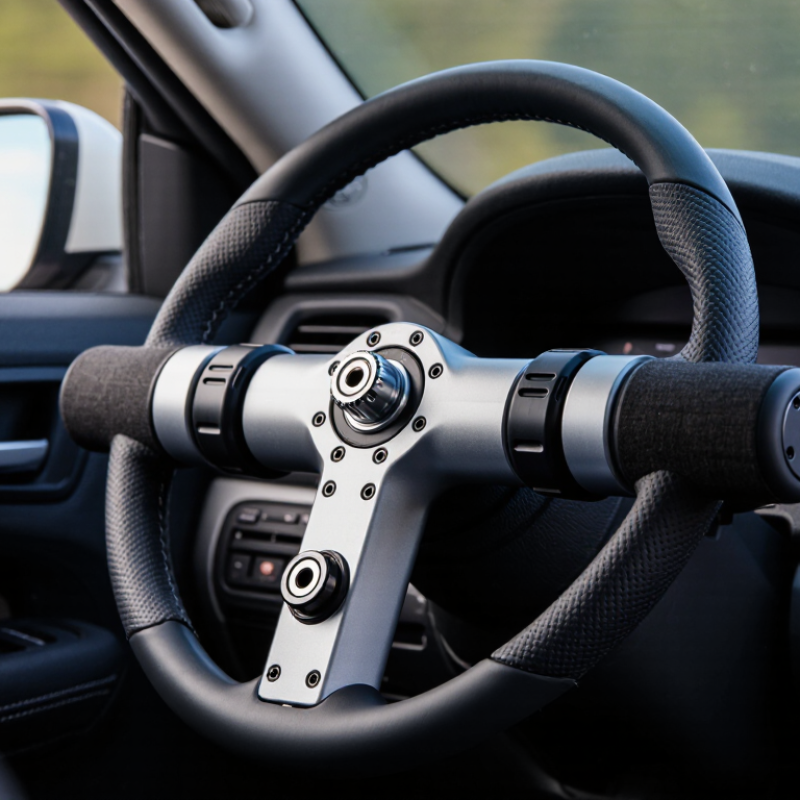
A steering wheel lock bar is a visible, adjustable metal device that spans the steering wheel. Its ends hook around the rim, and a central lock secures it in place. If someone tries to turn the wheel, the bar can meet the dashboard, seat, or another part of the vehicle’s interior, limiting steering movement. The exact fit depends on the wheel’s size and the bar’s design. Check that it sits firmly and does not slide off easily. It is a physical obstacle, not an alarm or an engine immobilizer.
The National Insurance Crime Bureau’s 2023 Hot Spots report counted 1,020,729 vehicle thefts in the United States that year, about one percent more than in 2022. A steering wheel bar cannot guarantee protection, but its bright, visible presence may discourage opportunistic theft and add time to an attempt. That matters in a parking lot. Pair it with ordinary precautions, such as locking doors and keeping valuables out of sight. Some bars can be awkward to store or fit, and a loose one may offer less resistance. I would not treat it as a substitute for built-in security. It is one practical layer, with limits.
What Is the Best Steering Wheel Lock Bar? — What Is a Steering Wheel Lock Bar and How Does It Work?
A steering wheel lock bar is a visible physical anti-theft device. The best choice depends on the vehicle, the lock’s fit and construction, and how easy it is to use consistently.
| Lock-bar type or feature | How it works | Potential advantages | Limitations to consider | Best fit for |
|---|---|---|---|---|
| Across-the-wheel bar | Locks across the steering wheel, making it harder to turn the wheel normally. | Easy to see from outside the vehicle; quick to fit when correctly sized. | Fit varies by steering-wheel size and shape. It is a deterrent, not a guarantee against theft. | Drivers who want a straightforward, visible device for regular use. |
| Steering-wheel-to-pedal bar | Connects the steering wheel to a pedal, restricting steering-wheel movement and pedal operation. | Can create an additional physical obstacle compared with a wheel-only bar. | Installation may take longer; pedal layout and vehicle interior affect compatibility. | Drivers whose vehicle has a suitable pedal and enough space for secure installation. |
| Adjustable-length design | Uses a sliding or telescoping section to fit a range of steering-wheel positions. | Can accommodate more than one vehicle or steering-wheel size. | Adjustment range alone does not ensure a secure fit; check the manufacturer’s vehicle-fit guidance. | Households with multiple vehicles or vehicles with different wheel sizes. |
| Key-operated lock | A key turns the locking mechanism to secure or release the bar. | Simple operation when the key is available and the lock is maintained. | Requires keeping track of the key; a jammed or lost key can make removal difficult. | Drivers who prefer a familiar mechanical locking method. |
| Combination-operated lock | A preset number combination releases the locking mechanism. | No separate key is needed for everyday unlocking. | The combination must be remembered and kept private; operation may be less convenient in poor light. | Drivers who want key-free access and can reliably remember the combination. |
| Fit and contact points | The bar should engage the wheel securely without interfering with the driver’s normal controls when removed. | A stable fit reduces unwanted movement during use. | A loose, incompatible, or poorly positioned bar may provide less useful resistance and could damage interior surfaces. | Every buyer: confirm compatibility with the vehicle and follow the fitting instructions. |
| Visible deterrence | The installed bar signals that an extra obstacle must be dealt with before the vehicle can be driven normally. | May encourage a thief to choose an easier target. | Visibility does not make a vehicle theft-proof, and effectiveness varies with the situation and device. | Drivers seeking an additional, noticeable layer of protection. |
| Overall selection | Choose a well-fitting bar that is practical to install and remove every time the vehicle is parked. | Best choice: secure fit + consistent use | No single design is best for every vehicle. A steering-wheel bar should not replace other sensible security measures. | Drivers comparing options for their specific vehicle and parking conditions. |
How it works: Once locked in place, the bar obstructs normal steering-wheel movement; some designs also connect to a pedal. Treat it as a deterrent and use it alongside the vehicle’s built-in security features and safe parking practices.