
10 Tips for Choosing the Best Wooden Doors?
A door can change the feel of a room before anyone notices the paint. Wooden Doors bring warmth, texture, and a solid presence, but appearance alone cannot tell you whether a door suits your home. The right choice depends on where it will be installed, how often it will be used, and the conditions it must handle. A bathroom door, for example, faces more moisture than a bedroom door. Small differences matter.
This guide explores ten practical points to consider, from wood species and construction to finish, hardware, and installation. You will learn why a sample can reveal grain and color better than an online image, and why accurate measurements help prevent gaps or sticking. Solid wood may appeal for its natural character, while engineered options can offer more consistent performance in certain settings. Neither choice is automatically best. Check product details, warranty terms, and the supplier’s guidance, and ask a qualified installer about any unusual opening or fitting concern. A careful comparison is worth the effort.
There is no perfect door for every home. Wood can respond to changes in humidity, finishes need care, and even a well-made door may disappoint if it is poorly fitted. These details are easy to overlook. Use the tips ahead to weigh durability, style, budget, and maintenance together, then choose a door that feels right in daily use—not just in a showroom.
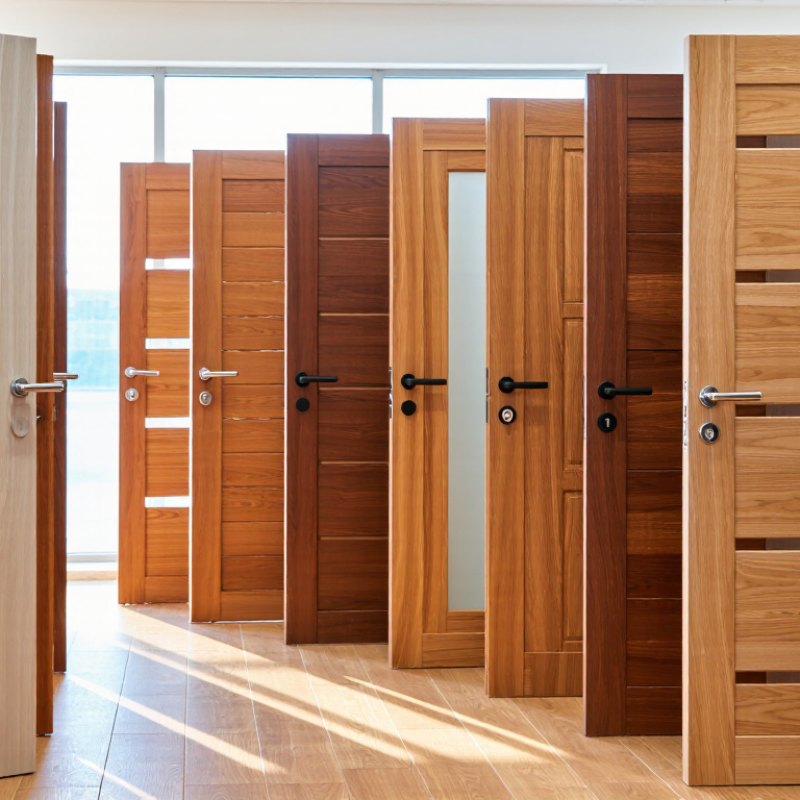
Define Your Door’s Purpose, Location, and Size
A door’s job should guide its construction. A front entrance needs security, weather resistance, and enough clearance for people carrying bags or furniture. A bedroom door usually needs privacy and quiet, while a pantry door may need little more than reliable daily movement. Note who uses the opening, how often it swings, and whether a threshold could catch a walker or a rolling suitcase. Small details matter.
Location changes the specification. An exterior door exposed to rain or afternoon sun needs a durable finish and tight seals; a bathroom door needs better moisture tolerance. The U.S. Department of Energy’s Energy Saver guidance estimates that windows account for about 25–30% of home heating and cooling energy use. That figure is not door-specific, but it shows why openings and their seals deserve attention. Measure the frame, not just the old slab: record width, height, thickness, hinge positions, and swing direction. Check the floor clearance, too. A bowed jamb can make a careful measurement misleading—an irritating detail that is easy to overlook. Recheck the dimensions before ordering, especially in older homes.
Compare Wood Species, Construction, and Durability
Wood species affect appearance, movement, and upkeep, but no species is automatically best. Oak’s open grain hides small marks and gives a pronounced texture. Maple has a smoother, tighter grain, though dents may show clearly on pale finishes. Pine is lighter and often more affordable, but its softer surface can collect dings. Feel the weight. A heavier slab may feel substantial, yet weight alone does not prove quality or suit every frame. Moisture, sunlight, and room temperature also influence how wood behaves over time.
Construction often matters as much as the species. Solid-wood doors can be repaired and refinished, but they may expand or shrink with seasonal humidity. Engineered doors use layered materials or a stable core to help limit movement; inspect the edges and finish, not just the face. Check the stiles, rails, joints, and panel fit for gaps or uneven lines. Details matter. A smooth showroom sample can conceal weak joinery, so examine the actual door when possible. It is easy to overvalue a beautiful grain and overlook daily wear. For bathrooms or sunny entryways, ask how the door’s materials and finish handle moisture and heat, and confirm that the frame and installation suit the door’s weight.
Match the Door’s Style and Finish to Your Space
A wooden door should feel connected to the room, not like a separate design decision. Start by noting the space’s main lines: square window trim, curved furniture, or simple cabinet fronts. A flat-panel door often suits clean, modern rooms, while a recessed panel can echo traditional woodwork. In a small hallway, a strong pattern may feel busy; a simpler face keeps the view calmer. Look at the floor too. Similar wood tones can blend neatly, but they do not need to match exactly.
Finish changes how the door reads. Pale oak can brighten a shaded entry, while a deeper walnut tone may add warmth to a large room. I’ve learned that a finish that looks balanced under showroom lights can appear surprisingly orange beside cool, gray flooring. Check a sample near the doorway, in morning and evening light. Don’t skip this. Matte finishes tend to soften reflections and show fewer fingerprints, while glossier surfaces reveal more grain—and more smudges. Consider how the door will be used, too: a busy kitchen entrance may need a finish that is easy to wipe clean. If the trim is painted, a stained door can add contrast, but test the combination first; I have changed my mind after seeing a sample against the actual wall.
Assess Insulation, Security, and Maintenance Requirements
A wooden door insulates only as well as its slab, frame, and seals. Check the product’s U-factor, which indicates heat transfer; lower values generally mean better insulation. The U.S. Department of Energy estimates that windows account for 25–30% of home heating and cooling energy use. That figure is not door-specific, but it shows why gaps around the whole building envelope matter. Small gaps matter. Check for continuous weatherstripping and a snug threshold, especially if you can feel a draft near the floor.
Security depends on more than the door’s thickness. Look for a solid, well-fitted slab, a strong frame, and hinges secured firmly to the structure. Ask whether the complete door assembly has been tested for forced-entry resistance; a strong slab alone cannot confirm that. USDA Forest Products Laboratory’s Wood Handbook (FPL-GTR-282, 2021) explains how wood responds to moisture changes. In practice, inspect the lower edge, finish, and joints for swelling, peeling, or soft spots after wet seasons. Refinish exposed areas as needed, and keep water from pooling at the sill. Measure twice. I would not assume a heavier door needs no upkeep; that’s an easy mistake to make.
Compare Costs, Warranties, and Supplier Quality
Compare wooden-door quotes item by item. A low price may cover only the door slab, leaving the frame, hardware, delivery, and fitting as extra costs. Ask each supplier for the same specification, including wood type, dimensions, finish, and included components. Check whether installation is priced separately. That matters.
Read warranty terms before paying a deposit. Look for coverage periods and clear exclusions, especially for finish wear, swelling, or installation problems. Ask what evidence is needed for a claim and who handles it. Conditions can vary, so get the answers in writing. A long warranty sounds reassuring, but vague wording is not much protection.
Supplier quality shows in the details. Request a sample or inspect a finished door for even joints, smooth edges, and consistent coating. Ask how the wood is dried and stored; damp stock can cause trouble after fitting. Check references and confirm lead times in writing. Even then, delays happen. I would not treat a polished showroom as proof of careful production, and sometimes the best comparison takes longer than expected.
10 Tips for Choosing the Best Wooden Doors
Suggested comparison weights for reviewing costs, warranties, and supplier quality alongside other key considerations.
Use these planning weights to compare quotes consistently. They are a customizable decision-making template, not market survey data; check each supplier’s written quote, warranty terms, materials, and references.