China Top 10 Automated Barrier Manufacturers
An Automated Barrier may look simple from the road: a motor, a control unit, and an arm lifting beside a gatehouse. Reliable performance depends on how those parts work together. Buyers should examine operating speed, duty cycle, safety sensors, weather protection, service access, and spare-parts availability. Small details matter. A barrier that handles steady traffic at a logistics entrance may not suit a quiet residential driveway.
This guide introduces ten China-based Automated Barrier manufacturers and offers a practical framework for comparing them. It considers product range, manufacturing experience, customization, stated certifications, technical documentation, and after-sales support. W. Edwards Deming, a respected manufacturing-quality expert, is often credited with the principle, “Quality is everyone’s responsibility.” That idea applies here: brochures tell only part of the story. Ask for clear specifications, installation guidance, warranty terms, and evidence supporting performance claims. Where possible, compare like-for-like models rather than headline prices.
No list can fit every project. A compact barrier may be right for a narrow entrance, while a busy site may need a stronger drive system and simpler maintenance access. Some manufacturer details can also be difficult to verify from public information alone. That deserves careful attention, not a confident guess. Use this overview as a starting point, then confirm requirements directly with each supplier. The best choice is the one that fits the site, the traffic pattern, and the maintenance plan.
How Automated Barriers Work and Where They Are Used
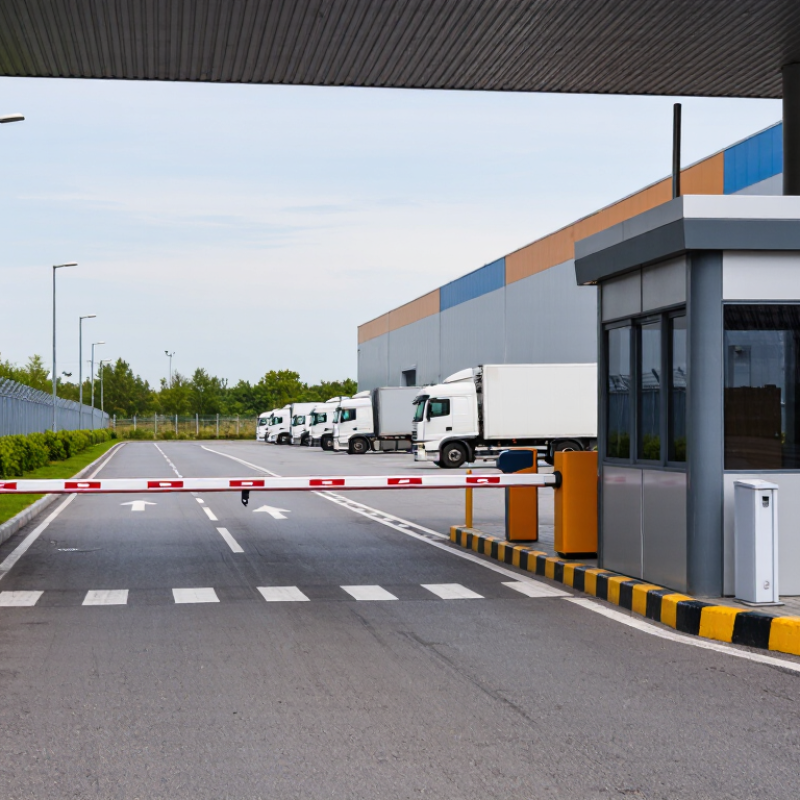
An automated barrier controls vehicle access with a motorized arm, a controller, and detection devices. A driver presents an access card or enters a code. The controller checks the request, then signals the motor to raise the arm. A ground loop or photoelectric sensor can detect a vehicle and help prevent the arm from lowering onto it. That pause matters. Sensor placement and regular testing are important; a poorly adjusted detector may miss a vehicle or keep the arm open.
These systems are common at parking garages, residential entrances, campuses, and warehouse driveways. At a busy car park, a barrier can organize entry and exit while linking access records to payment or visitor procedures.
At a warehouse, it can help staff manage deliveries and keep vehicle movement predictable. The right setup depends on traffic volume, vehicle type, weather exposure, and available space. A narrow lane may need different detection than a wide driveway.
In practice, the neat diagram is not the whole story. Dust, rain, and frequent use can affect sensors and moving parts. Some barriers also need a manual release during a power outage, depending on their design. Operators should check the safety response and arm movement routinely. Small delays are inconvenient, but rushing adjustment can create bigger problems.
China’s Automated Barrier Industry at a Glance
China’s automated barrier industry is closely tied to vehicle growth, parking access, and site security. The China Association of Automobile Manufacturers reported 31.28 million vehicles produced and 31.44 million sold in 2024. These figures indicate a large mobility market, not direct barrier sales. The distinction matters. Demand varies between residential garages, logistics yards, commercial car parks, and toll facilities.
At installation level, buyers weigh opening speed, arm length, vehicle flow, and sensor placement. A short boom arm may suit a tight garage entrance; a high-volume site needs careful attention to queue buildup and repeated operating cycles. The National Bureau of Statistics’ Statistical Communiqué on 2023 National Economic and Social Development put China’s urbanization rate at 66.16%, underscoring the scale of urban infrastructure where access control can be relevant. Yet public statistics rarely isolate automated barriers as a standalone category, so market-size claims deserve caution. Product selection also depends on maintenance access and what happens during a power interruption. These details are easy to overlook. A smooth demonstration is not the same as dependable daily operation.
Criteria for Comparing Automated Barrier Manufacturers
China Top 10 Automated Barrier Manufacturers
Criteria for Comparing Automated Barrier Manufacturers
Comparing automated barrier manufacturers takes more than lining up quoted prices. Start with the site: measure lane width, vehicle flow, available mounting space, and exposure to rain or dust. A barrier suited to a quiet office entrance may struggle at a busy loading area. Ask how the manufacturer matches motor duty cycles and opening speed to real traffic patterns. Faster is not always better.
Look closely at construction and serviceability. Check the boom arm’s material, cabinet protection, access to common replacement parts, and the time needed for routine maintenance. Request test records for repeated operation, and ask what conditions those tests covered. Small details matter. A clear wiring diagram and accessible components can reduce downtime when a technician is on site. Compare warranty terms, response times, and spare-part availability in writing, not just during a sales call.
Safety functions deserve equal attention. Confirm how obstruction detection, emergency release, warning lights, and integration with access controls are tested and supported. Ask for installation references from projects with similar traffic and weather, while remembering that one successful site does not prove every system will perform the same way. A scoring sheet helps, but it can hide trade-offs. I would leave room for unanswered questions; specifications sometimes look precise while service expectations remain vague.
Profiles of China’s Top 10 Automated Barrier Manufacturers
Profiles of China’s top 10 automated barrier manufacturers should reveal more than product range. A useful profile explains how each company designs, assembles, tests, and supports its equipment. Look for practical details: boom lengths, opening times, motor options, cabinet materials, and stated cycle ratings. These figures help buyers compare products against real site needs, such as a busy parking entrance or a narrow service lane. Small details matter.
The profiles can also distinguish manufacturers by their strengths. Some focus on high-volume production and standard models; others offer more engineering support for custom layouts and access-control integration. Ask how units are tested, which spare parts are stocked, and how faults are handled after installation. A clear service process is reassuring. So is honest documentation. Product claims alone are not proof of durability, and published specifications may not describe performance in every climate. That deserves a second look. Comparing these ten profiles through consistent criteria gives buyers a more grounded view of manufacturing capability, technical fit, and long-term support without relying on sales language alone.
China Top 10 Automated Barrier Manufacturers - Profiles of China’s Top 10 Automated Barrier Manufacturers
Scope note: The entries below are representative automated-barrier product profiles, not a verified company ranking or claims about specific manufacturers. Product availability and specifications vary by supplier; confirm technical details directly with each manufacturer.
| Profile | Product specialization | Typical application | Key configuration variables | Buyer verification points |
|---|---|---|---|---|
| Profile 1 | Straight-arm barrier gate | Standard vehicle entrances at parking facilities, residential communities, and commercial sites. | Boom length, opening and closing time, duty cycle, cabinet orientation, and control input type. | Confirm the permitted boom length, operating frequency, safety-device compatibility, and rated supply voltage. |
| Profile 2 | Folding-arm barrier gate | Entrances with limited overhead clearance, such as covered parking areas. | Fold geometry, boom length, clearance height, movement speed, and installation layout. | Check the folded boom’s clearance against ceilings, signs, lighting, and vehicle height requirements. |
| Profile 3 | Telescopic-arm barrier gate | Sites that need an adjustable boom length or have constrained installation space. | Extended and retracted length, telescoping mechanism, operating speed, and mounting position. | Request the full dimensional drawing and confirm that the selected boom configuration is supported by the drive unit. |
| Profile 4 | Fence-arm barrier gate | Vehicle access points where a more visible physical barrier is required. | Arm length, fence-panel layout, wind exposure, counterbalance, and opening direction. | Check structural suitability for the site and verify the specified wind and operating conditions with the supplier. |
| Profile 5 | High-speed barrier gate | High-throughput vehicle lanes where short opening and closing cycles are important. | Rated cycle time, boom length, duty rating, motor and drive design, and traffic-control interface. | Compare published cycle-time conditions and duty ratings; confirm that the figures apply to the chosen boom. |
| Profile 6 | Heavy-duty barrier gate | Industrial, logistics, or other access points requiring equipment selected for demanding service conditions. | Drive capacity, boom dimensions, duty cycle, cabinet protection, and environmental operating limits. | Obtain the rated operating limits and maintenance schedule, and check suitability for the site’s climate and traffic. |
| Profile 7 | Parking-system-integrated barrier | Parking entrances connected to ticketing, payment, or centralized parking-management equipment. | Controller inputs and outputs, communication interface, detector connections, and system integration method. | Confirm interface documentation and compatibility with the specific parking-management system before ordering. |
| Profile 8 | Access-control-integrated barrier | Controlled vehicle entrances using credential readers, access controllers, or security systems. | Trigger inputs, relay outputs, emergency controls, safety sensors, and access-control interface. | Verify wiring diagrams, fail-safe behavior, emergency release procedure, and safety-device requirements. |
| Profile 9 | Vehicle-recognition-ready barrier solution | Sites using license-plate recognition or other vehicle identification as part of lane access control. | Barrier controller interface, recognition-system trigger, lane layout, detector placement, and operating sequence. | Confirm that recognition equipment and barrier controls are compatible and that the complete lane sequence is tested. |
| Profile 10 | Configured or OEM/ODM barrier solution | Projects requiring customized cabinet finishes, control logic, dimensions, or private-label production. | Mechanical configuration, electrical requirements, software or control options, finish, and order quantity. | Request approved drawings, a written specification, quality-inspection criteria, warranty terms, and spare-parts details. |
How to Choose a Manufacturer for Your Project
Choosing a barrier manufacturer starts with the site, not the catalogue. Measure lane width, peak vehicle flow, arm clearance, and available power. Ask for the rated cycles per hour and expected service life. A unit that suits a quiet driveway may overheat at a busy car park. Small details matter.
MarketsandMarkets estimated the global access control market at US$10.4 billion in 2023 and projected US$15.2 billion by 2028. Its report covers more than barriers, but it signals growing demand for integrated entry systems. Check whether the manufacturer can document compatibility with your access controls, safety sensors, and backup release. Request test records, warranty terms, spare-part lead times, and references for comparable installations. For vehicle-impact applications, ask what test standard and performance class apply; ASTM F2656/F2656M provides one recognized evaluation framework. Brochures are not evidence. A polished specification can still omit operating limits, and buyers sometimes overlook that. Compare delivered performance, not just purchase price, and require the proposed configuration to match your drawings and site conditions.