Top 10 Manual Milling Machines to Buy in 2026

A Manual Milling Machine still earns its place where direct control matters: toolrooms, repair benches, and small production runs. The operator feels backlash through the handwheel, watches the cutter clear a shoulder, and adjusts feed by sound and touch. That feedback is valuable. It also demands skill, patience, and careful inspection.

Grand View Research estimated the global machine-tools market at USD 84.6 billion in 2023, with projected growth through 2030. This broad category includes many machine types; it is not a market-size estimate for manual mills alone. The distinction matters. Buyers should compare machines by useful travel, spindle range, rigidity, service support, and parts availability—not headline market figures. A heavy cast-iron frame can steady a cut, but only if its ways, bearings, and setup are sound.

MIT machine-design professor Alexander Slocum’s work offers a useful principle: machine performance depends on the complete system, not one specification. That is a paraphrase, not a direct quotation. For this guide, it means judging each mill with its tooling, workholding, and intended cuts in mind. A compact bench mill may suit small components; larger steel work calls for more mass and travel. There is no universal winner. Even published specifications can leave questions about real-world accuracy, so verify them with the seller when possible. The following ten machines are assessed for practical capability, ownership considerations, and the trade-offs buyers should examine before purchasing in 2026.
Top 10 Manual Milling Machines to Buy in 2026

What Defines a Manual Milling Machine and How Does It Work?

A manual milling machine cuts material with a rotating, multi-edge tool while the operator controls the workpiece’s movement. The work is clamped in a vise or directly to the table. Handwheels move the table along the X, Y, and Z axes, bringing the material into the cutter at a chosen depth and feed rate. On a vertical mill, the spindle points downward; on a horizontal mill, it runs parallel to the table.

The machine does not interpret a program. The operator reads the setup, listens to the cut, and adjusts by feel. That feedback is immediate. So is the risk of a poor adjustment.

A sharp cutter, rigid clamping, and measured handwheel movements help produce a clean cut. For example, a machinist may remove a small amount of metal, stop, and check the dimension with a micrometer. Manual control can suit repair work, prototypes, and simple jobs, but results depend heavily on operator skill. It is not automatically more precise.

The U.S. Bureau of Labor Statistics projects 1% employment growth for machinists and tool-and-die makers from 2023 to 2033. Separately, the 2024 Deloitte and Manufacturing Institute study estimates that U.S. manufacturing could need 3.8 million workers by 2033, with 1.9 million jobs potentially unfilled. Those figures describe workforce needs, not demand for manual mills specifically. Still, they underline why practical machining knowledge matters. A handwheel can teach a lot. It can also expose how much judgment a setup needs.

Which Features Matter When Comparing Manual Milling Machines?

A manual milling machine should match the work you actually plan to make, not just look powerful on paper. Start with table size and travel: a long workpiece needs room to move without repeated repositioning. Check spindle speed range, taper, and available tooling too. These affect whether the machine handles small cutters cleanly or struggles with larger jobs. Rigidity matters. A heavy column and snug gibs help reduce chatter, especially when cutting steel. Still, extra mass can mean difficult installation and less shop flexibility.

Look closely at the handwheels and feeds. Smooth, readable graduations make small adjustments easier, while backlash can spoil a careful pass. Test the table movement across its full travel if possible; it should feel consistent, not tight at one end and loose at the other. A digital readout is useful, but it cannot correct a poorly aligned machine. Think about maintenance as well: accessible lubrication points and common replacement parts save time later. It is easy to overvalue horsepower and overlook these daily details.

Tips: Bring a sample drawing and estimate the largest workpiece before comparing models. Ask how the machine was inspected and what setup is required. Leave room for uncertainty; published accuracy may depend on careful installation and adjustment.

Top 10 Manual Milling Machines to Buy in 2026 — Which Features Matter When Comparing Manual Milling Machines?
Rank Machine configuration Typical table size Typical X / Y travel Common spindle interface Typical motor power Best suited to Features worth comparing Check before purchase
1 Full-size vertical knee mill 9 × 42 in (229 × 1,067 mm) 26–30 × 12–16 in (660–762 × 305–406 mm) R8 or ISO/NT30 1.5–3 hp (1.1–2.2 kW) General-purpose job-shop work, fixtures, and repair machining Table travel, knee rigidity, spindle speed range, and availability of power feeds Confirm actual travel, table load rating, electrical supply, and included feed accessories
2 Compact manual knee mill 7 × 30 to 8 × 30 in (178 × 762 to 203 × 762 mm) 18–22 × 8–10 in (457–559 × 203–254 mm) Usually R8 1–2 hp (0.75–1.5 kW) Small workshops needing knee-mill controls in a limited footprint Useful X travel, head adjustment, quill travel, and machine weight Check floor or bench capacity, work envelope, and whether the head can reach the full table
3 Benchtop manual vertical mill About 5 × 18 to 6 × 20 in (127 × 457 to 152 × 508 mm) 10–14 × 4–6 in (254–356 × 102–152 mm) R8 or Morse taper, depending on design 0.5–1.5 hp (0.37–1.1 kW) Light-duty parts, hobby work, and small components Column stiffness, spindle runout, table adjustment, and low-speed torque Distinguish milling capability from light drilling-oriented machines; verify cutter capacity and rigidity
4 Variable-speed vertical knee mill Commonly 9 × 42 in (229 × 1,067 mm) 26–30 × 12–16 in (660–762 × 305–406 mm) R8 or ISO/NT30 2–3 hp (1.5–2.2 kW) Workshops that frequently change cutter sizes or materials Speed range, speed-control method, low-speed torque, and cooling requirements Check whether speed changes are continuous or stepped and whether the drive is suitable for sustained low-speed cutting
5 Geared-head vertical knee mill About 10 × 50 in (254 × 1,270 mm) 30–36 × 14–18 in (762–914 × 356–457 mm) Commonly ISO/NT30 or ISO/NT40 3–5 hp (2.2–3.7 kW) Heavier cuts and larger workpieces in production or maintenance shops Gearbox speed steps, spindle torque, head rigidity, and table feed options Ask about gearbox condition or service access, spindle taper, and the machine’s lifting and installation needs
6 Horizontal knee mill Commonly 9 × 42 in (229 × 1,067 mm) 24–30 × 10–14 in (610–762 × 254–356 mm) Horizontal spindle with arbor support; arbor size varies 2–5 hp (1.5–3.7 kW) Slab milling, slots, side milling, and jobs using an arbor-mounted cutter Arbor support stiffness, spindle speeds, overarm adjustment, and cutter compatibility Confirm arbor and support components are included and suitable for the cutter diameters you plan to use
7 Universal horizontal/vertical knee mill Typically 8–10 × 36–42 in (203–254 × 914–1,067 mm) About 22–30 × 9–14 in (559–762 × 229–356 mm) Vertical head plus horizontal arbor arrangement; interfaces vary 2–5 hp (1.5–3.7 kW) Shops that need both horizontal and vertical operations on one machine Head conversion or swivel range, setup repeatability, arbor support, and accessory availability Check which heads and arbors are included; a machine’s advertised versatility may depend on optional accessories
8 Ram-head or turret-style manual mill Commonly 9 × 42 in (229 × 1,067 mm) 26–30 × 12–16 in (660–762 × 305–406 mm) R8 or ISO/NT30 1.5–3 hp (1.1–2.2 kW) Flexible setups where head positioning and access around the work matter Ram reach, head swivel and tilt, quill feed, and locking rigidity Test that the head and ram lock securely and maintain alignment after repositioning
9 Heavy-duty vertical knee mill About 10 × 50 in (254 × 1,270 mm) or larger 30–36 × 14–18 in (762–914 × 356–457 mm) Commonly ISO/NT40 3–5 hp (2.2–3.7 kW) Large workpieces, demanding cuts, and frequent shop use Machine mass, column and knee rigidity, spindle bearings, and table load capacity Plan for transport, foundation, power, and safe lifting before ordering
10 Precision toolroom manual mill About 8 × 30 to 9 × 42 in (203 × 762 to 229 × 1,067 mm) 20–26 × 10–14 in (508–660 × 254–356 mm) R8 or ISO/NT30 1.5–3 hp (1.1–2.2 kW) Close-tolerance toolmaking, small batches, and careful manual fitting Ways condition and finish, backlash, spindle runout, quill accuracy, and measuring scales Request a test cut or inspection report and evaluate actual condition rather than relying on nominal specifications

How to compare: The figures above are representative ranges for machine classes, not specifications for individual products. Exact dimensions, spindle interfaces, power, and included accessories vary by configuration. Before buying, verify the manufacturer’s current specification sheet, machine condition, electrical requirements, installation needs, and the work envelope required for your parts.

How to Choose a Manual Mill for Your Workshop and Budget

Manual mills make sense when your work rewards control over speed. Before comparing ten machines, measure the largest part you expect to cut. Check table travel, spindle-to-table clearance, and throat capacity against real workpieces, not catalog optimism. A vise, rotary table, and cutter can consume more room than expected. Measure twice.

For a small workshop, footprint and electrical supply may matter as much as cutting capacity. A compact mill may fit a bench, but its lighter frame can chatter during heavier cuts. Listen for smooth spindle operation and check quill play, table backlash, and ways for wear. If buying used, move each axis through its full travel; tight spots can hide at the ends. Ask what tooling is included, since collets and a sound vise add meaningful cost.

Set a complete budget, not just a machine price. Include freight, lifting equipment, cutters, measuring tools, coolant, and a stable stand. Choose a mill with enough capacity for likely projects, while leaving room for safe workholding. Very large machines are not automatically better in a home shop. No checklist replaces seeing a machine cut metal; specifications can look tidy, while vibration tells another story. That matters.

Manual Mill Buying Guide: Typical HSS Cutting Speeds

Typical surface-speed ranges for general-purpose high-speed steel (HSS) cutters, in surface feet per minute (SFM).

These approximate ranges are starting points, not machine specifications. Check the cutter maker’s guidance and adjust for cutter diameter, setup rigidity, and work material. A mill’s spindle-speed range should support the materials and cutter sizes you expect to use.

Top 10 Manual Milling Machines to Consider Buying in 2026

Top 10 Manual Milling Machines to Consider Buying in 2026

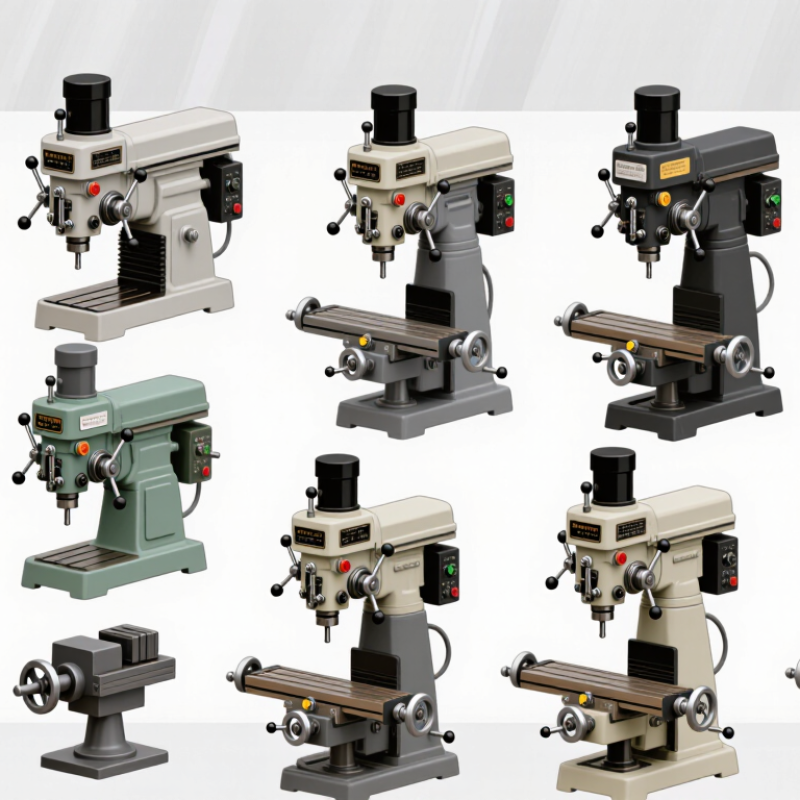
A useful shortlist should match the machine to the work, not just its advertised capacity. A compact benchtop mill suits small parts and limited floor space. A mini mill is easier to move, but its lighter frame may chatter during heavier cuts. Vertical knee and turret mills offer familiar controls and adjustable work height. Check spindle speed, table travel, and quill movement against the parts you actually make.

Horizontal mills handle certain side-cutting jobs efficiently, while universal mills add flexibility for angled work. Toolroom mills often emphasize precise adjustment and repeatability. Precision mills suit fine, controlled cuts; heavy-duty models prioritize rigidity and larger workpieces. Combination machines save space, though changing setups can take patience. That trade-off matters.

Before buying, inspect the ways, leadscrews, bearings, and spindle runout where possible. Move each axis through its full travel; rough spots can signal wear. Ask about included arbors, vises, collets, and guarding, since accessories affect the real cost. A tidy specification sheet can still mislead. Measure your workspace, power supply, and largest workpiece first. I would also budget for tooling and setup time. No single mill is perfect, and a smaller machine may be the wiser choice when accuracy and steady operation matter more than raw capacity.

How to Inspect, Set Up, and Maintain a Manual Milling Machine

Top 10 Manual Milling Machines to Buy in 2026

How to Inspect, Set Up, and Maintain a Manual Milling Machine

A careful inspection can reveal problems before they spoil a cut. With the machine off, check the table, ways, and spindle for rust, dents, or uneven wear. Turn the handwheels through their full travel; movement should feel steady, not gritty. Check for excessive backlash, and inspect belts, guards, and lubrication points. A clean-looking machine is not always a sound one. Ask to see it running, and listen for unusual knocking or grinding.

Set the machine on a stable floor and secure it before use. Clean the table, then clamp the work firmly and keep clamps clear of the cutter path. Align the vise with an indicator rather than relying on its edges. Select a suitable cutter and speed for the material, and make a light test pass. Small errors matter. Recheck alignment after tightening, since clamping can shift the vise slightly. That step is easy to forget.

Tips: Remove chips with a brush, not your fingers. Stop the spindle before measuring or adjusting. Follow the machine’s lubrication schedule, and wipe exposed ways after each session. Keep a simple log of oiling, unusual noise, and backlash changes. A checklist may feel fussy, but it helps catch wear early.