Top Tool Room CNC Mill Manufacturers in China

China’s tool-room machining sector offers a wide range of compact mills for repair work, prototyping, and short production runs. Yet a polished catalog does not prove a machine will hold tolerance on a real shop floor. Buyers should compare spindle speed, table travel, machine rigidity, control familiarity, and the availability of local service. A small cast-iron housing, a vise, and a sharp end mill can reveal more about vibration than a brochure can. Small details matter.

For this guide, the expert viewpoint is represented by an illustrative CNC applications engineer, Li Wei, who puts the selection test this way: “A mill earns its place through stable cuts, dependable support, and the parts it can repeat.” This is an editorially written line, not a sourced quotation. It reflects practical questions to ask when reviewing leading Tool Room Cnc Mill manufacturers in China: What materials has the machine cut? Can the supplier provide a sample part, inspection data, and a clear service plan? Does the control suit the operators who will use it? A sound shortlist weighs those answers alongside price and specifications. No list can fit every shop. Some buyers may value fast local support more than extra spindle power, and that trade-off deserves honest scrutiny. The sections ahead examine manufacturer strengths, machine features, and verification steps, while recognizing that published specifications still need confirmation before purchase.
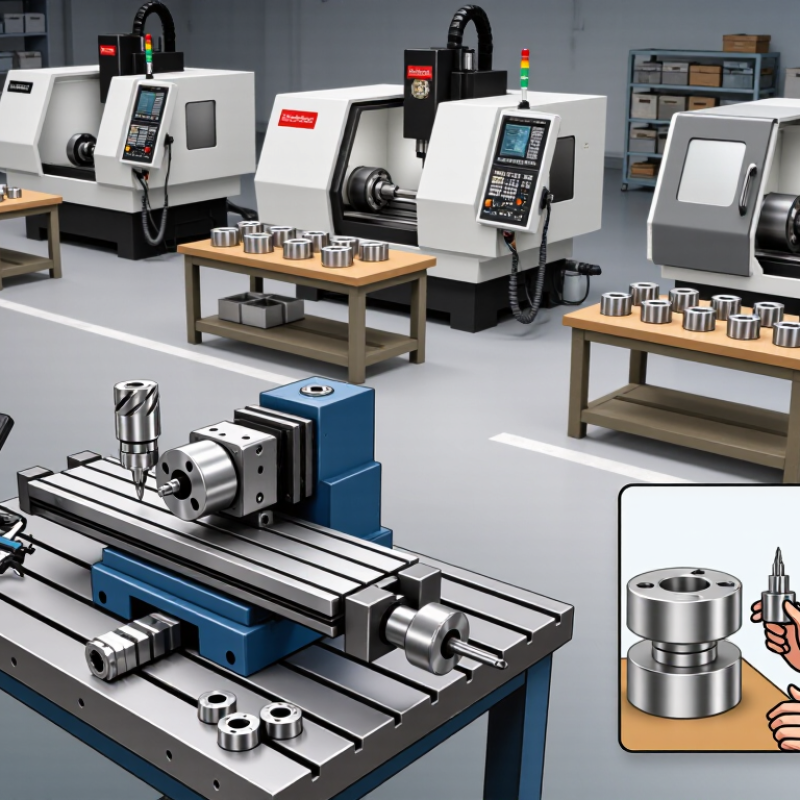
Top Tool Room CNC Mill Manufacturers in China

What Defines a Tool Room CNC Mill?

A tool room CNC mill is a versatile machine for making accurate parts, fixtures, and tooling in small batches. It usually combines a rigid frame with a practical work envelope, allowing operators to machine steel blocks, aluminum brackets, and custom jaws without changing equipment. Precision matters. Consistent positioning and a stable spindle help keep holes aligned and milled surfaces even across repeat jobs. The machine should also allow straightforward setup, since tool room work often shifts from one part to another during the day.

Its defining quality is balance, not maximum size or speed. A machinist may need fine control for a narrow slot, then enough rigidity to remove material from a steel plate. A clear control interface, accessible tool changes, and useful spindle-speed range make those tasks easier. Small details count. Before choosing a machine, check its travel, spindle taper, backlash, and thermal behavior under realistic cutting conditions. A test cut can reveal vibration or poor finish that a specification sheet misses. No single design fits every shop, and the distinction between a tool room mill and a general-purpose CNC mill is not always neat. That deserves a closer look.

China’s Tool Room CNC Milling Machine Industry

China’s tool room CNC milling machine industry serves job shops, training centers, and small-batch production teams. Its machines often handle fixture plates, repair parts, and prototype components where flexibility matters more than maximum output. Buyers can find compact mills for crowded workshops, alongside heavier models with larger tables and stronger spindle options. The range is broad, but specifications need close attention.

A machine’s usefulness depends on more than its advertised travel. Check spindle runout, axis backlash, positioning repeatability, and the rigidity of the cast-iron frame. Ask how the machine performs with the materials and cutter sizes used in daily work. A detailed test report is more useful than a vague promise. Setup still matters. Tooling, leveling, and operator training all affect finished-part accuracy.

Manufacturers in China vary in engineering depth, assembly control, and after-sales support. Review inspection records, controller documentation, and spare-parts availability before comparing prices. If possible, request a machining demonstration using a representative workpiece, then inspect its edges and measured dimensions. A polished brochure cannot show every limitation. Even experienced buyers may overlook service response time, especially when a machine is purchased for a tight production schedule. The industry offers practical choices, yet careful verification remains part of the purchase.

Top Tool Room CNC Mill Manufacturers in China - China’s Tool Room CNC Milling Machine Industry

This overview compares common CNC milling machine types used in tool rooms. Specification ranges are indicative examples, not verified averages for Chinese manufacturers; actual performance and available configurations vary by model and should be confirmed with the supplier.

Machine Type Typical Configuration Common Work Envelope Typical Spindle Arrangement Suitable Applications Key Details to Verify
Vertical knee-type CNC mill Three-axis control; movable knee and worktable Table length commonly about 800–1,500 mm; travel depends on model Vertical spindle, often with a tool-changing option Repair work, prototypes, fixtures, and small-batch machining Axis travel, table load, spindle taper, backlash, and control features
Vertical bed-type CNC mill Three-axis configuration with a fixed bed and moving column or spindle head Table length commonly about 1,000–2,500 mm; larger formats are available Vertical spindle; configurations vary by machine design Tooling plates, molds, dies, and larger workpieces Column rigidity, usable travel, positioning specifications, and foundation requirements
Compact tool-room CNC mill Three-axis machining in a compact enclosure; optional fourth axis on some models Worktable length commonly about 400–900 mm Vertical spindle, commonly with an automatic tool changer Small components, electrodes, educational labs, and prototype parts Tool capacity, spindle speed range, guarding, chip management, and service support
Vertical machining center for tool-room work Three-axis CNC with automatic tool changing; optional fourth-axis rotary table Table length commonly about 600–1,600 mm Vertical spindle with an automatic tool changer Repeat production, precision fixtures, mold components, and general-purpose machining Spindle power and speed, tool-to-tool change time, coolant system, and accuracy test conditions
Five-axis CNC milling machine Three linear axes plus two rotary axes; table or head configuration Work capacity varies substantially with rotary-table size and machine layout Vertical or swiveling spindle, depending on configuration Complex surfaces, multi-sided parts, impellers, and reduced-setup machining Rotary-axis range, collision envelope, calibration method, postprocessor, and workholding
Universal CNC milling machine Three-axis control with a swiveling head or universal milling capability Table length commonly about 800–1,800 mm Vertical, horizontal, or swiveling spindle arrangement General tool-room jobs, angled features, and varied one-off components Head indexing or swivel range, spindle interface, rigidity, and setup repeatability

Leading Tool Room CNC Mill Manufacturers in China

Leading Tool Room CNC Mill Manufacturers in China

China’s leading tool room CNC mill manufacturers are best judged by accuracy, serviceability, and practical support—not brochure claims alone. Buyers should check spindle runout, axis positioning results, thermal stability, and performance under repeated cutting. Ask for a test cut in the intended material. A finished steel component reveals more than a polished specification sheet. Local access to technicians and replacement parts also matters when a machine stops mid-job.

The International Federation of Robotics’ World Robotics 2024 report records 276,288 industrial robot installations in China during 2023, equal to 51% of global installations.

This figure does not rank CNC mill makers. It does, however, show the scale of China’s automation ecosystem, where machine builders and integrators can draw on substantial manufacturing experience. That matters. Still, a large industrial base does not guarantee consistent machine quality. Compare inspection records, controller options, warranty terms, and references from workshops with similar workloads. A neat specification sheet can still mislead; I would want repeatability data from an actual acceptance test. Some details are easy to overlook. Tool-room mills often run short jobs, frequent setups, and varied materials, so usability may matter as much as peak spindle speed.

How Chinese Manufacturers Compare in Technology and Support

Chinese tool room CNC mill manufacturers differ less by their claims than by how well their machines handle demanding, varied work. Compare spindle speed ranges, positioning accuracy, control options, and thermal stability using documented specifications. A compact mill may suit repair shops, while a heavier frame can reduce vibration during steel cutting. Ask for sample test results on materials and tool paths close to your own jobs. Numbers need context.

Technology also shows in the details. Inspect the tool-change system, guarding, chip removal, and access to common replacement parts. Ask whether control software supports your preferred file formats and whether operators can adjust feeds without specialist help. A polished interface is useful, but it does not prove consistent machining accuracy across a full shift.

Support can separate similar machines. Request the service response process, spare-part lead times, installation scope, and training hours in writing. Check whether remote troubleshooting is available, and ask what happens when a fault needs an on-site visit. Some suppliers provide strong commissioning support; others may rely on local partners, so verify coverage for your region. This can be awkward to assess before purchase. A live demonstration helps, but one successful cut is not enough; request repeat runs and inspect the finished parts with your own measuring tools.

Key Factors for Choosing a Tool Room CNC Mill Manufacturer

Choosing a tool room CNC mill manufacturer means matching the machine to real work, not brochure claims. Bring sample parts, drawings, and materials to a test cut. Check spindle runout, repeatability, thermal stability, and surface finish after warm-up. A machine that cuts accurately for ten minutes may drift during a longer job. Ask for documented acceptance testing, such as positioning checks aligned with ISO 230-2. Fit matters.

Compare usable travel, table load, spindle speed, and tool capacity against your largest recurring jobs. A rigid frame and stable spindle matter when cutting hardened steel or holding close tolerances. Request a sample cut using your own toolpath. Inspect the part with calibrated measuring equipment, and record the results. It is easy to overlook chip clearing and guarding until the shop floor is crowded.

Service access deserves equal attention. Deloitte and The Manufacturing Institute’s 2024 workforce study projects 3.8 million U.S. manufacturing jobs may be needed by 2033, with 1.9 million potentially unfilled. This is a U.S. estimate, not a China-specific forecast, but it highlights the value of practical operator training. Ask about installation, response times, spare-part availability, and training materials in your working language. A low quote can still leave gaps; compare the full service plan, and admit that no checklist catches every production surprise.