China Top 10 CNC Tool Room Lathe Manufacturers

Choosing a Cnc Tool Room Lathe is a practical decision, not just a comparison of catalog prices. The right machine should suit the parts, tolerances, and production volume you actually handle. A small workshop turning steel bushings has different needs from a training center producing varied components. Details matter. Spindle runout, bed rigidity, speed range, and control options all affect daily work. So do less visible factors, such as installation support and access to replacement parts.

This guide introduces ten Chinese manufacturers associated with tool room lathes and explains what buyers may want to examine. It considers machine configuration, stated specifications, customization, service arrangements, and export experience. These points offer a starting framework, not a guarantee of performance. Manufacturer claims should be checked against current technical documents, sample parts, and a clear service agreement. A photograph cannot confirm machining accuracy. Nor does a long specification sheet prove that a machine fits your shop. Buyers should ask about inspection procedures, training, delivery scope, and the support available after installation. Rankings can also shift as product lines and market conditions change. That limitation deserves attention. The comparison ahead is intended to help readers ask better questions, narrow their options, and request evidence before making a purchase.
China Top 10 CNC Tool Room Lathe Manufacturers

What Is a CNC Tool Room Lathe?

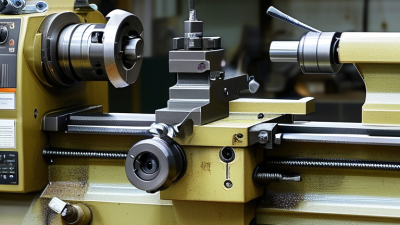
A CNC tool room lathe is a computer-controlled machine for producing precise, small-batch parts and prototypes. It rotates a workpiece while cutting tools shape its outside diameter, face, grooves, or threads. The operator programs tool paths and cutting conditions, then checks the result against the drawing. Compared with a conventional manual lathe, CNC control can repeat movements more consistently, though setup still matters. A scratched test piece can reveal a tool offset error before valuable material is cut.

These lathes are often used for shafts, bushings, and custom repair components. Their compact work area suits varied jobs, not necessarily high-volume production. Accuracy depends on more than the controller: spindle condition, tool rigidity, workholding, and measurement practice all play a part. In practice, the line between a tool room lathe and a general CNC lathe is not always clear. Buyers should compare actual capacity and precision needs rather than rely on the label alone.

Tips: Secure the workpiece firmly, verify tool offsets, and run a cautious first pass. Measure the part with suitable instruments. Small checks save rework. A written setup note helps repeat the job, although it may miss details that only an experienced operator notices.

China Top 10 CNC Tool Room Lathe Manufacturers — What Is a CNC Tool Room Lathe?

A CNC tool room lathe is a precision turning machine used for making, modifying, and repairing parts, often in small batches. Common axis configurations range from two-axis X–Z turning to four-axis machines with a C axis and a Y axis. The chart shows the number of controlled axes; machine capabilities vary by configuration.

How CNC Tool Room Lathes Are Used in China

Across China, CNC tool room lathes support prototype work, repair jobs, and small production runs. Their strength is flexibility: one machine can turn a steel shaft in the morning and cut a threaded sleeve later. Operators commonly use them for bushings, pins, spacers, and custom fixtures. Setup matters.

In maintenance workshops, a replacement part may need to match a worn component, not just a drawing. The operator measures the original, enters tool offsets, and checks the first piece with a micrometer. A small error in diameter can affect fit. That is why careful inspection remains essential, even with CNC control.

Technical schools and factory training rooms also use these lathes to teach turning operations. Learners can practice facing, grooving, threading, and selecting cutting speeds on manageable workpieces. In daily production, stable clamping and sensible chip control matter as much as the program. Not every job fits. Long shafts, awkward shapes, or frequent design changes may require different equipment or more setup time. Real workshop conditions are rarely as tidy as a sample part.

Criteria for Evaluating Chinese Manufacturers

A tool room lathe should be judged by the parts it can repeatedly produce, not by its brochure specifications. Check spindle runout, carriage travel, lead-screw backlash, and repeatability under load. Ask for measurement records, including the instrument used and its calibration date. A dial indicator check is useful, but it cannot replace a controlled cutting test.

The market is substantial: Gardner Intelligence’s 2023 World Machine Tool Survey reported global machine-tool consumption of about US$99.9 billion in 2022. That scale makes supplier comparison important. Request a test cut on a representative material, then inspect the finish, diameter variation, and threading accuracy. Ask how the machine performs after warming up. Small details matter.

Quality certificates can support evaluation, but they are not proof of machine accuracy. The ISO Survey 2022 recorded more than 1.2 million ISO 9001 certificates worldwide; certification alone does not confirm a lathe’s precision or service quality. Review inspection reports against applicable machine-tool test methods, such as ISO 230-1. Also examine spare-parts lead times, service response, operator training, and the clarity of manuals. One weakness: factory tests may not match your shop’s conditions. Ask for realistic evidence.

China’s Top 10 CNC Tool Room Lathe Manufacturers

China’s Top 10 CNC Tool Room Lathe Manufacturers

China’s CNC tool room lathe sector serves repair shops, training centers, and precision job shops. When comparing manufacturers, look beyond advertised spindle speed. Ask for measured positioning accuracy, repeatability, spindle runout, and a sample-cut report. ISO 230-2 describes tests for positioning accuracy and repeatability on numerically controlled axes. Requesting results under stated test conditions makes comparisons more meaningful. Small details matter.

Automation is also shaping the market. The International Federation of Robotics reported that China installed 276,288 industrial robots in 2023, representing 51% of global installations that year. This figure covers industrial robots, not lathes, but it signals a large automation ecosystem around machine-tool production. Grand View Research estimated the global CNC machine market at USD 101.22 billion in 2023; that broad category includes more than tool room lathes. For buyers, it is a useful market indicator, not proof of any supplier’s quality. Check bed rigidity, control usability, service response, and spare-parts availability. A polished brochure cannot reveal a rough finish on a small steel shaft. I would also verify local support before ordering; this step is easy to overlook.

China Top 10 CNC Tool Room Lathe Manufacturers

The table below provides general evaluation benchmarks for CNC tool room lathes available from manufacturers in China. It is not a verified manufacturer ranking or a comparison of specific company models; specifications vary by machine configuration.

No. Evaluation Dimension Typical Benchmark Range What to Check
1 Swing over bed Approximately 250–500 mm Confirm the maximum workpiece diameter, including clearance for tooling and fixtures.
2 Distance between centers Approximately 500–1,500 mm Choose a center distance suited to the longest parts normally produced.
3 Spindle bore Approximately 40–80 mm Check that bar stock and through-spindle workpieces can pass through the spindle.
4 Spindle speed Commonly up to approximately 2,000–6,000 rpm Review the speed range, available torque, and whether the spindle uses geared or direct drive.
5 Main spindle motor power Approximately 5.5–15 kW Match motor power and torque characteristics to the materials and cutting depths required.
6 X- and Z-axis travel Varies by bed size and machine configuration Check usable travel against the required part envelope, tooling, and workholding setup.
7 Positioning and repeatability Specified by the manufacturer for each model Request documented test results and clarify the measurement method and test conditions.
8 Tooling configuration Manual tool post or multi-station turret options Verify tool station count, tool dimensions, indexing method, and compatibility with existing tooling.
9 Control and programming Depends on the machine’s control system and configuration Confirm supported programming functions, language options, training, and service availability.
10 Inspection and after-sales support Confirm documentation and service terms before purchase Request an acceptance test, installation requirements, warranty details, spare-parts information, and operator training.

How to Compare and Select a Manufacturer

When comparing CNC tool room lathe manufacturers in China, treat a “top 10” list as a starting point, not proof of fit. Request specifications for spindle runout, repeatability, bed construction, and speed ranges. Ask how each figure was measured. A polished brochure cannot show how a lathe performs after hours of cutting. Request a sample part made from your material, then check its diameter, surface finish, and consistency with suitable measuring tools. Small details matter.

Tips: Send the same drawing and material requirements to every supplier. Compare quotations line by line, including tooling, installation, training, and warranty coverage. Ask for a live test cut. Watch the chip flow and listen for vibration. Easy to miss.

Look beyond the machine price. Ask whether critical spare parts are stocked locally and how quickly technical support responds. Review the inspection checklist and request records from a completed machine test. If possible, visit the factory or arrange a remote inspection of assembly and testing. A video call helps, but it cannot show everything. I would not overvalue a long feature list; some options may not suit your actual work. Match the control system, chuck size, and working capacity to the parts you make most often.