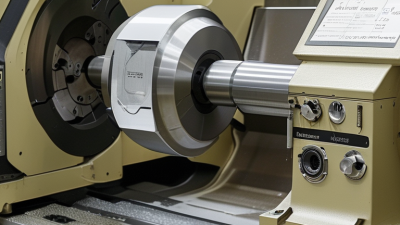
What Are the Top Lathe Machine Tools in 2026?
Choosing the right lathe equipment in 2026 is less about chasing a “best” label and more about matching tools to real work. A small repair shop may value quick setup and flexibility. A production floor may need repeatable dimensions across long runs. The difference shows up in the details: insert geometry, holder rigidity, workpiece material, and chip control.
Manufacturing scholar David Dornfeld has described sustainable manufacturing as creating products through processes that “minimize negative environmental impacts, conserve energy and natural resources, are safe for employees, communities, and consumers, and are economically sound.” That principle offers a useful lens for comparing Lathe Machine Tools. Tool life, cutting stability, setup time, and material waste all affect the final choice. One detail is easy to miss: a lower-cost insert can become expensive when changes interrupt a short production run.
This guide examines the leading lathe tools and tool systems to consider in 2026, from turning inserts and boring bars to holders and threading tools. It focuses on practical fit, not brand claims alone. Cutting data still depends on the machine, material, and operator. No ranking fits every shop. Some comparisons remain imperfect, especially when manufacturers publish different test conditions. Use the shortlist as a starting point, then check specifications against your own workholding, spindle limits, and production needs. A careful test cut can reveal more than a glossy catalogue page.
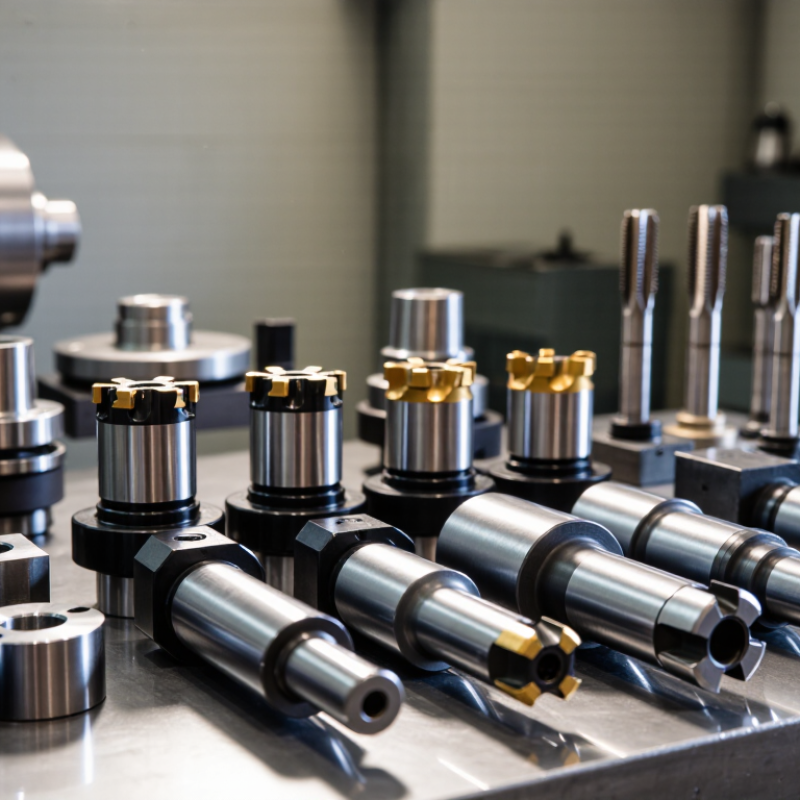
What a Lathe Machine Does and How It Removes Material
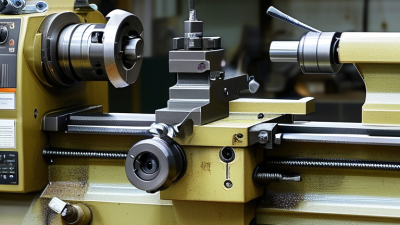
A lathe shapes material by rotating a workpiece against a cutting tool. The workpiece is held in a chuck or between centers, then turned by the spindle. As it spins, the cutting edge removes thin layers and carries them away as chips. That simple motion can produce cylinders, tapers, grooves, and flat end faces.
The tool’s edge and position determine how material comes off. A turning tool reduces the outside diameter; a facing tool cuts across the end. Boring tools enlarge existing holes, while threading tools form precise helical grooves. Small changes matter. Tool geometry, workpiece material, feed rate, and cutting depth all affect heat, surface finish, and accuracy. A shiny finish alone does not prove a part meets its required dimensions.
In practice, a machinist checks the setup, selects a suitable tool, and measures the part during cutting. Calipers may help with general checks, while micrometers provide finer diameter measurements. The best choice depends on the job, machine rigidity, and required tolerance—not on one tool being “top” for every task. Even experienced operators can misjudge tool wear or workholding. A useful habit is to pause, inspect the cut, and verify the measurement before removing more material.
The Main Types of Lathe Machines Available in 2026
The main lathe machine types in 2026 serve different work, from one-off repairs to repeated production runs. A conventional engine lathe lets an operator adjust feed, speed, and cutting depth by hand. It suits shafts, bushings, and small batches, but accuracy depends heavily on setup and operator skill. Setup takes patience. Turret lathes hold several tools at once, making repeated operations faster without changing tools by hand. They work well for consistent parts, though their fixed setup can be awkward when designs change.
CNC lathes follow programmed tool paths and can produce closely matched parts across a run. They are useful for complex profiles and repeatability, but programming, workholding, and inspection still require skilled attention. Toolroom lathes offer fine manual control for prototypes and precision work. Vertical lathes support large, heavy workpieces that are difficult to mount horizontally. Automatic lathes can feed and machine stock with limited operator intervention, especially in high-volume production. Material shape matters. A long, slender shaft may need different support from a broad, heavy casting. Buyers should compare part size, batch volume, tolerance needs, and available operator expertise before choosing. Those factors do not always point to the most automated machine; that judgment deserves a second look.
Leading Lathe Machine Tools and Their Distinguishing Features
What Are the Top Lathe Machine Tools in 2026?
Leading Lathe Machine Tools and Their Distinguishing Features
The right lathe depends on part geometry, batch size, and required tolerance. CNC turning centers are versatile: powered tooling and multiple axes can complete turning, drilling, and milling in one setup. That can reduce handling, though programming and setup still take time. Swiss-type lathes suit slender, small-diameter parts, supporting the work close to the cutting zone. Vertical lathes handle heavy, wide components that are awkward to mount horizontally. Conventional engine lathes remain useful for repair work and one-off parts.
Market figures offer context, not a machine ranking. Grand View Research estimated the global CNC machine market at USD 101.2 billion in 2023 and forecast 9.3% annual growth from 2024 to 2030. This broad category includes more than lathes. Buyers should compare spindle speed, bar capacity, tool stations, axis travel, and service access against actual jobs. A feature-rich machine can be the wrong choice.
Tips: Bring sample drawings and material specs to a supplier. Ask for a test cut, then inspect the finish and chip shape. Check cycle time, too. A small detail, but revealing. Leave room for maintenance access; cramped installations make routine work harder.
Lathe Machine Types in 2026: Typical Controlled Axes
A comparison of common lathe configurations by their typical number of controlled axes. More axes can support more complex turning and milling operations in one setup.
Typical configurations are shown; actual axis counts vary by machine. Axis count does not indicate how many axes can move simultaneously.
How to Compare Lathe Machines by Capacity, Precision, and Control
When comparing lathe machines in 2026, start with the parts you actually make. Measure their maximum diameter and length, then allow room for the chuck, tooling, and safe workholding. A machine’s advertised swing can look generous, yet the usable space may shrink once a large fixture is installed. Check spindle bore and workpiece weight, too. Small details matter.
Precision depends on more than a specification sheet. Review spindle runout, bed rigidity, thermal stability, and the machine’s condition under load. For tight tolerances, ask for a test cut on material similar to your own, then measure it after the workpiece cools. That step is often skipped. I might overvalue a tiny stated tolerance; without repeatable shop results, the number proves little.
Control should fit the operator and the workload. Manual machines offer direct feedback for short runs and varied jobs, while CNC control can improve repeatability on recurring parts. Compare programming effort, setup time, tool-change capacity, and available training. Ask operators to try a typical job, not just a showroom demonstration. A polished interface can still slow production if everyday adjustments take too many steps.
What Are the Top Lathe Machine Tools in 2026? — How to Compare Lathe Machines by Capacity, Precision, and Control
| Lathe Type | Typical Workpiece Capacity | Typical Precision Potential | Spindle and Cutting Characteristics | Control and Automation | Best Suited For | Key Trade-Off |
|---|---|---|---|---|---|---|
| Benchtop / Precision Lathe | About 100–250 mm swing over bed; roughly 250–600 mm between centers | Often around 0.01–0.05 mm on suitable work, depending on setup, tooling, and material | Small spindle bore and moderate power; intended for light cuts and smaller parts | Usually manual; some setups add digital readouts or basic CNC conversion | Small workshops, repair work, instrument parts, prototypes, and education | Compact and comparatively economical, but limited in workpiece size, power, and production speed |
| Engine / Centre Lathe | About 250–600 mm swing over bed; roughly 750–3,000 mm between centers | Commonly around 0.01–0.03 mm for capable machines with sound setup and careful operation | Versatile spindle speeds, feed rates, and threading capability; available with a range of spindle bores | Manual operation, often with a digital readout; operator skill strongly affects results | General-purpose machining, shafts, bushings, repair work, and low-volume production | Flexible and straightforward to maintain, but cycle time and repeatability depend heavily on the operator |
| CNC Turning Center | About 150–700 mm swing; commonly around 200–1,500 mm maximum turning length | Typical part tolerances may be around 0.005–0.02 mm under controlled conditions | Powered turning with repeatable feeds; many configurations support live tooling, turret tools, or a second spindle | CNC program control; options may include automatic tool changes, probing, bar feeding, and part catching | Repeat production, complex turned components, and jobs requiring consistent cycle times | High productivity and repeatability, but requires programming, setup expertise, and higher investment |
| Swiss-Type CNC Lathe | Typically designed for bar stock around 2–38 mm in diameter; larger-capacity versions are available | Often capable of approximately 0.002–0.01 mm on suitable small parts with controlled processes | Guided-bushing support keeps slender stock close to the cutting zone; commonly uses multiple tools | Multi-axis CNC control; many machines support simultaneous operations and automatic bar feeding | Small, slender, high-volume components such as pins, fasteners, and precision fittings | Excellent support and output for small parts, but setup and programming are more specialized |
| Vertical Turning Lathe (VTL) | Commonly handles workpieces from about 500 mm to several metres in diameter, depending on configuration | Often around 0.01–0.05 mm for suitable work; achievable results depend on size, rigidity, and process | Vertical workholding supports heavy, large-diameter components; table load capacity is a key selection factor | Available in manual, CNC, and multi-axis configurations; CNC models can automate repeat operations | Large, heavy parts such as rings, housings, wheels, and castings | Handles heavy components well, but needs substantial floor space and lifting provisions |
Comparison note: Capacity and precision figures are representative ranges for machine classes, not guaranteed specifications. Actual performance varies by machine design, condition, workholding, tooling, material, temperature, and measurement method. Confirm the manufacturer’s specification and run an application test before purchase.
Choosing a Lathe Machine for Your Workshop or Production Needs
What Are the Top Lathe Machine Tools in 2026?
Choosing a lathe in 2026 starts with the work, not the machine’s feature list. Measure your typical workpiece, including chuck clearance and tool access. A compact bench lathe may suit bushings, shafts, and repair parts. Repeated long cuts call for a rigid bed and stable spindle. Compare swing over bed, distance between centers, spindle bore, and speed range with actual jobs. Leave room for occasional larger work. It happens.
For a workshop, weigh floor space, power supply, setup time, and operator skill. Manual controls can be flexible; CNC can improve repeatability when batch sizes justify programming and setup. Ask for runout measurements, load-test details, guarding, service support, and compatible tooling. Maximum capacity alone does not show how a lathe performs during a sustained cut. That matters.
Tips: Bring a drawing and material sample when comparing machines. If possible, test a representative cut; listen for chatter and inspect the finish. Confirm installation needs, training, and tooling costs before buying. I would not choose on horsepower alone. Easy mistake.
Related Posts
-
Top Lathe Machine Tools for Global Buyers?
-
China Top 10 CNC Tool Room Lathe Manufacturers
-
Future Trends in Global Market for Best Lathe Machine by 2025
-
2026 Top Lathe Machine Buyers Guide and Key Features?
-
Top 10 Mill Lathe Machines for Global Buyers in 2026?
-
How to Buy a Used Lathe for Your Business?